Hōfu Tenmangū, Shinto shrine in Hofu, Japan
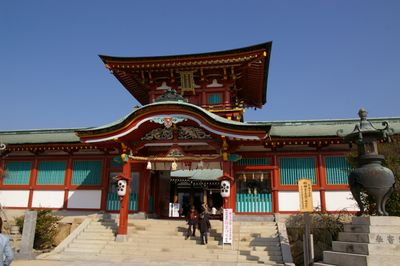
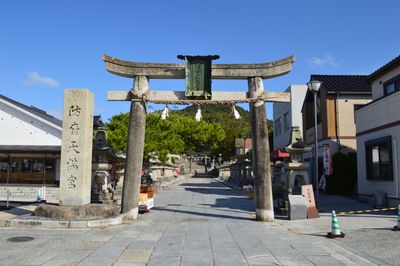
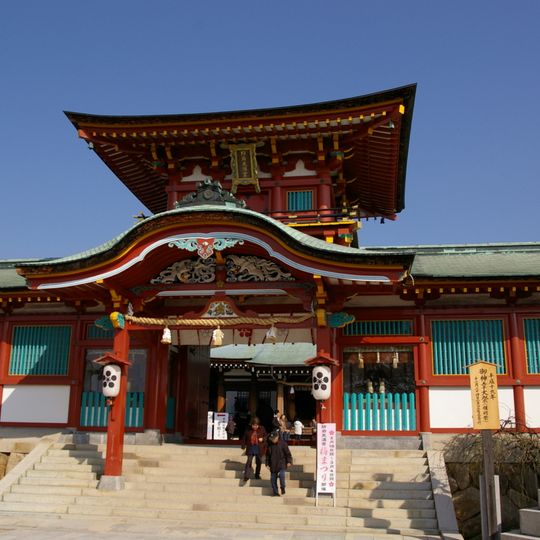
Hōfu Tenmangū is a Shinto shrine in Matsuzaki-chō, Hōfu, entered through a large weathered stone torii with a curved lintel and a straw rope hung with four white zigzag streamers. The main shrine, rebuilt in 1958, stands behind a two-tiered red gate with a dark curved roof, gold trim and a carved panel of two facing creatures. A stone pillar with vertical characters stands beside the torii.
The shrine was founded in 904 to honor Sugawara no Michizane, a historical scholar and politician who became deified as Tenjin. From its creation, it became linked to the patronage of education and learning.
Students come here to buy protective charms and pray for success in their exams, continuing a tradition that stretches back through generations. The shrine remains a gathering place where people seek the blessing of the deity connected to learning and achievement.
The shrine is accessible from Hofu Station, which is reachable by local train from surrounding areas, followed by a short walk to the entrance. The site has hilly terrain, so wearing sturdy shoes is helpful and visitors should allow time for climbing the steep stairs.
The November Gojinko-sai is also called Hadakabo-matsuri, the naked festival: teams haul a roughly one-tonne o-ajiro along the omotesando, down the great stone steps on the way out and back up them on the return, and injuries occur almost every year. The February 3 Ushikae-shinji changes the ox that pulls Tenjin's cart.
The community of curious travelers
AroundUs brings together thousands of curated places, local tips, and hidden gems, enriched daily by 94,027 contributors worldwide.