Tamanooya Shrine, shrine in Hōfu, Yamaguchi Prefecture, Japan
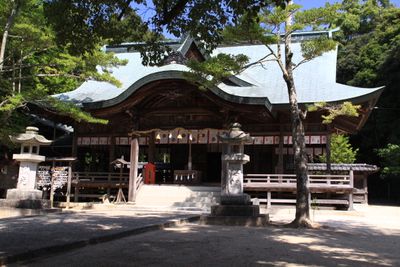
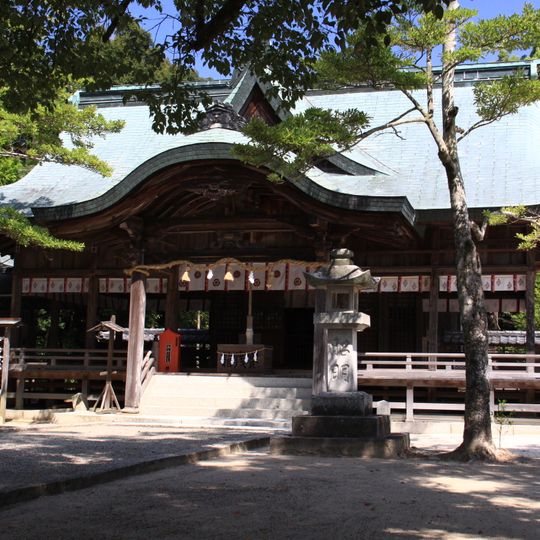
Tamanooya Shrine is a Shinto shrine in the Ōsaki neighborhood of Hōfu, Yamaguchi Prefecture. Its worship hall has a wide front roof of silver-grey metal that slopes down from a high ridge on the left toward the right, with dark wood beneath the deep eaves. White rectangular banners with red markings and paper streamers hang across the front, above a dark wooden veranda railing reached by a low stone stair. A tall stone lantern carved with a single character stands in the right foreground.
The shrine's origin is attributed to a clan of bead-makers who venerated Tamanooya-no-Mikoto, though no documentary evidence survives. The Nihon Shoki records that Emperor Keikō prayed here for victory over the Kumaso. In 1195 the monk Chōgen rebuilt the shrine in thanks for Tōdai-ji's completion and donated ten chō of tax-free land; the shrine keeps his signed inventory of treasures, a National Important Cultural Property.
Tamanooya is an ichinomiya, meaning it held the top rank among shrines in its province and was visited first during official circuits. This status is still felt today, as the shrine draws many worshippers for annual festivals.
The shrine stands in the Ōsaki neighbourhood, not the city centre: it is about a 45-minute walk from Hōfu Station on the JR West Sanyō Main Line, or roughly 20 minutes on foot from the Sōgō Iryō Center-mae bus stop. The main festival falls on the Saturday and Sunday nearest 25 September.
The name Tamanooya refers to a deity of jewel-making, which is unusual since most shrines are dedicated to warriors or natural forces. This connection to craft and gemcraft makes the deity enshrined here a rare figure in the Shinto pantheon.
The community of curious travelers
AroundUs brings together thousands of curated places, local tips, and hidden gems, enriched daily by 93,845 contributors worldwide.