Tanjō-ji Temple, Buddhist temple in Kamogawa, Japan
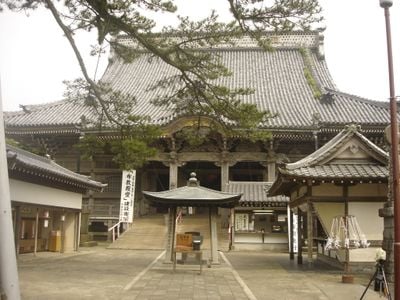
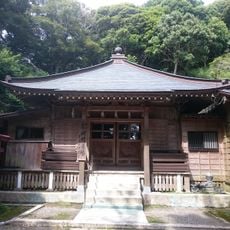
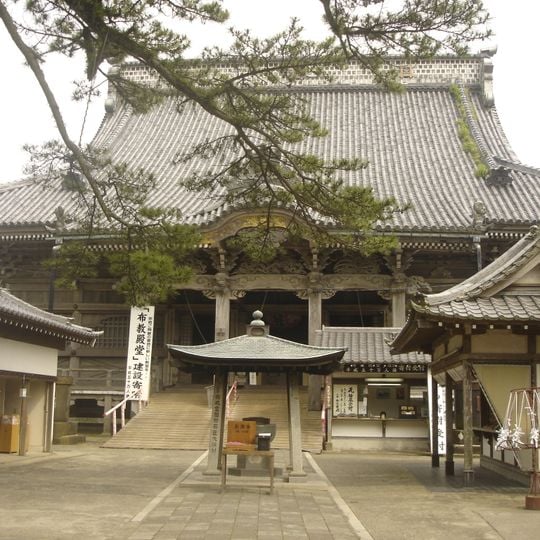
Tanjō-ji is a Nichiren-shū temple in Kamogawa, Chiba Prefecture, founded in 1276 on Nichiren's birthplace. Its main hall, rebuilt in 1991, has a broad, steeply pitched grey tiled roof with a dark timber frame and two small curved dormers on the front slope. A stone stairway leads to glass doors, and a stone lantern stands in front.
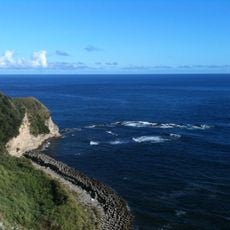
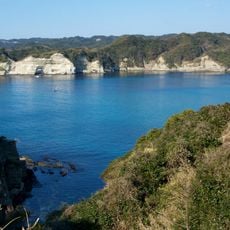
The temple was founded in 1276 and venerated Nichiren, a Buddhist teacher born in this area, from the start. Two severe earthquakes forced the monks to relocate the grounds twice, until they chose the current site close to the water.
The temple's name refers to Nichiren's birth on this site, and its statue of him is called the "Resurrecting Goshiso" after a legend that he revived his mother. As the saint's messenger, sea bream are sold as the "wish-fulfilling sea bream" amulet, and many people in the area avoid eating sea bream. The temple also appears in Natsume Soseki's novel Kokoro.
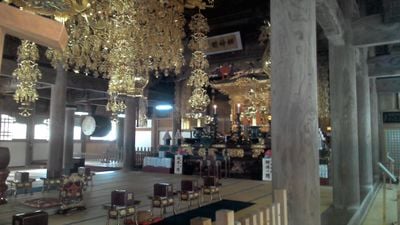
The main buildings are open to walk through without charge, while the treasure hall requires a small fee to enter. Visitors can sign up for sutra copying rituals held in a separate room beside the founder's hall.
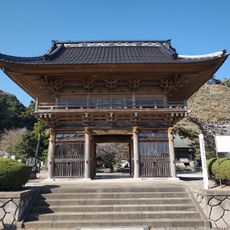
The temple's Nichiren statue is called the "Living Saint of Wish Fulfillment" because a document found inside it in 1991, when it was dismantled for repair, named it so and recorded the time and place of the founder's birth. Its messenger is the sea bream, and the temple sells bream charms; many people in the surrounding area avoid eating bream. The Niōmon gate, built in 1706, survived the 1758 fire and is the temple's oldest structure.
The community of curious travelers
AroundUs brings together thousands of curated places, local tips, and hidden gems, enriched daily by 93,291 contributors worldwide.