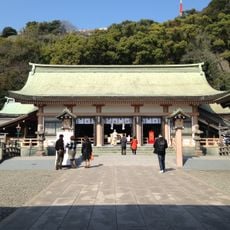
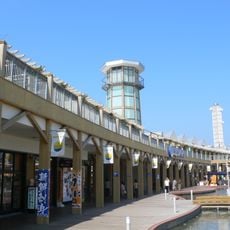
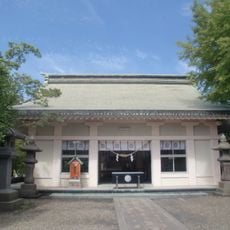
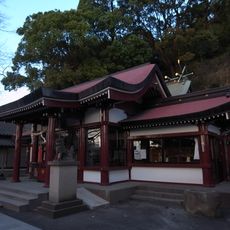
Kagoshima Castle, Castle ruins in Shiroyama-chō, Kagoshima, Japan
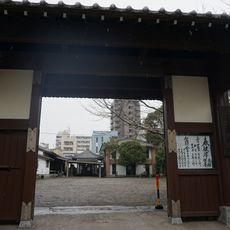
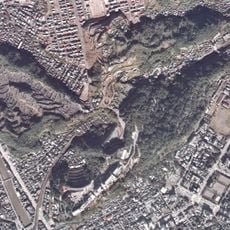
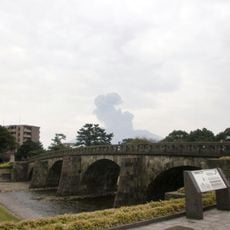
Kagoshima Castle, also called Tsurumaru Castle, is a flatland-style castle begun in 1601 at the foot of Mount Shiroyama, with the main enclosure to the north and the second enclosure to the south, protected by moats and low stone walls. It had no keep or tall stone walls; the reconstructed wooden Otemon gate, completed in 2020, now serves as the entrance.
Shimazu Tadatsune began building Kagoshima Castle in 1601 after the Battle of Sekigahara, moving his seat south from Satsumasendai to distance it from Tokugawa forces; it was completed in 1604. The main citadel burned in 1873, taking the Go-Romon gate with it, and the second citadel burned in 1877 during the Satsuma Rebellion. The gate was rebuilt in wood and opened to the public on 11 April 2020.
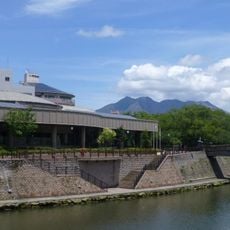
The name Tsurumaru comes from Mount Shiroyama, which from the Harara heights looked like a crane spreading its wings; the flat residence below echoed that shape, and the nickname spread after the Meiji era. The formal name in old maps and documents is Kagoshima Castle. The moat is known for lotus flowers, planted in the Meiji period.
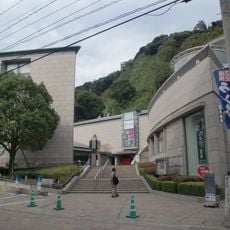
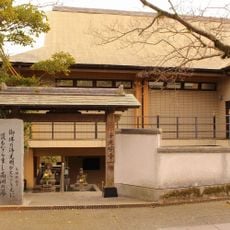
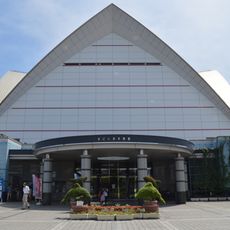
The castle grounds are split between two sites: the Honmaru, now home to the Reimeikan museum, and the Ninomaru, which holds the prefectural library, art museum, and prefectural museum. The reconstructed Otemon gate opened to the public in April 2020. A free parking lot with 125 spaces is available; turn right at the torii of Terukuni Shrine and continue straight.
The castle's nickname Tsurumaru, Crane Castle, comes from Mount Shiroyama, which from the plateau of Harara looks like a crane with spread wings; the flat residence below echoed that shape. The name Tsurumaru only spread after the Meiji era. The castle was chosen as one of Japan's Top 100 Castles in 2006.
The community of curious travelers
AroundUs brings together thousands of curated places, local tips, and hidden gems, enriched daily by 93,138 contributors worldwide.