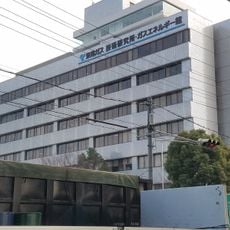
Port of Nagoya, Maritime port in Minato-ku, Japan.
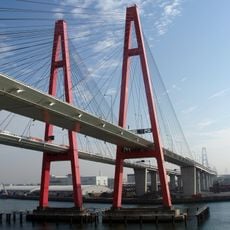
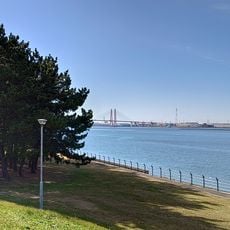
The Port of Nagoya is a port in Ise Bay whose harbour area covers 8,167 hectares and whose waterfront district, 4,301 hectares, is the largest in Japan. It stretches across Nagoya, Tokai, Chita, Yatomi and Tobishima, with piers such as Garden Pier, where the retired Antarctic survey ship Fuji is moored, and Kinjo Pier, home to the Port Messe Nagoya exhibition hall. A blue-and-white cargo vessel with the characters 安全第一 on its superstructure is a typical sight at the quays.
Dredging of the shallow Atsuta harbour began in 1896 under prefectural engineer Okuda Sukehachirō, and the port was renamed Nagoya Port and opened on 10 November 1907. It was designated an international port in 1946 and a specially important port in 1951. The Ise Bay Typhoon struck it directly in 1959.
The port's mascots are Potan and Mitan, characters visitors meet on signage and at events. Garden Pier hosts the Nagoya Minato Festival and its fireworks, first held in 1946, and the Christmas Starlight Review. The retired Antarctic survey ship Fuji has been permanently moored there since 1985, and the sightseeing boat Kinshachi, shaped like a golden shachi, departs from the same pier.
Visitors can walk through parts of the harbor area or view operations from observation points. An aquarium at the port is also a good place to understand more about the area.
The white superstructure of a cargo vessel at the port carries the characters 安全第一, "safety first". The port has been Japan's top automobile exporter since 1979, and in 2023 its export value of 15.19 trillion yen ranked first among Japanese ports, ahead of Narita Airport and the Port of Tokyo.
The community of curious travelers
AroundUs brings together thousands of curated places, local tips, and hidden gems, enriched daily by 93,127 contributors worldwide.