Urawa Komaba Stadium, athletics and football stadium in Urawa-ku, Saitama, Japan
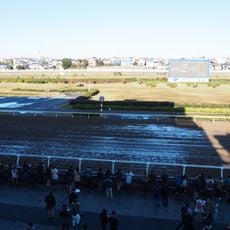
Urawa Komaba Stadium is an athletics and football ground in Komaba, Saitama, with a natural grass pitch inside a 400-metre, eight-lane running track. A low green fence separates the track from the field. Covered seating runs along one long side, with a two-tier back stand, and four floodlight towers stand behind the stands. Capacity is 21,500.
Opened in 1967 as Urawa City Komaba Soccer Ground for the 22nd National Sports Festival, it seated 5,000. A running track was added in 1982, and in 1993 night lighting and a partly seated back stand raised capacity to 10,000 for the J.League's start. After the league required 15,000 seats, the main and back stands were rebuilt, reopening in 1995 with 21,500 seats; the record crowd of 22,150 saw Urawa vs Júbilo Iwata on 9 September 1995.
Urawa Red Diamonds supporters call Komaba their "sacred place": title wins, relegation and promotion were settled here, and in 2003 the team reported its Nabisco Cup victory to fans at this ground. The away section, cut off from the home stands and fan-shaped, is nicknamed Dejima after the old island enclosure; a 2001 incident in which FC Tokyo fans were held there for about three hours gave the name wider currency.
The stadium is within walking distance of a local train station, making it easy to reach without a car. It is worth checking whether the ground is open to visitors on non-match days before making the trip.
The away section is an isolated, fan-shaped stand cut off from the home seats and nicknamed "Dejima", after the Edo-period island where foreigners were confined. Holding fewer than 400 of the 21,500 places, it sits directly beneath a speaker, so even the goalkeeper struggles to hear away support. After a 2001 match against FC Tokyo, home fans blocked the exit and held visiting supporters there for nearly three hours.
The community of curious travelers
AroundUs brings together thousands of curated places, local tips, and hidden gems, enriched daily by 94,369 contributors worldwide.