Sapporo Clock Tower, Heritage tower in central Sapporo, Japan
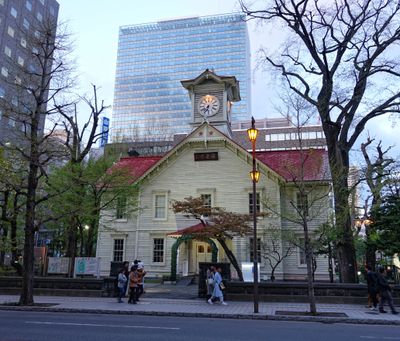
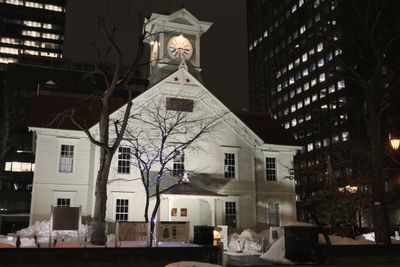
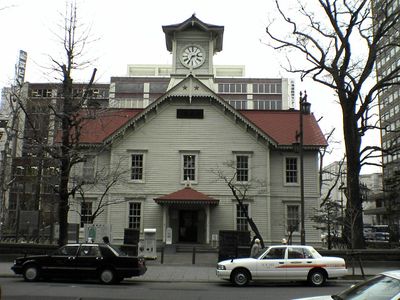
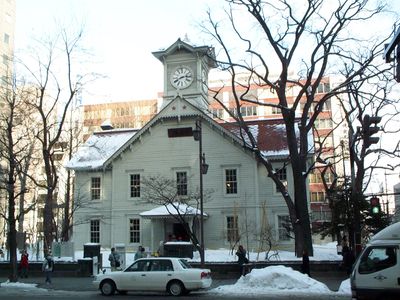
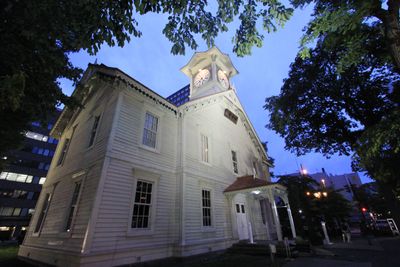
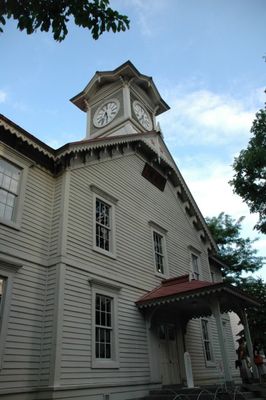
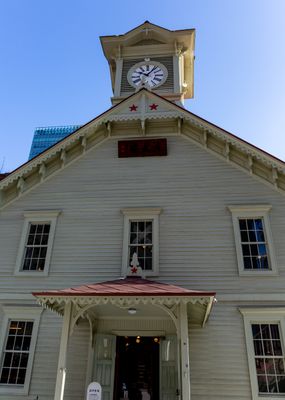
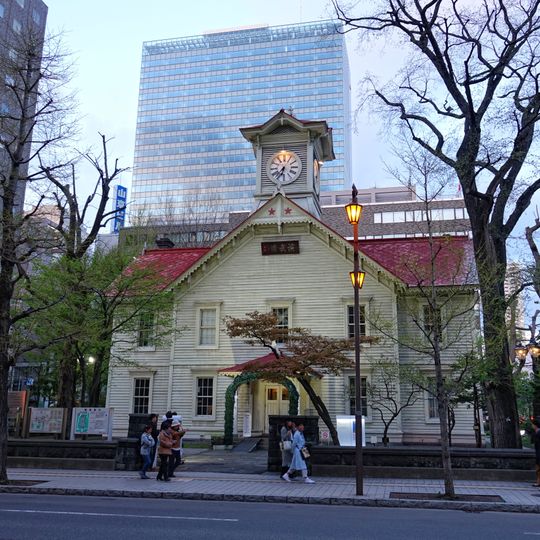
This two-story wooden structure displays clock faces on all four sides and stands roughly 60 feet (18 meters) tall. The building employs American balloon-frame construction methods with white clapboard siding over a timber framework. Interior spaces include ground-floor exhibition galleries and an upper-level assembly hall that preserves its original layout and function. A slender bell tower rises above the main roof, housing both the clock mechanism and a bronze bell that marks each hour.
Constructed in 1878 as a military drill facility for Sapporo Agricultural College, this building initially served both training exercises and academic assemblies. The Howard Clock Company of Boston shipped and installed the timekeeping apparatus three years later, connecting the facility to international trade networks. The structure survived multiple earthquakes and wartime periods throughout the 20th century. Major restoration work in the 1970s secured its structural integrity, and the Japanese government designated it an Important Cultural Property in 1970.
This structure has served as a civic landmark for over a century, marking the transformation of Sapporo from a frontier outpost into a major metropolitan center. Locals have used it as a meeting point and time reference for generations. The facility now functions as an educational space where residents and school groups learn about Hokkaido's settlement and development during the Meiji era through archival materials and period artifacts.
The facility opens daily from 8:45 AM to 5:00 PM, with closures only during the first three days of January. Admission costs 200 yen for adults, with reduced rates for students and seniors. The site sits a ten-minute walk from Sapporo Station and is accessible via Odori or Nishi-Juitchome subway stops. Photography is permitted inside. A small gift shop on the ground floor sells historical reproductions and local crafts. Wheelchair access is available through a side entrance.
The original Howard mechanism has chimed every hour since 1881, making it one of the oldest continuously operating American tower clocks in Asia. The gear system requires manual winding twice weekly by trained staff who use the same maintenance techniques passed down through generations. During World War II, officials temporarily buried the bronze bell to protect it from confiscation for war production, then reinstalled it after the conflict ended in 1945.
The community of curious travelers
AroundUs brings together thousands of curated places, local tips, and hidden gems, enriched daily by 60,000 contributors worldwide.