Lake Suwa, Tectonic lake in Nagano Prefecture, Japan
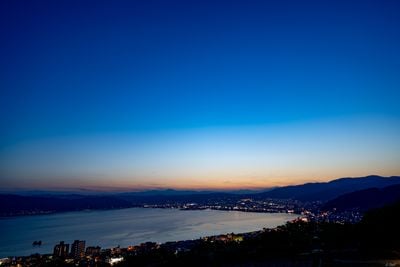
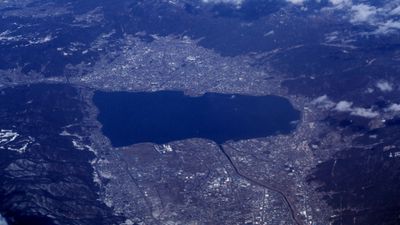
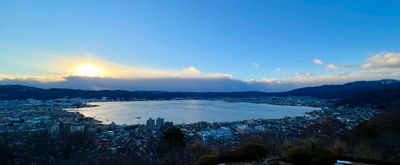
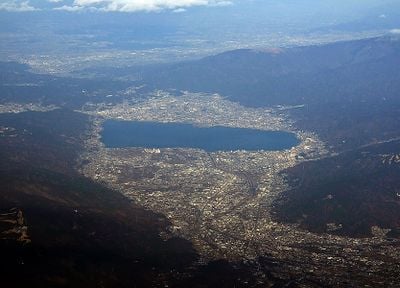
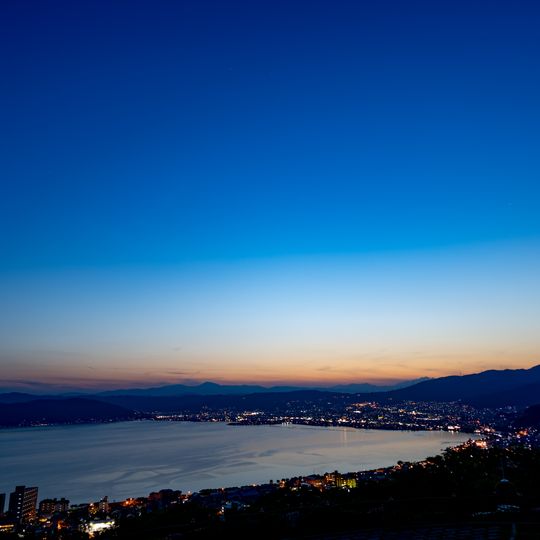
Lake Suwa is a tectonic lake in the Suwa Basin of central Nagano Prefecture, Japan's largest lake in the prefecture at 12.81 square kilometres. It lies at the junction of the Itoigawa-Shizuoka and Median tectonic lines, and the Tenryū River leaves it at Okaya through the Kamaguchi floodgate. Its smooth grey-blue surface meets a shoreline of scattered lights below a dark ridge of hills.
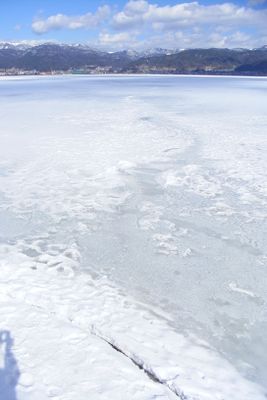
Religious observers documented freezing patterns starting in 1443, creating one of the world's longest climate records. These records emerged through shrine priests who monitored ice formation as a spiritual duty.
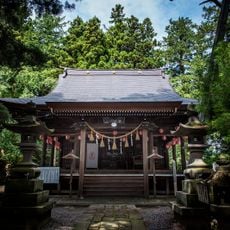
Lake Suwa's shores hold two major shrines, Suwa-taisha and Tenaga Jinja, and the year's festivals include Onbashira and Setsubun. The winter ice ridges are read as the god Takeminakata crossing to his wife Yasakatome, and the shrine priests' records of that crossing go back to 1443.
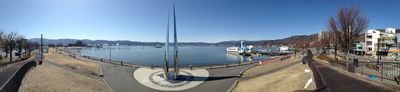
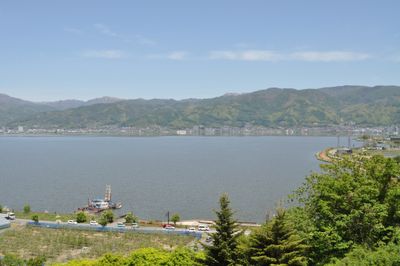
A jogging and cycling route runs around the lake, and sightseeing boats, water-skiing and pedal boats operate on the water. The lake is shallow and its ice is uneven in thickness, so walking on a frozen surface is dangerous. In winter, swans visit the lake.
During winter, pressure forces create ice ridges called Omiwatari that cross the surface. Local religious traditions understand these formations as paths made by crossing deities.
The community of curious travelers
AroundUs brings together thousands of curated places, local tips, and hidden gems, enriched daily by 92,307 contributors worldwide.