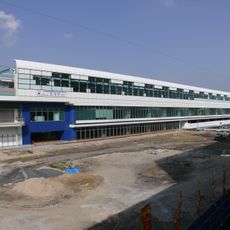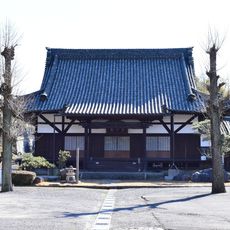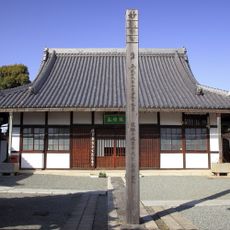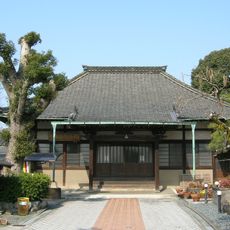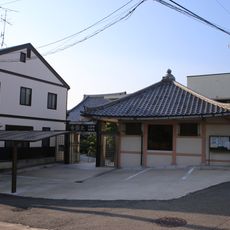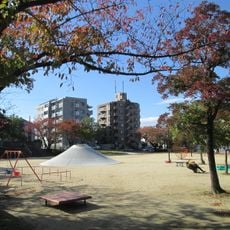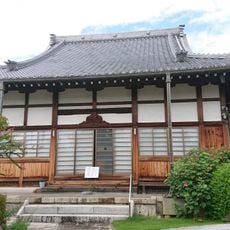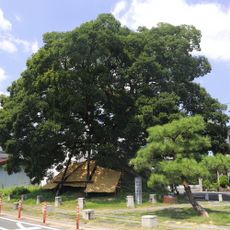
Hoshizaki Castle, Japanese castle ruins in Motohoshizaki-cho, Minami-ku district of Nagoya, Japan.
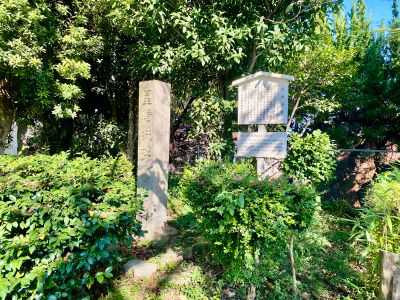
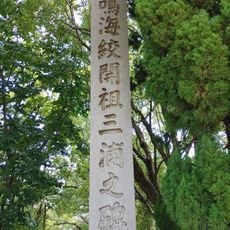
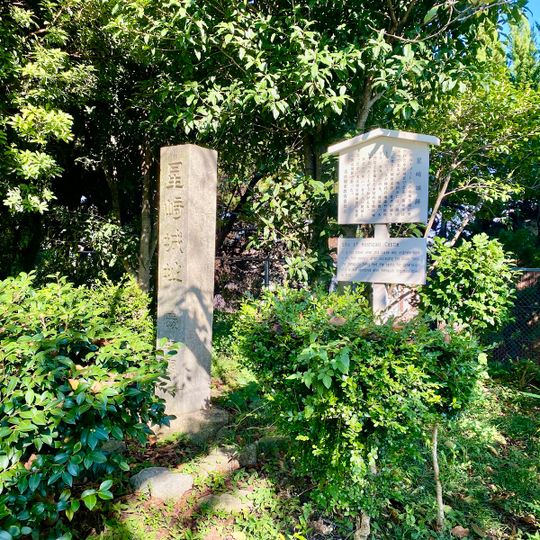
Hoshizaki Castle was a flatland castle measuring about 47 metres east-west and 61 metres north-south, with Honmaru, Ninomaru and Sannomaru enclosures. Today the site in Motohoshizaki-cho is occupied by Nagoya Municipal Kasadera Elementary School and housing; only a well and stone memorial steles at the school and nearby Akiba Shrine remain.
The Japanese sources record that Yamada Shigetada built Hoshizaki Castle during the Jishō era (1177–1181); the Yamada later left and it fell into disuse. In the Sengoku period the local magnate Hanai Uemonbei held it, then Oda Nobunaga confiscated his lands and installed Okada Naonori. In 1584 Okada's retainer Yamaguchi Shigekatsu became lord; after Toyotomi Hidetsugu's forced suicide in 1595, Shigekatsu too took his own life. The castle was abandoned when Yamaguchi Shigemasa exchanged it for Mōtoku Castle.
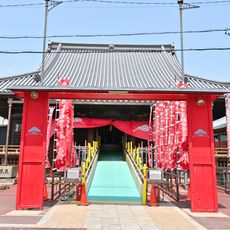
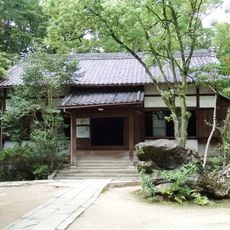
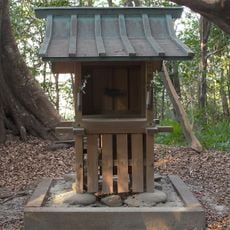
The nearby Hoshimiya Shrine served as a place of worship for the local community while also functioning as a landmark for maritime travelers. This dual purpose shows how structures in the region were designed to meet both spiritual and practical community needs.
The Meitetsu railroad line runs through the former castle grounds, with Moto Hoshizaki Station providing convenient access to the site. Visitors should expect that the grounds are now part of an urban area, so exploring the historical remains takes patience and attention to detail.
The castle measured roughly 47 metres east-west by 61 metres north-south, and the Honmaru, Ninomaru and Sannomaru enclosures lay within it. The Hoshimiya Shrine attached to the complex doubled as a lighthouse for ships on the nearby sea. Only a well survives today; stone steles stand at Kasadera Elementary School and at the nearby Akiba Shrine.
The community of curious travelers
AroundUs brings together thousands of curated places, local tips, and hidden gems, enriched daily by 94,537 contributors worldwide.