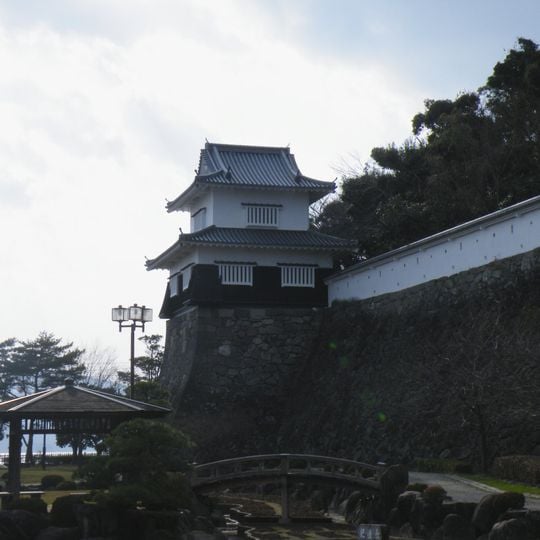
Kushima Castle, Japanese castle in Omura, Japan
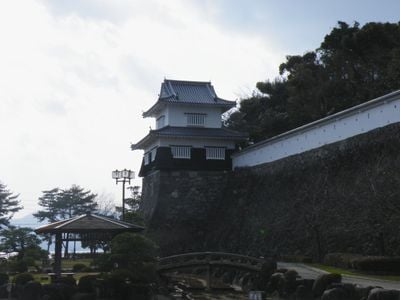
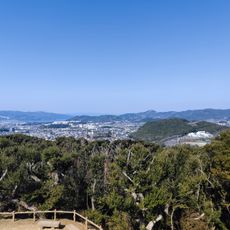
Kushima Castle is a hilltop castle on a peninsula in Ōmura Bay, made up of three baileys: the roughly square honmaru on a 15-metre-high stone base, the ninomaru with a large dry moat, and the flat sannomaru where the domain's ship storehouses stood. No keep was ever built; the present tower is a 1992 wooden reconstruction of the Itajiki Yagura.
The castle was begun in 1598 by Ōmura Yoshimasa (喜前), who moved his seat there from Mitsushiro Castle the following year, after Hideyoshi's death left the region unsettled. In 1614 his son Sumiyori rebuilt it with stone walls in the uchikomi-tsugi style, guided by Katō Kiyomasa. It remained the Ōmura domain's seat until 1871, when the buildings were demolished.
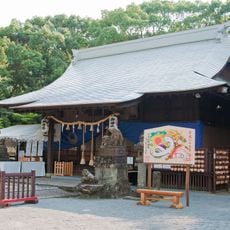
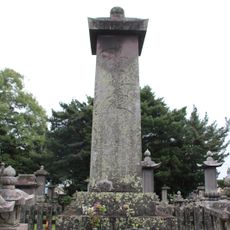
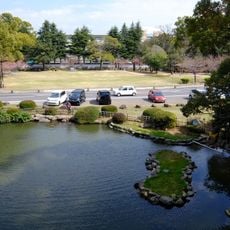
The castle grounds are now Ōmura Park, home to the Ōmura sakura, a cherry tree designated a natural monument, and irises that bloom in season. On the honmaru site stands Ōmura Shrine, founded in 1884, where a statue of Ōmura Sumihiro, the last daimyō, can be seen.
The original stone walls surrounding the outer area can be explored on foot, with the three gate locations marking key entry points along the perimeter. Visiting during flower blooming seasons offers the best experience of both the fortress structure and the park grounds.
On the shallow north side, the builders sank a sunken moat (sutebori) into the sea floor to stop enemy troops wading across at low tide. The northern shore has since been reclaimed, and no other Japanese castle is known to have used this device.
The community of curious travelers
AroundUs brings together thousands of curated places, local tips, and hidden gems, enriched daily by 94,311 contributors worldwide.