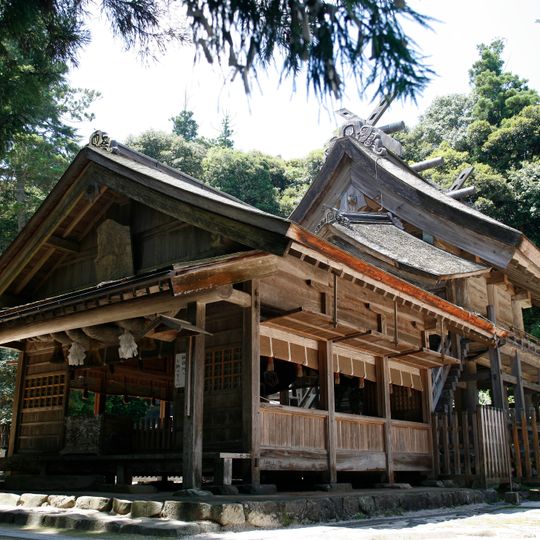
Kamosu Shrine, Shinto shrine in Matsue, Japan
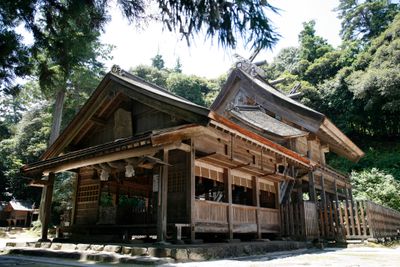
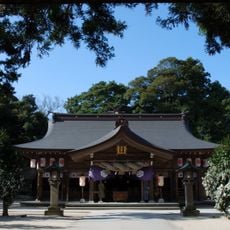
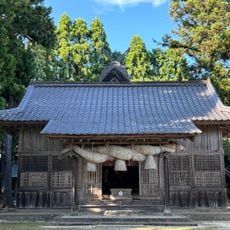
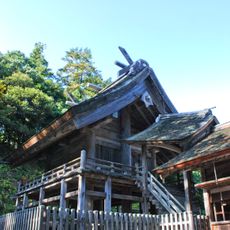
Kamosu Jinja is a Shinto shrine in Matsue whose honden, rebuilt in 1583, is the oldest surviving example of Taisha-zukuri, a style found only in eastern Shimane. The 5.5-metre-square hall has a chestnut-bark roof with three katsuogi and inward-cut chigi, and its interior beams and pillars are painted vermilion, with polychrome paintings by Kano Sanraku and Tosa Mitsuoki on the walls and a dragon and clouds on the central beam.
The earliest written mention of this place dates to 1208, and the current main building was constructed in 1583. Over the centuries, the site remained a place of worship and underwent several renovations to preserve its traditional building techniques.
Locals call the shrine "Kamosu-san" or "Oba no Omiya-san". Until the early Meiji period the Izumo Kokuzo came here for the Ohichigishiki fire-succession rite and the Koden Niiname-sai, in which sacred fire cooked rice and one-night sake were offered to the deities before being eaten. The Okama Shinji on 13 December recalls the legend that Ame-no-Hohi-no-Mikoto arrived in Oba riding a cauldron.
The grounds are accessible by taking the municipal bus or Ichibata bus lines, and a short walk from the stop leads to the entrance. Access is free, and the paths inside the courtyard are covered with gravel, so comfortable footwear is helpful.
Ancient iron pots kept inside are said to have been used by deities during their descent from the heavens, according to local legend. Visitors can view these pots through a small window at the rear of the main building.
The community of curious travelers
AroundUs brings together thousands of curated places, local tips, and hidden gems, enriched daily by 93,921 contributors worldwide.