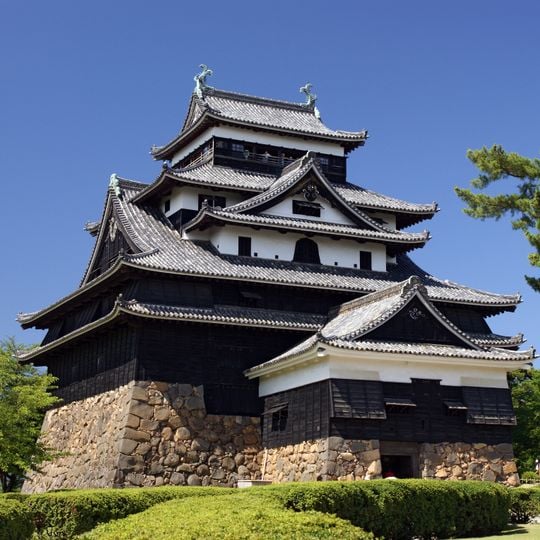
Matsue Castle, Edo-period castle in Matsue, Japan
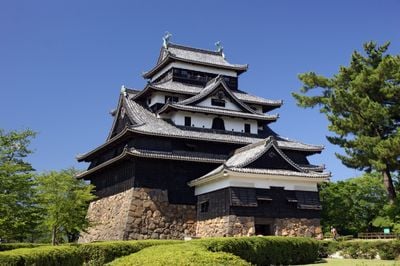
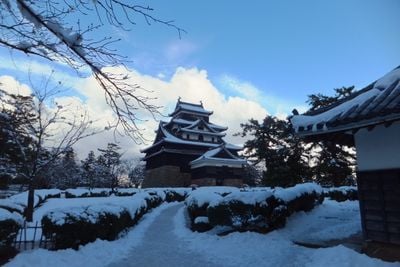
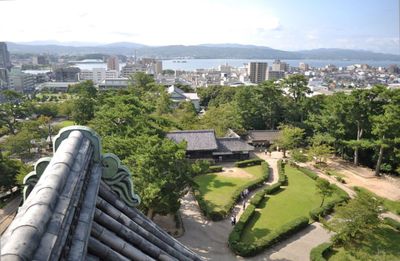
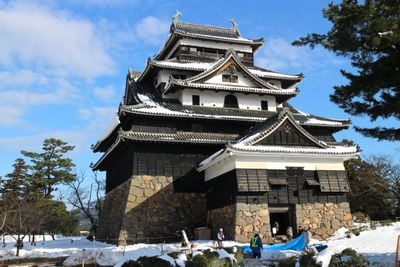
Matsue Castle is a wooden keep on Kameda Hill in Matsue, built from 1607 to 1611. Its exterior shows four roofs, while inside there are five floors and a basement. The lower walls are black-painted vertical boards, the upper walls white plaster, and the roofs grey tiles with two fish-shaped ornaments on the top ridge.
Horio Yoshiharu constructed the castle between 1607 and 1611 after gaining control of the region. The Matsudaira clan later took over and ruled the surrounding territory from here for more than two centuries.
The castle is also called Chidori Castle (Plover Castle). The keep served as a storehouse in peacetime, while the honmaru was a keep for wartime use only. The shachihoko on the top roof are wooden with copper sheeting, about 2 m tall, the largest among surviving keeps; the originals are displayed separately.
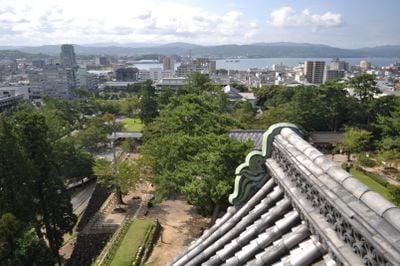
The site opens daily and welcomes visitors from 8:30 in the morning, with closing times that shift depending on the season. Guided tours are available and boat rides on the moat offer a different view of the walls and towers.
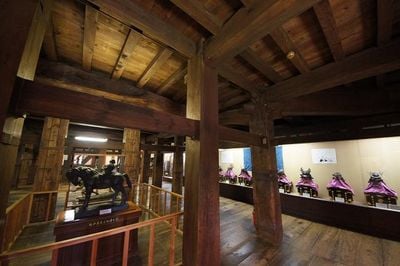
The keep's underground well is the only surviving example in Japanese castle architecture, and its wooden shachihoko ornaments, about 2 m tall, are the largest among extant keeps. The castle also holds the only Edo-period keep model among Japan's five National Treasure castles.
The community of curious travelers
AroundUs brings together thousands of curated places, local tips, and hidden gems, enriched daily by 94,046 contributors worldwide.