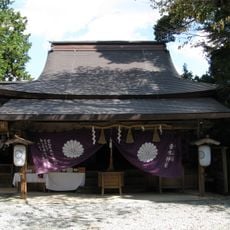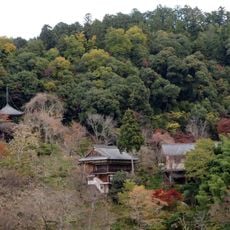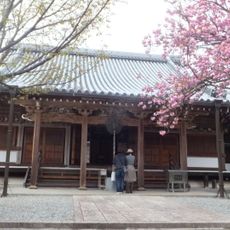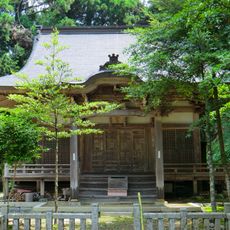
Kinpu Shrine, Shinto shrine in Yoshino, Japan.
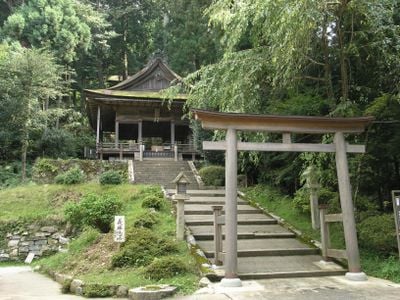
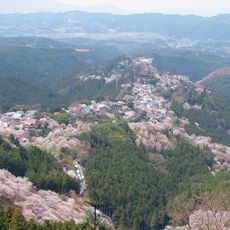
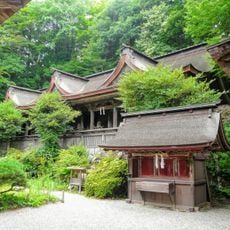
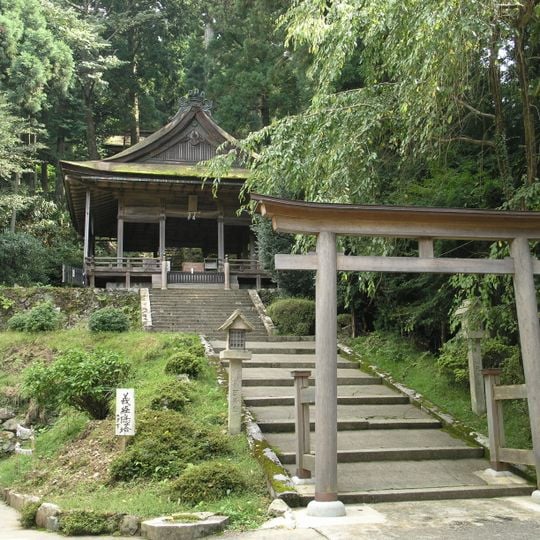
Kinpu Shrine stands near Aonega Peak at the deepest point of Mount Yoshino, in Yoshino, Nara Prefecture. Its honden is built in the nagare-zukuri style, with a roof sloping down toward the front. A stone staircase climbs to the wooden worship hall, framed by a large torii gate of weathered wood; a small lantern beside the stairs bears the inscription "義春塔".
The shrine's founding is unknown. From the Middle Ages it served as a training site for Shugendo ascetics, and the Heian-period Eiga Monogatari records that Fujiwara no Michinaga visited. Before the Meiji era it was called Konsho Myojin, a syncretic deity whose Buddhist counterparts were Akshobhya, Shakyamuni and Mahavairocana. In 2004 its grounds became part of the UNESCO World Heritage Site Sacred Sites and Pilgrimage Routes in the Kii Mountain Range.
The shrine's deity, Kanayamahiko-no-mikoto, is the guardian of Yoshino mountain; the name Kinpu reflects a belief that the peak holds gold. Before the Meiji era the shrine was called Konshō Myōjin, a Shugendō site where Buddhist and Shinto practice merged, with Aizen, Shaka and Dainichi as its original Buddhas.
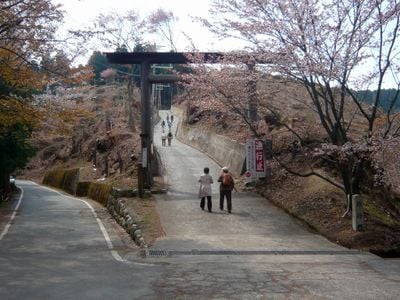
From Kintetsu Yoshino Station take the Yoshino Ropeway to Yoshinoyama, then walk about 1 hour 45 minutes; alternatively a bus from Yoshinoyama Station reaches Okusenbon-guchi in 23 minutes, with 5 minutes on foot from there. The shrine stands beside Aonega-mine, the farthest point of Yoshinoyama, so allow time for the climb.
The shrine grounds contain the Kakureto pagoda, a structure with medieval roots. Local tradition holds that it once served as a hiding place for the 12th-century warrior Minamoto Yoshitsune.
The community of curious travelers
AroundUs brings together thousands of curated places, local tips, and hidden gems, enriched daily by 94,477 contributors worldwide.