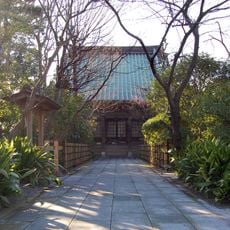
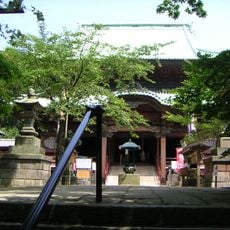
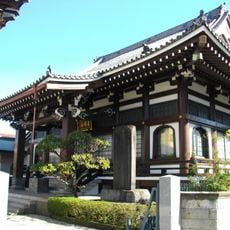
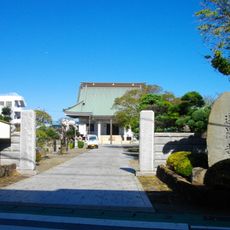
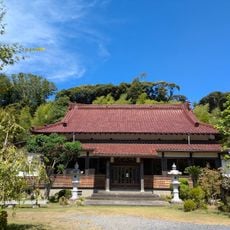
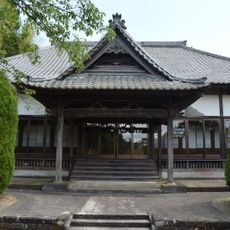
Kōzō-ji, Buddhist temple in Kisarazu, Japan.
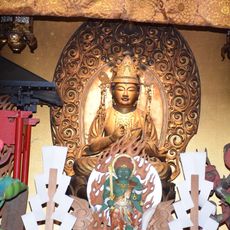
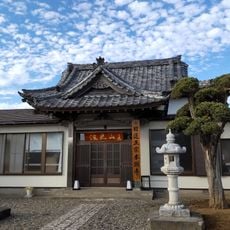
Kōzō-ji is a Buddhist temple in Kisarazu, Chiba Prefecture, holding the 30th position in the Bandō Sanjūsankasho pilgrimage circuit, a series of 33 temples dedicated to Kannon. The temple houses a statue of Shō Kannon, a specific manifestation of this revered deity.
Legend attributes the temple's founding to the brief reign of Emperor Yōmei (585–587), when the monk Tokugi enshrined a small Kannon image later placed inside one carved by Gyōki. Fujiwara no Kamatari, whose mother received a vision here, rebuilt it as a shichidō garan with a three-story pagoda. The Kannon-dō was probably rebuilt in 1526.
Kōzō-ji is the 30th stop on the Bandō Sanjūsankasho, a 33-temple Kannon pilgrimage across eastern Japan, and its amulets are valued throughout the country. Its honzon is a 3.6-metre Shō Kannon carved from a single camphor tree, once a hidden hibutsu image and now shown to visitors. Observances include Setsubun on 2 February, the Kannon Festival on 18 August and the New Year bell ringing 108 times.
Kōzō-ji stands in the Yana neighbourhood of Kisarazu, about an hour by bus from Kisarazu Station on the JR East Uchibō and Kururi lines. The temple observes Setsubun on 2 February, the equinox Higan services in March and September, the Kannon Festival on 18 August, a Segakie memorial on 24 August, and Joya no Kane, 108 bell rings, in December.
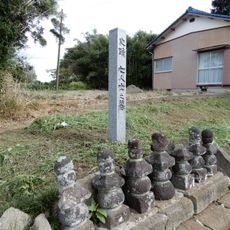
The honzon is a 3.6-metre Shō Kannon carved from a single camphor tree; it was formerly a hibutsu hidden image and is now shown to the public. Amulets issued here are valued throughout Japan. In the grounds stands a stone said to be where Fujiwara no Kamatari rested in July 650.
The community of curious travelers
AroundUs brings together thousands of curated places, local tips, and hidden gems, enriched daily by 94,135 contributors worldwide.