Przhevalsky Museum, Memorial museum in Pristan'-Przheval'sk, Kyrgyzstan
The Przhevalsky Museum displays personal belongings, expedition equipment, and scientific specimens gathered during journeys across Central and Eastern Asia. The collection includes over 2,000 items, featuring preserved flora and fauna samples that showcase the breadth of what was documented.
Nikolai Przhevalsky died of typhoid in Karakol on 20 October 1888 and was buried on the steep shore of Issyk-Kul, 12 versts from the city, as he had wished. In 1900 a 9-hectare garden was laid out around the grave and monument. The museum beside the grave opened in 1957; in 2002 the whole memorial complex was listed as a monument of republican significance.
The exhibition displays original manuscripts, photographs, and maps that document how remote regions in Mongolia, China, and Tibet were first observed and recorded for European audiences. Walking through these materials gives visitors insight into how geographical knowledge was built in the 19th century.
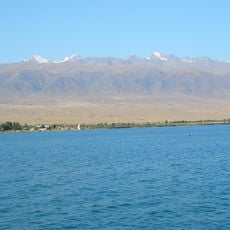
The complex lies in the town of Pristan'-Przheval'sk, 12 km northwest of Karakol on the high shore of Lake Issyk-Kul. The grounds cover 9 hectares, with the grave and monument at the centre and the two museums, chapels and memorials around them; allow time to walk between them.
The bronze eagle on the memorial's rock is not a separate sculpture but the top of the 1894 monument to Przhevalsky, cast in St Petersburg from a model by sculptor I. N. Shreder. Its wingspan is 2.5 metres, and beneath its talons lies a half-unrolled bronze map of Central Asia marked with his expedition routes.
The community of curious travelers
AroundUs brings together thousands of curated places, local tips, and hidden gems, enriched daily by 93,629 contributors worldwide.