Issyk kurgan, Burial mound in Almaty Region, Kazakhstan
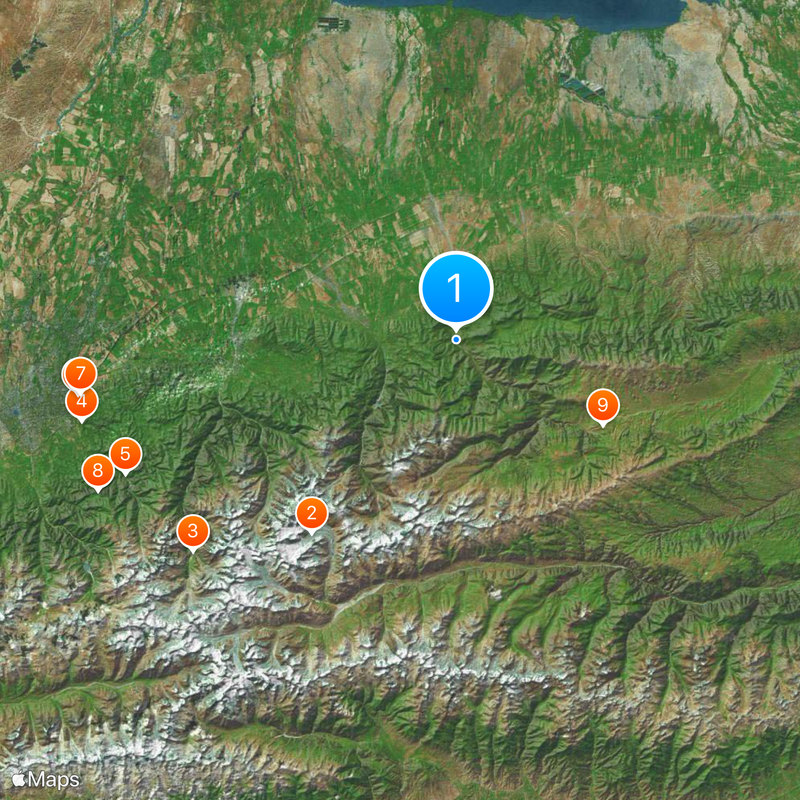
Issyk kurgan is a Saka burial mound on the left bank of the Issyk river, southwest of the town of Esik. The main mound measures 60 meters across and 6 meters high, with a side chamber built of fitted spruce logs. The wider cemetery holds 45 earthen mounds, 30 to 90 meters wide and 4 to 15 meters tall, spread over 3 square kilometers.
The Zhetysu archaeological expedition led by Kemal Akishev excavated the site in 1969–70. In the side chamber of the 60-metre-wide, 6-metre-high central mound they found the 'Golden Man' with over 4,000 gold ornaments, an iron sword and dagger, a bronze mirror and vessels. A silver bowl bearing a 26-sign inscription, the Issyk written monument, came from the same burial.
The silver bowl found in the side chamber carries a 26-sign inscription, known as the Issyk written monument. Scholars agree it is alphabetic writing, and its presence is taken as evidence of a state-level society among the Saka. The burial also held a bronze censer on a conical stand, the first of its kind found in Semirechye, in which aromatic substances were burned during rituals.
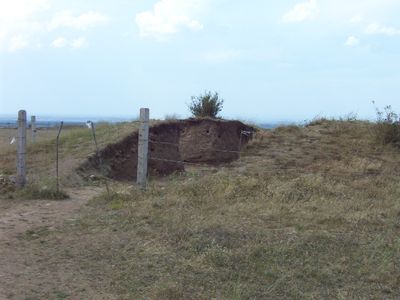
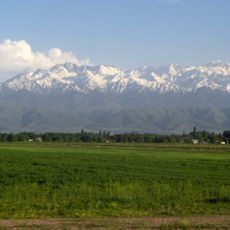
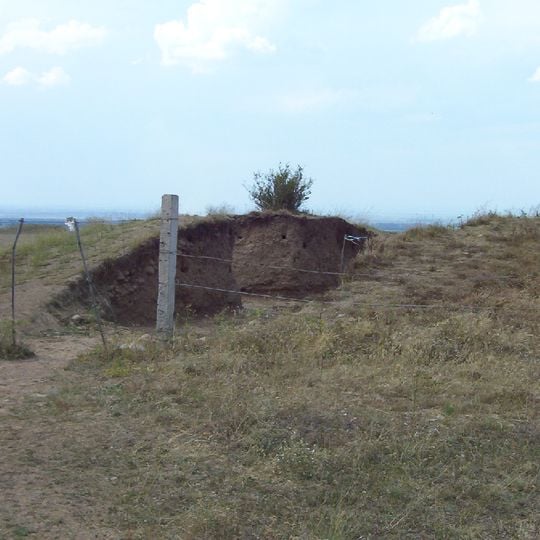
The mounds lie on the left bank of the Issyk river at the south-western edge of Esik town, about 50 km east of Almaty. The excavated kurgan is a low earthen mound with a cut face held by a wire fence on a concrete post; the ground is dry grassland, so wear sturdy shoes and carry water.
Skeletal remains studied by researchers show a blend of European and Mongoloid features, pointing to connections with Semirechye Saka tribes. These physical characteristics offer clues about the origins and movements of this ancient population group.
The community of curious travelers
AroundUs brings together thousands of curated places, local tips, and hidden gems, enriched daily by 93,518 contributors worldwide.