Chilbosan, Mountain summit in North Hamgyong Province, North Korea
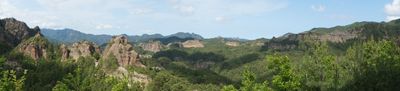
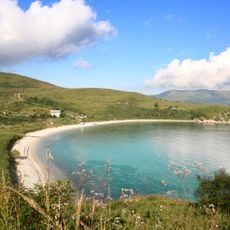
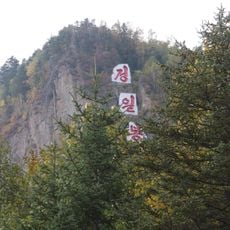
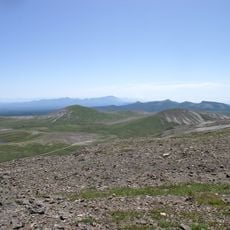
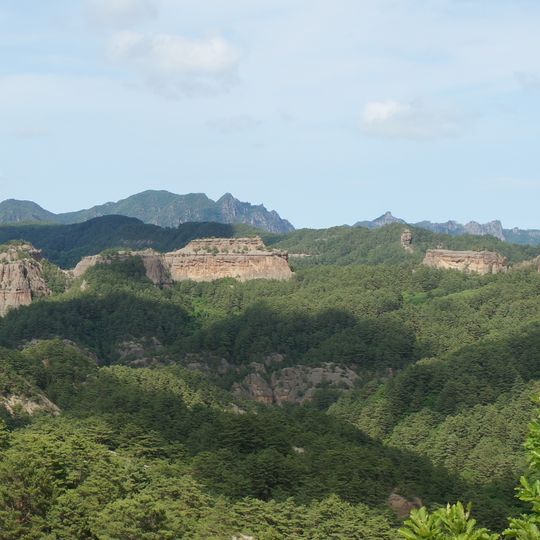
Chilbosan is a 659-metre mountain in North Hamgyong Province, spread across Myongchon, Hwadae, Myongan and Orang counties and covering about 250 km2. It is built of basalt, trachyte and flow-banded rock from volcanic activity, weathered into odd-shaped peaks and crags. It is divided into Inner Chilbo, with peaks such as Nodokbong and Manwolbong, Outer Chilbo, and Sea Chilbo, where cliffs and sea stacks line the coast.
Chilbosan's recorded history centres on Kaesim Temple, a Buddhist monastery founded in the 9th century and counted among the oldest in the region. The mountain's three divisions — Inner Chilbo, Outer Chilbo and Sea Chilbo — are named in Korean accounts of the massif, and Inner Chilbo holds the temple along with a protected tree over 200 years old.
The name Chilbosan means "seven treasures", from a legend that seven treasures lie buried in the mountain; it is also rendered as Seven Jewelled Mountain. The mountain is divided into Inner Chilbo, Outer Chilbo and Sea Chilbo, and North Koreans call it the "Kumgang of North Hamgyong" for its scenery.
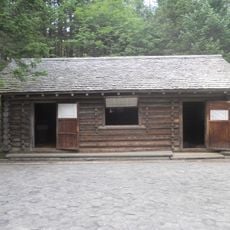
The mountain spans the counties of Myongchon, Hwadae, Myonggan and Orang. Access to Inner Chilbo runs via Chonghak-dong in Hwanggok-ri, Myongchon County, up a steep vehicle road to Pakdal Pass. Hot springs of 52 to 73 degrees rise at Hwangjin near Outer Chilbo, where the Hwangjin sanatorium takes guests; a Chilbo Mountain rest house sits in Chonggye Valley.
BirdLife International lists Chilbosan as an Important Bird Area for its Oriental storks and critically endangered Baer's pochards. The mountain lies across Myongchon, Hwadae, Myongan and Orang counties, and a 30,000-hectare national park covers most of it.
The community of curious travelers
AroundUs brings together thousands of curated places, local tips, and hidden gems, enriched daily by 95,566 contributors worldwide.