Paektusan Secret Camp, Military camp and museum in Samjiyon, North Korea.
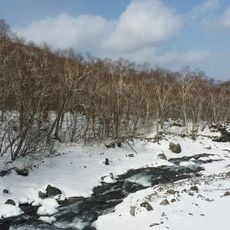
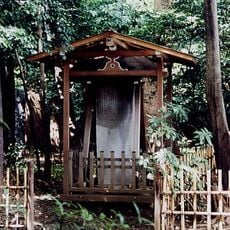
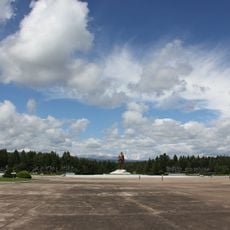
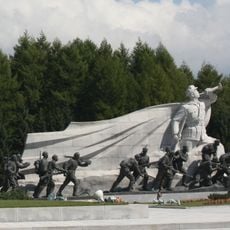
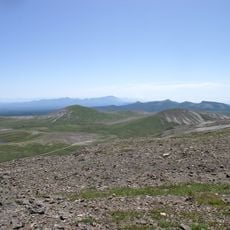
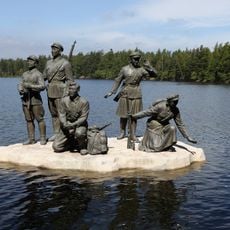
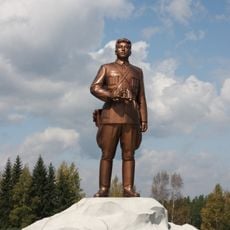
Paektusan Secret Camp is a former guerrilla base in the Sobaeksu valley, at the foot of Jongil Peak (1,798 m) in Samjiyon, Ryanggang Province. The site holds a reconstructed log cabin, a headquarters house, guard posts, a sewing workshop, a secretariat, two natural springs and control huts. It also displays tree trunks from which partisans peeled bark to write anti-Japanese appeals.
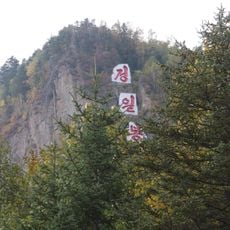
The camp was the main base of the Korean People's Revolutionary Army in the Mount Paektu area from the second half of the 1930s until Korea's liberation in 1945. In September 1936 Kim Il-sung proposed placing the headquarters in the Sobaeksu valley. From the 1980s the former camp was laid out as a site of revolutionary glory, with the log cabin rebuilt in 1987 and the nearby 1,793 m peak renamed Jongil Peak in 1988.
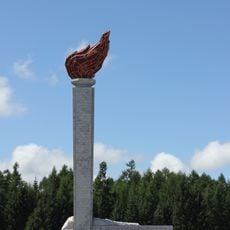
North Korean state institutions connect this location to Kim Jong-Il's birth in 1942 as part of the national leadership narrative. Monuments throughout the site emphasize this historical connection that remains central to the country's official story.
Visitors require official authorization to reach the site, which is accessible between May and September. Access is arranged through chartered flights from Pyongyang to Samjiyon Airport in the mountainous region.
The camp appears on the front of a 2000-won banknote of the Central Bank of the DPRK, and the Korean Central Television weather forecast names it alongside Pyongyang and provincial cities. The site also holds tree trunks from which partisans stripped bark to write appeals against the Japanese occupiers.
The community of curious travelers
AroundUs brings together thousands of curated places, local tips, and hidden gems, enriched daily by 94,109 contributors worldwide.