Yongmyongsa, Buddhist temple at Moranbong hill base, Pyongyang, North Korea
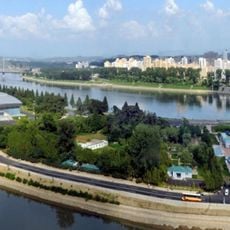
Yongmyongsa is a Buddhist temple situated at the base of Moranbong hill in Pyongyang, designed in traditional Korean architectural style. The grounds hold stone pagodas and an octagonal shrine positioned among trees and near the Taedong River.
The site was established during the Goguryeo kingdom period when Buddhism was expanding throughout the Korean peninsula. It underwent significant reconstruction in the 1920s and briefly served as a headquarters for Japanese Zen Buddhist activities.
The temple's name, Yongmyongsa ("Temple of Eternal Brightness"), was rendered in Japanese as Eimei-ji during the colonial period. The site appears in Korean literature: Kim Si-seup identified it with King Dongmyeong's Gugye Palace, and a poem by Yi Saek describes the temple and Pubyok Pavilion. A 19th-century text preserves the dedication inscription of the temple's Deungwol Pavilion.
Access requires arrangements through authorized North Korean tourism agencies due to strict regulations governing foreign visits to the site. Travelers should secure all necessary permits in advance and follow local guidelines while present.
Pubyok Pavilion was rebuilt after the Korean War, so it is not an original wartime survivor. The temple's stone pagoda and octagonal shrine did survive the bombings, and all three structures are registered as National Treasures of North Korea.
The community of curious travelers
AroundUs brings together thousands of curated places, local tips, and hidden gems, enriched daily by 93,458 contributors worldwide.