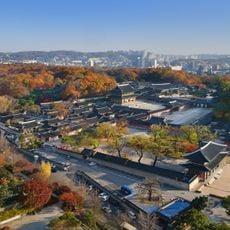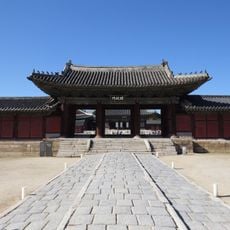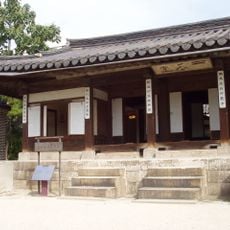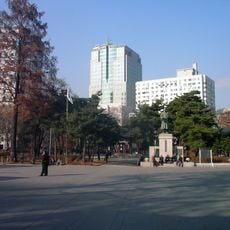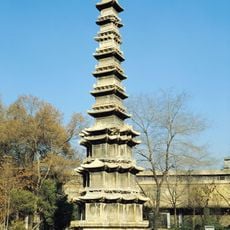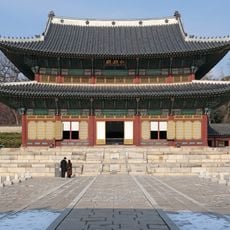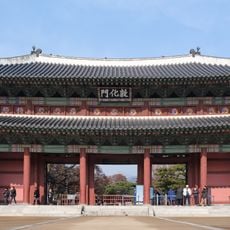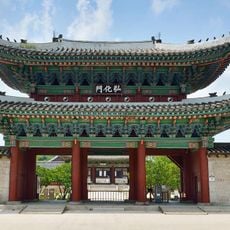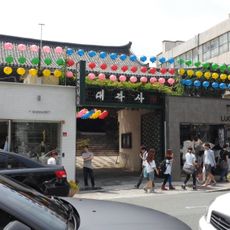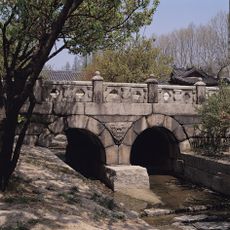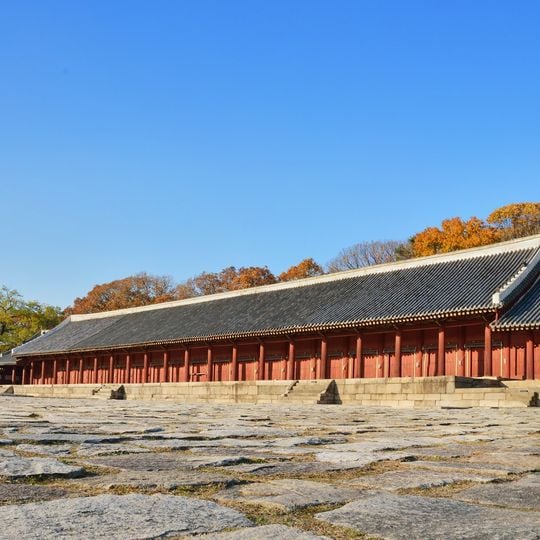
Jongmyo, Confucian shrine in Jongno District, Seoul, South Korea.
Jongmyo is a Confucian royal ancestral shrine in Jongno District, Seoul, consisting of the Jeongjeon main hall and the Yeongnyeongjeon hall. Jeongjeon is Korea's longest building in traditional design, with 19 niches holding 19 king tablets and 30 queen tablets. The complex sits at the foot of hills, and its buildings are deliberately plain, with minimal decoration and restrained dancheong painting.
The shrine was founded in 1394 under King Taejo as one of Korea's oldest surviving royal ancestral complexes. It was reconstructed in the early 1600s following destruction during the Japanese invasions and restored to its current appearance.
The Jeongmyo Daeje rite is held each year on the first Sunday of May, performed by the Jeonju Lee Royal Family Association with music and dance from the National Center for Korean Traditional Performing Arts and the Gukak National High School. King Sejong composed new ritual music in 1447, drawing on hyangak, and the ceremony was inscribed by UNESCO in 2001.
Visitors can explore the complex through guided tours available in multiple languages, with certain areas reserved for the annual May ceremonies. It is helpful to wear comfortable shoes and allow time for slow, attentive exploration of the grounds.
During the 1592–1598 Japanese invasions the shrine was burned, but the original spirit tablets survived because they were hidden in a commoner's house. The Jeongjeon hall standing today was rebuilt from 1608 and holds 19 tablets of kings and 30 of queens in 19 niches. A panel beside each tablet lists that king's achievements.
The community of curious travelers
AroundUs brings together thousands of curated places, local tips, and hidden gems, enriched daily by 93,473 contributors worldwide.