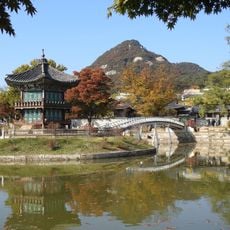
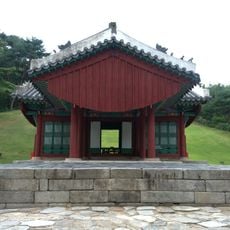
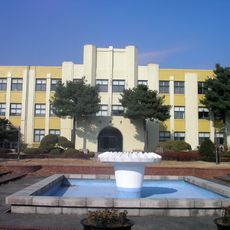
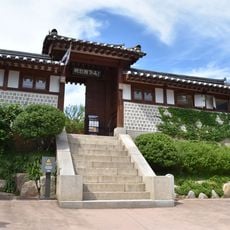
Bugaksan, Mountain and scenic site in northern Seoul, South Korea.
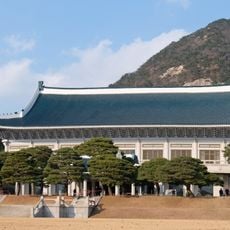
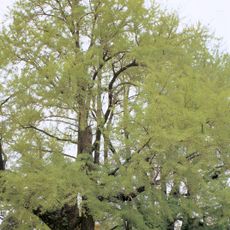
Bugaksan is a granite mountain about 342 metres high in northern Seoul, rising behind Gyeongbokgung Palace and the Blue House. Its bedrock is Jurassic Daebo granite, and 208 plant species, including 81 trees, grow on its slopes. Sukjeongmun gate sits on its eastern ridge and Changuimun at the western foot; Samcheong Park lies on the southeast slope.
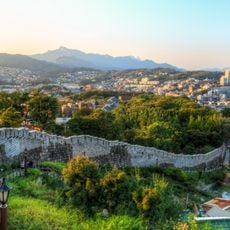
The mountain formed part of the original fortification system built when the Joseon capital was established in the 14th century, with the city wall following its ridge. After an armed raid in 1968, the entire area was closed to the public for nearly 40 years and only reopened in 2006.
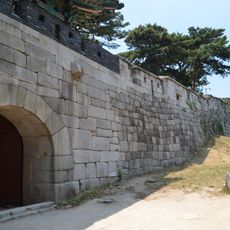
The trails run alongside long stretches of the old city wall, and walkers can stop to look at the stone construction up close at several points along the route. In Korean geomancy, this mountain is considered the northern guardian of Seoul, which is why the main royal palace was built directly at its foot.
Entry to the trails requires identity checks, so visitors must carry an ID; hiking is barred on Mondays and on the day after public holidays. Access is limited to daytime hours, and some sections may close depending on weather or security conditions.
The Cheonggyecheon stream, which flows through central Seoul and is often seen as a purely urban feature, actually originates on the slopes of this mountain. The Bugak Skyway, a driving road along the northeast ridge open since 1968, offers a way to see the summit area without hiking.
The community of curious travelers
AroundUs brings together thousands of curated places, local tips, and hidden gems, enriched daily by 93,467 contributors worldwide.