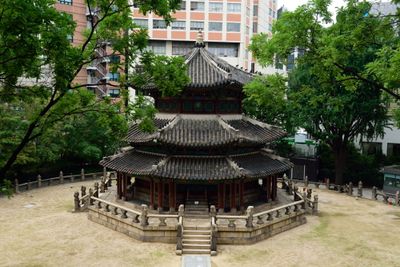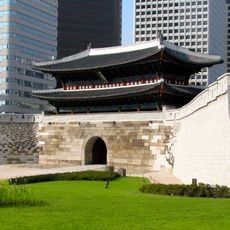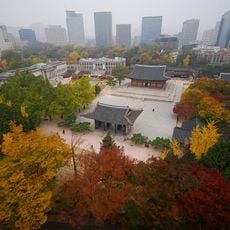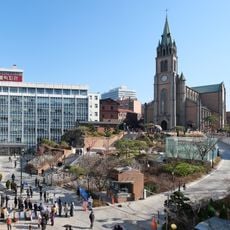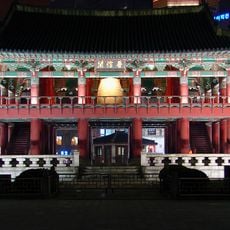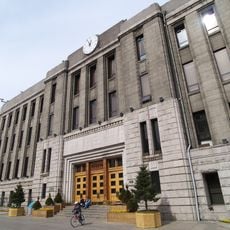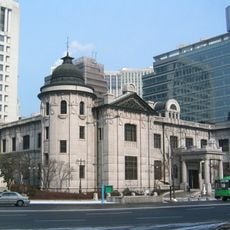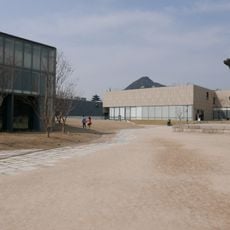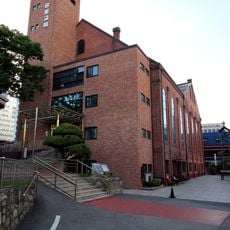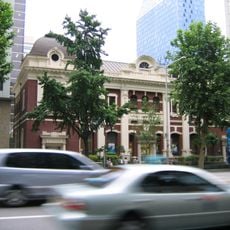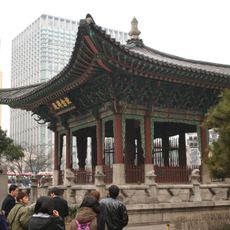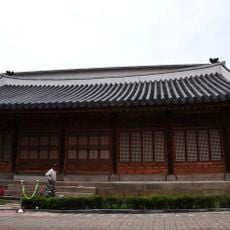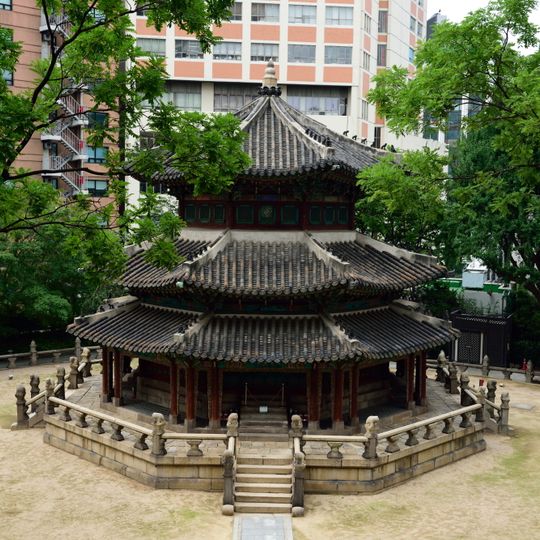
Hwangudan, Imperial altar in Jung District, Seoul, South Korea.
Hwangudan is an octagonal three-story structure featuring stone platforms and granite walls that express Korean imperial architecture. The building contains carefully arranged levels designed to host court ceremonies and religious observances for the nation's rulers.
Emperor Gojong built this altar in 1897 to mark Korea's transformation from a Chinese tributary state into an independent empire through ceremonial rituals. The structure symbolized the break from previous political dependence and the establishment of new imperial sovereignty.
The site held ritual ceremonies honoring celestial powers and royal ancestors according to Joseon Dynasty traditions. These observances reflected how Koreans connected their earthly rulers to forces beyond the physical world.
The memorial sits on the grounds of the Westin Chosun Hotel and can be reached through City Hall Station exits 6 or 7. Both subway lines 1 and 2 serve this station, offering different route options for visitors approaching the area.
Three stone drums carved in 1902 with dragon patterns mark the 40th year of Emperor Gojong's rule. These crafted objects show how imperial power was commemorated through carefully made stone monuments.
The community of curious travelers
AroundUs brings together thousands of curated places, local tips, and hidden gems, enriched daily by 92,178 contributors worldwide.