Hyehwamun, City gate in Seongbuk-gu, Seoul, South Korea
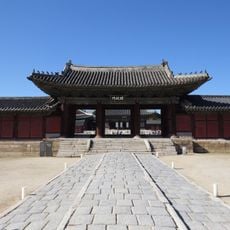
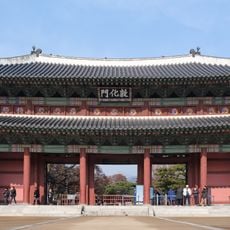
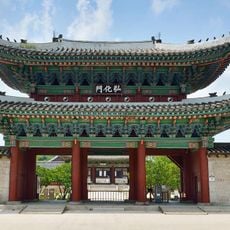
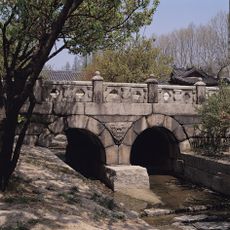
Hyehwamun is a city gate near Seoul City Wall in the northern area, featuring a stone archway supporting a wooden gatehouse with colorful painted decorations. The structure stands as part of the walled perimeter that once protected the city.
Built in 1396 under King Taejo as Honghwamun, the gate was renamed Hyehwamun in 1511 to avoid confusion with Changgyeonggung Palace's east gate. Its wooden gatehouse burned in 1592 and was rebuilt in 1744 with a plaque by Jo Myeong-ri. The gatehouse was demolished in 1928, and the stone arch was removed in 1938 for a tram line; the gate was rebuilt in 1994, 13 metres northwest of its original site.
The gate was first called Honghwamun, but because that name clashed with the Honghwamun gate of Changgyeonggung Palace, built in 1483, it was renamed Hyehwamun in 1511. The gate served as a site for military examinations and as a place where the king communicated with common people. During state funerals, the funeral and return processions passed through it.
The gate stands on Dongsomun-ro, a busy street; the fortress wall continues north of it and resumes across the road toward Heunginjimun. Reach it on Line 4 from Hansung University Station exit 5, about 1.5 blocks away, or Hyehwa Station exit 4. Visitors may walk in front of, behind and beneath the arch, but the wooden gatehouse above is closed and a laser alarm guards it.
The gate was reconstructed in 1992 at a spot slightly north of where it originally stood, after being absent from the city for decades. This rebuild shows how the city worked to bring back lost monuments.
The community of curious travelers
AroundUs brings together thousands of curated places, local tips, and hidden gems, enriched daily by 93,567 contributors worldwide.