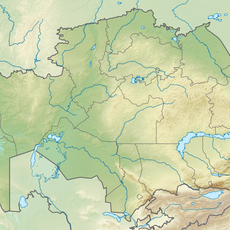
Schülbi-Talsperre, Reservoir in Kazakhstan
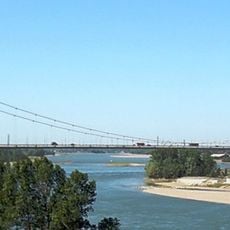
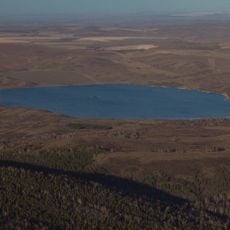
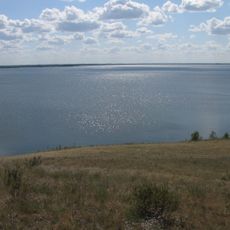
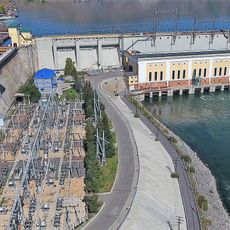
The Schülbi-Talsperre is a large dam in Kazakhstan that spans across the valley to manage water storage. The concrete structure crosses the Irtysch River valley and creates a wide body of water stretching over 50 kilometers along the river.
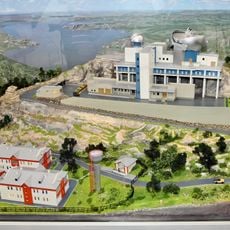
The reservoir was created by the dam of the Shulba hydroelectric station on the Irtysh; its first phase was put into operation in 1989. It is the third and last reservoir in the Upper Irtysh cascade, after Bukhtarma. It regulates the lateral tributaries between the Bukhtarma and Shulba stations and stores water from the Ulba and Uba rivers, which is released in spring to flood the Irtysh floodplain.
The reservoir takes its name from the Shulbinka river valley and the settlement of Shulbinsk on its western shore. Its water is held at a constant 240 m level and released each April and May, when the level drops by 8 m over 13 to 20 days to flood the Irtysh floodplain meadows. The reservoir is fished for pike, zander, bream and roach.
The reservoir lies between the Bukhtarma and Shulba hydroelectric stations on the Irtysh, with the settlement of Shulbinsk on the western shore. Its level is held at 240 m year-round, but drops by 8 m for 13 to 20 days in April and May when the Irtysh floodplain is flooded. The deepest point, 30 m, is in the old river channel.
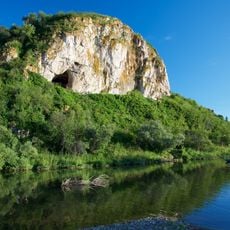
The reservoir flooded a burial mound complex of the 2nd–1st centuries BC, the Karashat kurgans, and a Mousterian site at Shulbinka. The flooded area covered 22,800 hectares of pasture, hay meadows and floodplain forest. The reservoir is the third and last in the Upper Irtysh cascade.
The community of curious travelers
AroundUs brings together thousands of curated places, local tips, and hidden gems, enriched daily by 94,020 contributors worldwide.