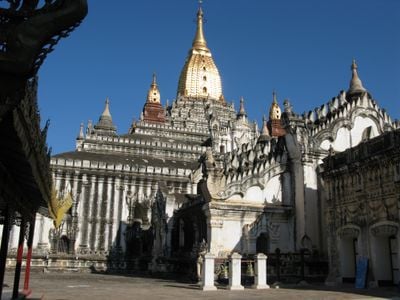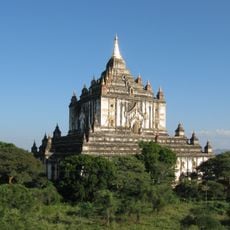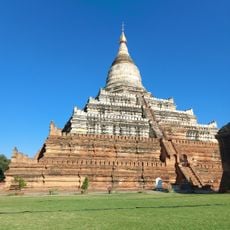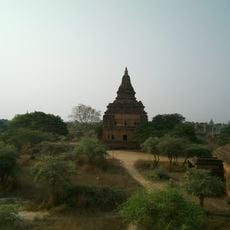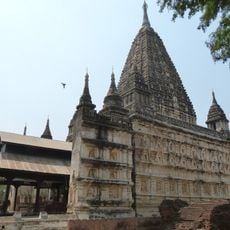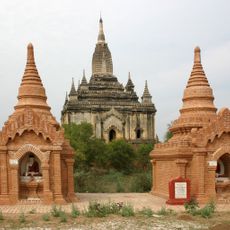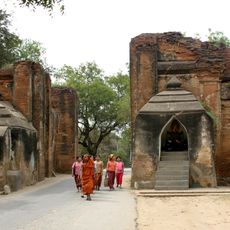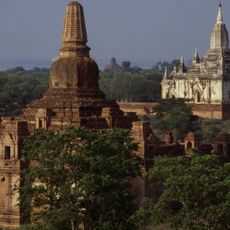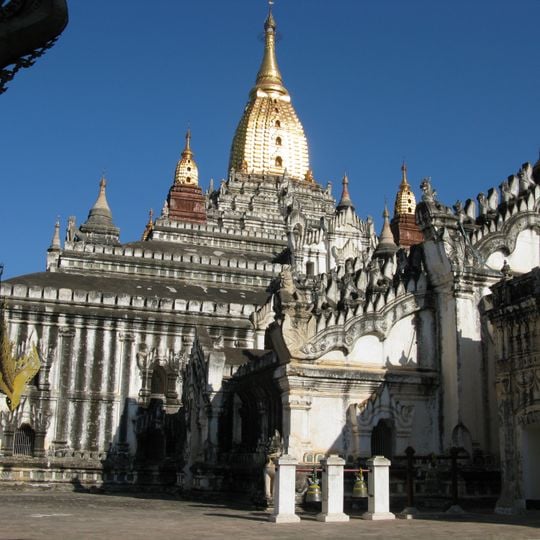
Ananda Temple, Buddhist temple in Bagan, Myanmar
Ananda is a Buddhist temple in Bagan, Myanmar, built in 1105 under King Kyansittha. Its cruciform core, a central square of 53 metres with gabled porches projecting from each face, rises through receding terraces to a 51-metre superstructure crowned by a gilded spire and hti umbrella. Four standing Buddhas face the cardinal directions, and 554 glazed terracotta tiles with jataka scenes decorate the base and terraces.
King Kyanzittha ordered the temple built in 1091, combining Mon architectural influences with Indian temple principles. The construction set standards for many later sacred buildings in the region and shaped the development of Bagan architecture for centuries.
The name comes from Ananda, the Buddha's cousin and personal attendant, though an older form, Ananta, derives from the Sanskrit 'ananta pinya', endless wisdom. The temple is also called a 'veritable museum of stones' for its stone sculptures and glazed terracotta plaques, including 554 jataka tiles on the base and terraces. It remains one of Bagan's most revered temples, and its spires were gilded for the 900th anniversary in 1990.
Shoes must be removed before entering any part of the building, and the entrances lead into the four main halls as well as the surrounding corridors. Early morning hours and late afternoon offer cooler temperatures inside, as the brick walls retain heat.
Sunlight enters through small window openings and illuminates the Buddha statues at different times of day, making the facial features change according to the angle of light. Local craftsmen use traditional techniques to renew the gilding on the statues regularly, passing down old methods.
The community of curious travelers
AroundUs brings together thousands of curated places, local tips, and hidden gems, enriched daily by 95,814 contributors worldwide.