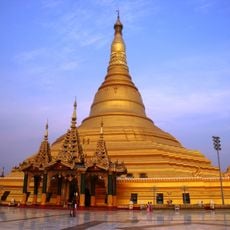
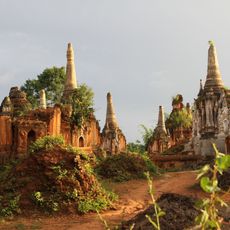
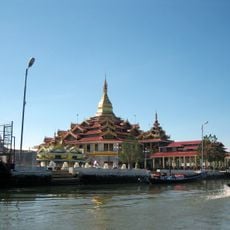
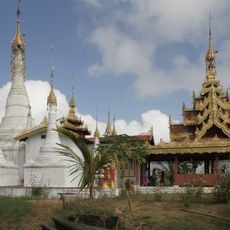
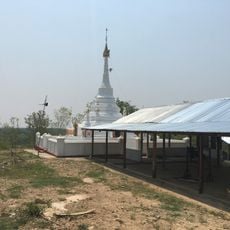
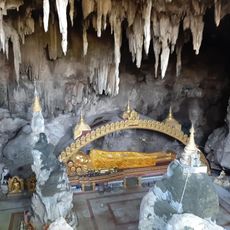
Inle Lake, Polymictic lake in Nyaungshwe Township, Myanmar.
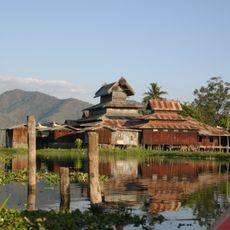
Inle Lake is a large freshwater body in the Shan plains, characterized by stilt houses and floating gardens dotting its surface. The landscape forms a patchwork of residential areas, cultivation plots, and waterways that organize daily life.
The area was settled by the Intha people, who developed their own systems for living and farming on the water. In 2015, the lake received UNESCO Biosphere Reserve status, becoming officially recognized as a place of global importance.
Intha fishermen row standing on one leg at the stern, the other leg wrapped around the oar, a technique that lets them see over the reeds and floating plants; women row seated, using their hands. The Inle carp, called nga hpein, has long been a staple, served in htamin gyin, rice kneaded with fish or potato, alongside hnapyan gyaw, twice-fried Shan tofu.
The lake is explored primarily by boat, with services connecting visitors to villages, markets, monasteries, and workshops. Starting early in the day helps you experience the lake when it is most active and capture good light for photographs.
Local farmers grow vegetables and fruits on floating gardens formed from lake-bottom materials. These cultivation plots remain stable and productive despite drifting with seasonal water level changes.
The community of curious travelers
AroundUs brings together thousands of curated places, local tips, and hidden gems, enriched daily by 93,642 contributors worldwide.