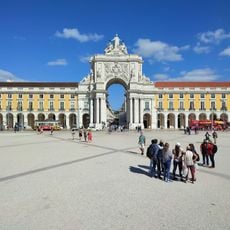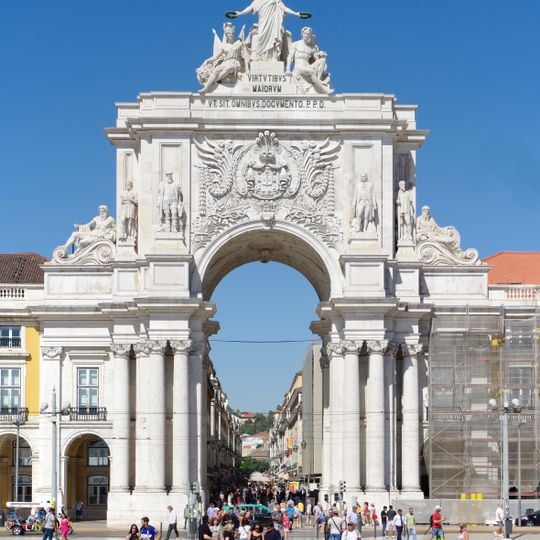
Rua Augusta Arch, Triumphal arch in Baixa district, Lisbon, Portugal.
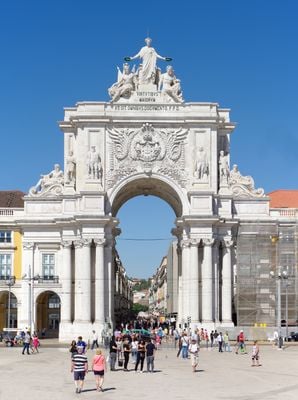
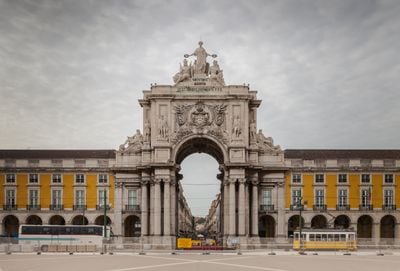
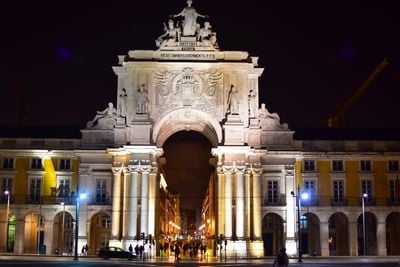
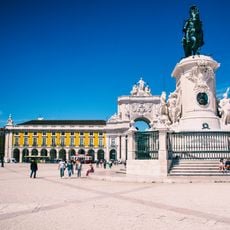
Rua Augusta Arch is a stone triumphal arch at the north end of Praça do Comércio, spanning Rua Augusta. Six fluted columns about 11 metres high flank a single rounded opening, with the Portuguese coat of arms carved above it. Four statues by Vítor Bastos stand over the columns, recumbent figures of the Tagus and Douro rivers at the outer edges, and the top is crowned by Célestin Anatole Calmels's group of Glory rewarding Valor and Genius. The inscription reads "VIRTVTIBVS MAIORVM VT SIT OMNIBVS DOCVMENTO. PPD".
Planned in 1759 by Eugénio dos Santos to mark the Pombaline rebuilding after the 1755 earthquake, the arch stood only to its cornice until 1843, when a competition was won by Veríssimo José da Costa. His design was approved in 1844; the arch was closed by 1862 and finished in 1873, inaugurated in 1875.
The arch displays statues of historical figures and allegorical characters representing glory and valor. These sculptures tell stories of Lisbon's rebuilding and served as meaningful symbols of hope for people of that era.
The arch is freely accessible for viewing from outside and can be seen anytime, while the interior is open during set hours. An elevator makes it possible to reach the upper levels and viewing platform.
The arch appears in the 1996 miniseries Gulliver's Travels, where the Lilliputians wheel Lemuel Gulliver through its opening. The Latin inscription ends with PPD, for Pecunia Publica Dedicat: the arch was paid for with public money, without a private patron.
The community of curious travelers
AroundUs brings together thousands of curated places, local tips, and hidden gems, enriched daily by 93,894 contributors worldwide.