Мытищинский-Московский водопровод, Water pipeline in Mytishchi, Russia
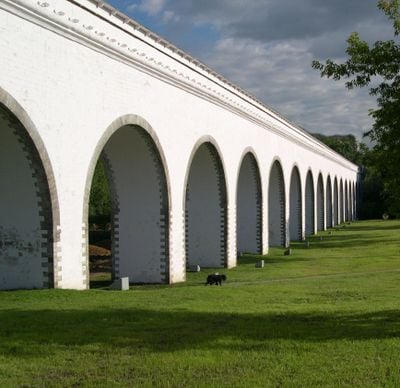
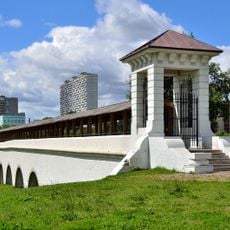
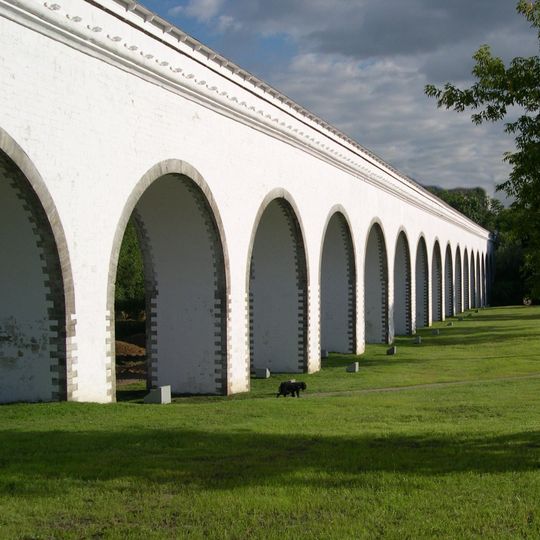
The Mytishchi-Moscow water pipeline is a historic water supply system that carried water from springs in Mytishchi to Moscow through aqueducts, pumping stations, and underground channels. The most visible surviving structure is the Rostokinskiy Aqueduct, a white limestone bridge that crosses the Yauza River.
Empress Catherine II ordered the system to be built in 1779 after Moscow had suffered from a serious lack of water, and military engineer Friedrich Wilhelm von Bauer was put in charge of the design. Construction took several decades and was only completed in the early 19th century, after which the system was gradually expanded.
The route of the old water supply system is visible today at several points across Moscow, including the Rostokinskiy Aqueduct, which can be walked across. Visitors can see the white limestone arches up close and get a sense of how this structure once shaped the rhythm of daily life in the city.
The Rostokinskiy Aqueduct is the most accessible part of the system and can be visited at no cost. It sits within a park and is easy to reach on foot, and dry weather makes it more comfortable to walk around and take in the structure from different angles.
The Rostokinskiy Aqueduct was built entirely from white Moscow limestone, with no iron parts, which was unusual for a structure of this size at the time. This choice of material gives it a pale, almost weightless look that stands apart from the heavier industrial construction that came later in the city.
The community of curious travelers
AroundUs brings together thousands of curated places, local tips, and hidden gems, enriched daily by 60,000 contributors worldwide.