Durbe Dilyara-bikech, Islamic mausoleum in Bakhchysarai, Russia.
Durbe Dilyara-bikech is an octagonal limestone mausoleum in Bakhchysarai, the former capital of the Crimean Khanate. It is topped by a dome and decorated with carved ornaments visible on both the outer walls and in the interior.
The octagonal mausoleum was built in 1764 in a far corner of the garden terraces by the South Gate of the Khan's Palace. The first written mentions come from foreign travellers just after the Russian annexation of the Crimean Khanate: the Englishwoman Craven in 1786 and the German Pallas in 1793. The Fountain of Tears stood by the tomb before being moved to the fountain courtyard in 1783. A 2007 restoration re-covered the dome with lead.
The name Dilyara comes from a Persian and Turkish word meaning "beloved of the heart", suggesting the woman buried here held a close bond with a ruler of the Khanate. Visitors today can still see the carved stone ornaments on the outer walls, which follow patterns common to Crimean Tatar funerary buildings.
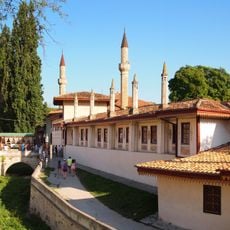
The building stands close to the Bakhchysarai Palace, making it easy to combine with a visit to the palace grounds. Access may involve unpaved paths, so sturdy footwear is a good idea.
The only inscription above the entrance read "Prayer for the repose of the soul of the deceased Dilyara-bikech" — it named her but never mentioned a khan. The "Fountain of Tears" stood by this mausoleum before being moved to the palace fountain court in 1783. Foreign travellers noted the tomb soon after Crimea's annexation: the Englishwoman Craven in 1786 and Pallas in 1793.
The community of curious travelers
AroundUs brings together thousands of curated places, local tips, and hidden gems, enriched daily by 93,363 contributors worldwide.