Archaeological museum-reserve "Tanais", Archaeological site in Don River delta, Russia
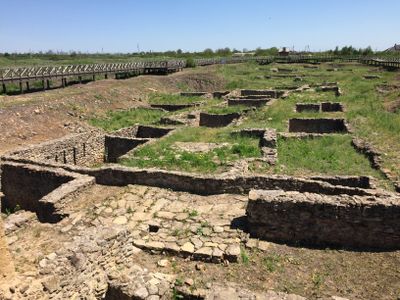
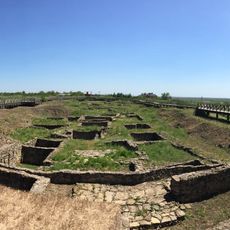
The Tanais Archaeological Museum-Reserve is an excavated ancient settlement in the Don River delta displaying fortifications and building foundations from multiple periods. The site spans a large area with structures arranged to show how the city developed and changed over time.
Greek colonists founded the settlement in the third century BC and developed it into a major trading hub between the Mediterranean and the steppes. The city was eventually abandoned in the fifth century, leaving behind layers of occupation that span nearly a thousand years.
The site demonstrates where Greek traders and local Sarmatian people met and exchanged goods over centuries. The exposed remains show how Mediterranean culture and local traditions coexisted in this remote frontier location.
Visitors can walk through the excavated ruins along marked pathways, with guided tours available to explain the discoveries. Wear sturdy shoes as the terrain is uneven and can be muddy depending on recent weather.
This was the farthest northeastern point where ancient Greek civilization reached, making it a rare meeting place of two very different worlds. Artifacts found here carry marks of both Mediterranean and steppe cultures, telling the story of how two worlds traded with each other.
The community of curious travelers
AroundUs brings together thousands of curated places, local tips, and hidden gems, enriched daily by 60,000 contributors worldwide.