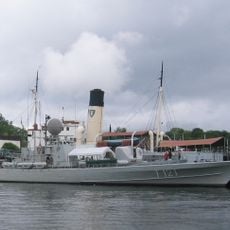
Sankt Erik, Historical icebreaker vessel in Stockholm, Sweden
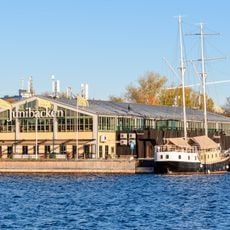
Sankt Erik is an icebreaker launched in 1915 as Isbrytaren II, now a museum ship at the Vasa Museum in Stockholm. Its bow is angled to ride up onto ice and crush it, and a forward propeller washes water and broken ice along the hull. Two reciprocating steam engines of 2,800 and 1,200 horsepower remain the most powerful working ones in Sweden.
Sankt Erik was completed in 1914–1915 at Finnboda Shipyard in Stockholm as Isbrytaren II, Sweden's first sea-going icebreaker, and entered service in 1915 for the City of Stockholm. She broke ice mainly in the Stockholm archipelago until 1977, and in harsh winters also in the Baltic for the Swedish Maritime Administration. A major refit in 1958 converted her from coal to oil and gave her the name Sankt Erik. Since 1980 she has been a museum ship cared for by the Maritime Museum.
The name references Saint Erik, Sweden's patron saint, reflecting the pride connected to maintaining shipping routes. The vessel now serves as a working life museum, showing how critical ice-breaking operations were to Stockholm's survival.
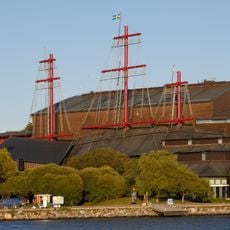
The vessel is moored near the Vasa Museum where visitors can board and explore the deck and engine areas. The location is easily accessible and provides direct access to the history of ice-breaking operations.
The ship has heeling tanks that fill with seawater to make it rock side to side, creating wider channels through the ice. This technique allowed the crew to break through difficult frozen passages more efficiently.
The community of curious travelers
AroundUs brings together thousands of curated places, local tips, and hidden gems, enriched daily by 93,666 contributors worldwide.