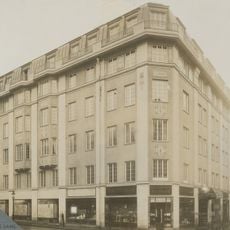
Tegnérgatan, Pedestrian street in Norrmalm district, Stockholm, Sweden.
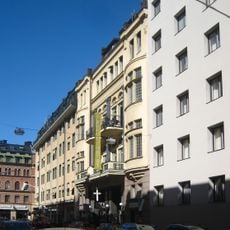
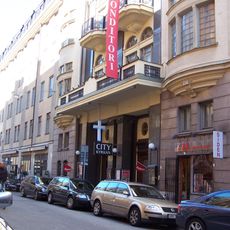
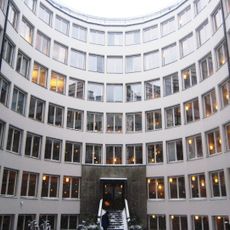
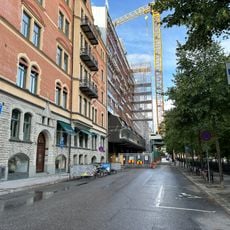
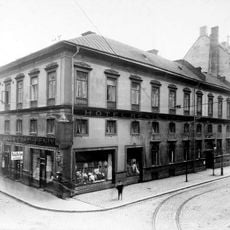
Tegnérgatan runs east–west along the border of Norrmalm and Vasastan, from Birger Jarlsgatan to Dalagatan and Barnhusbron. Its eastern stretch holds late 19th-century blocks, including the Spårvägspalatset with preserved tram halls; the middle section climbs steeply past the Grand cinema to Tegnérlunden, and the last three blocks end at Sven Markelius's Berget 10 from 1929–1930.
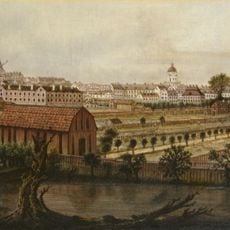
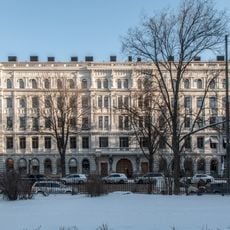
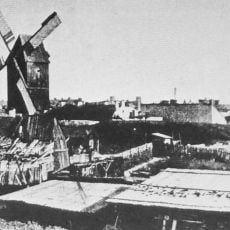
The street was first called Tre Backar Långgata, a name describing its three slopes. In the 1885 street-name revision it became Tegnérsgatan, after the poet and bishop Esaias Tegnér (1782–1846), and in 1932 the Name Committee's proposal shortened it to Tegnérgatan. Its blocks hold some of Stockholm's best-preserved late 19th-century urban architecture.
The street is named after Swedish poet Esaias Tegnér, and visitors can see the Blue Tower building where writer August Strindberg spent his final years. The location reflects Stockholm's literary history through its connection to these important figures.
The street is accessible via the green metro line at Rådmansgatan station or multiple bus lines serving the area. Wear comfortable shoes for the steep gradient and expect crowds, especially during meal times.
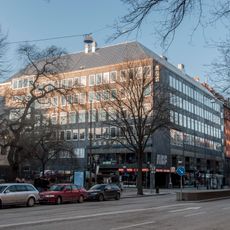
At the corner of Sveavägen, the left-hand 1920s building houses the Grand cinema, where Olof Palme spent his last hours before he was shot a few blocks away on Sveavägen in 1986. The street's old name, Tre Backar Långgata, referred to the three slopes it climbs.
The community of curious travelers
AroundUs brings together thousands of curated places, local tips, and hidden gems, enriched daily by 94,035 contributors worldwide.