Jasovská Cave, Cave system in Slovak Karst National Park, Slovakia
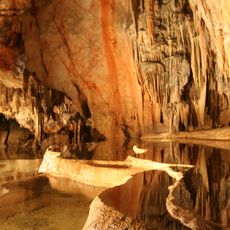
Jasovská Cave is a limestone cave system in Slovak Karst featuring passages that wind across multiple levels deep underground. The chambers are decorated with colorful mineral formations that resemble frozen waterfalls and tower-like structures made of stone.
The cave was partly opened to the public in 1846 by monks from the Jasov monastery, making it the oldest accessible cave in Slovakia. In 1878 E. Nyáry and A. Tallóczy conducted the first archaeological and paleontological survey of the entrance areas. A speleoarchaeological investigation in 1916 by geologist T. Kormos uncovered pottery of the Bukk and Piliny-Kyjatice cultures, bronze objects and osteological material. A 1452 inscription in Schwabacher script in the Husitská sieň records a victory of the Bratríci troops over Ján Huňady at Lučenec.
The cave takes its name from the village of Jasov. In the Husitská sieň (Hussite Hall), a wall inscription in Schwabacher script dated 1452 records the victory of the Bohemian Brethren's troops over János Hunyadi at Lučenec. Archaeological digs in 1916 uncovered pottery of the Bukk culture and Piliny-Kyjatice culture, bronze objects and bone material.
The tour route runs 720 m between an artificial entrance at 256 m and a natural exit at 286 m, so you climb through five connected levels. The concrete paths and electric lighting date from 1924. The underground air stays cool, so bring a layer even in summer.
The underground chambers serve as a winter refuge where around 20 species of bats gather to survive the cold months. These flying mammals use the stable temperature and shelter to rest, making the cave an unexpected sanctuary for animals.
The community of curious travelers
AroundUs brings together thousands of curated places, local tips, and hidden gems, enriched daily by 94,532 contributors worldwide.