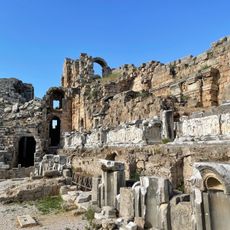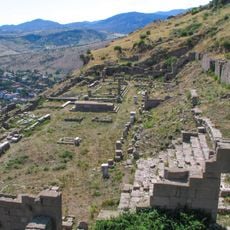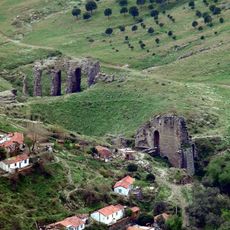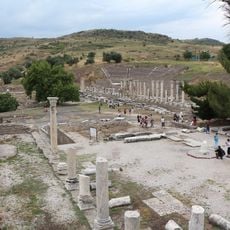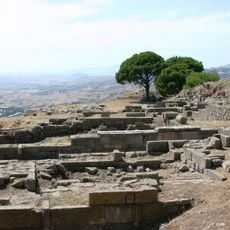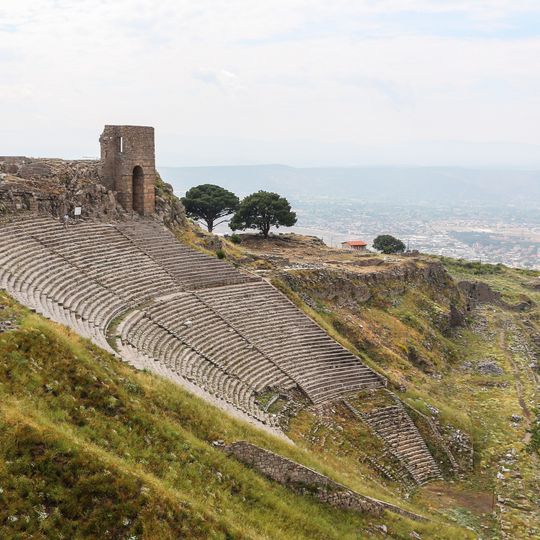
Ancient Greek theatre of Pergamon, Greek theatre in Pergamon, Turkey.
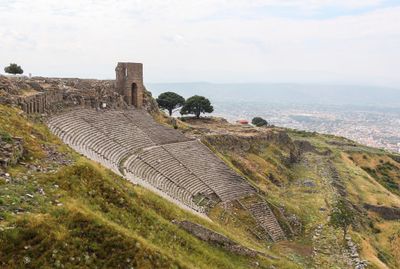
The Ancient Greek theatre of Pergamon is an amphitheatre located on the western slope of the acropolis, featuring 78 rows of seating arranged in sections. The structure rises approximately 36 meters from the orchestra level and is divided into distinct zones connected by staircases.
Construction began in the 3rd century BCE under King Eumenes II and the structure underwent changes during the Roman period that followed.
This was a gathering place where residents watched theatrical performances and musical shows that brought the community together. Such events shaped social life and showed how important art and entertainment were to the people living in this ancient city.
Access to the upper seating areas requires climbing steep staircases, so visitors should be in reasonable physical condition. Wearing comfortable shoes and being prepared for uneven surfaces are important for a safe visit.
With an inclination of 70 degrees, this is the steepest ancient theatre ever built. This dramatic slope gave spectators sitting higher up exceptional views across the surrounding landscape.
Location: Bergama
Official opening: 201
GPS coordinates: 39.13179,27.18341
Latest update: December 6, 2025 17:46
Ancient Greek theaters demonstrate skilled architecture developed between the 5th and 3rd centuries BC. Built into hillsides, these structures utilized natural terrain to create stone seating and enhance acoustic performance. They served as venues for tragedies and comedies, as well as gathering spaces during religious festivals and panhellenic games. Most theaters are located in mainland Greece and on the islands, with notable examples such as Epidaurus in Argolis, renowned for its exceptional sound clarity, or the Theater of Dionysus in Athens, considered the cradle of Western theater where works by Aeschylus, Sophocles, and Euripides were performed. Additional sites are found across the eastern Mediterranean, including Miletus in present-day Turkey and Philippi in northern Greece. Some of these structures were modified during the Roman period, such as the Odeon of Herodes Atticus, which incorporated Roman architectural features while maintaining its function as a performance space. Many of these venues, which could seat between 5,000 and 18,000 spectators, remain important remnants of ancient Greek social and cultural life.
Pergamon
1.7 km
Library of Pergamum
105 m
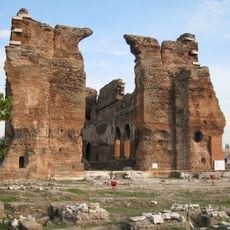
Red Basilica
1.1 km
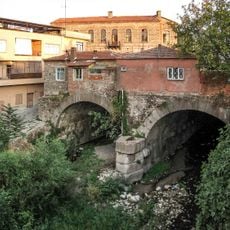
Pergamon Bridge
1.1 km
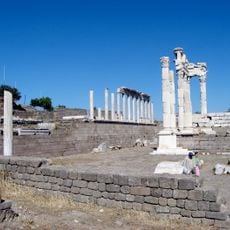
Temple of Trajan
136 m
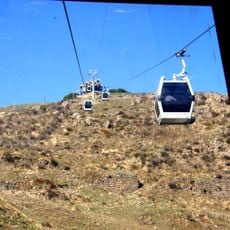
Bergama Acropolis Gondola
866 m
Sanctuary of Demeter (Pergamum)
505 m
Pergamon amphitheatre
1 km
Roman theatre of Perge
6 m
Pergamon and its Multi-Layered Cultural Landscape
725 m
Alp Çıkmazı Fountain
948 m
Kasapoğlu Çeşmesi
1.1 km
Parmak Batıran Caddesi Çeşmesi
925 m
1. Çukurbağ Caddesi Çeşmesi
1.1 km
Agora of Pergamon
101 m
Konyalı Çıkmazı Çeşmesi
1 km
Kale (Roma) Çeşmesi
657 m
Mahmut Şevket Sokağı Çeşmesi
926 m
Domuz Alanı Meydanı Çeşmesi
721 m
Cami-i Kebir Caddesi Çeşmesi
914 m
Sarı Çeşme
949 m
Menekşe Çıkmazı Çeşmesi
741 m
Rum Çeşmesi
685 m
Tabak Çıkmazı Çeşmesi
1 km
Yeni Çeşme
1 km
Alp Sokak Fountain
989 m
Turgut Sokak Çeşmesi
1 km
Çizmeciler Arastası Çeşmesi
1.2 kmReviews
Visited this place? Tap the stars to rate it and share your experience / photos with the community! Try now! You can cancel it anytime.
Discover hidden gems everywhere you go!
From secret cafés to breathtaking viewpoints, skip the crowded tourist spots and find places that match your style. Our app makes it easy with voice search, smart filtering, route optimization, and insider tips from travelers worldwide. Download now for the complete mobile experience.
A unique approach to discovering new places❞
— Le Figaro
All the places worth exploring❞
— France Info
A tailor-made excursion in just a few clicks❞
— 20 Minutes