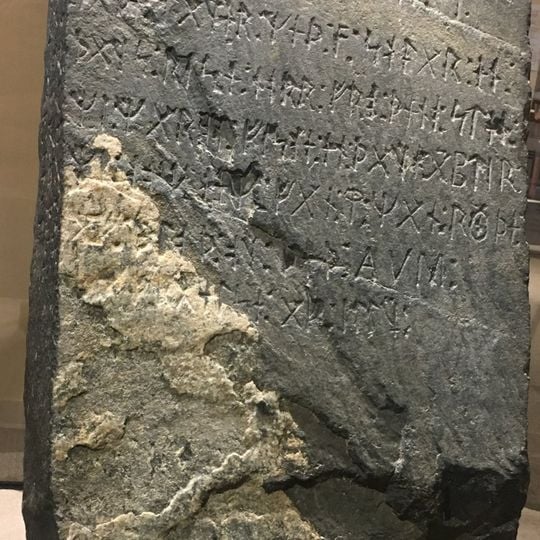
Kensington Runestone, Norse inscription in Alexandria, Minnesota, United States
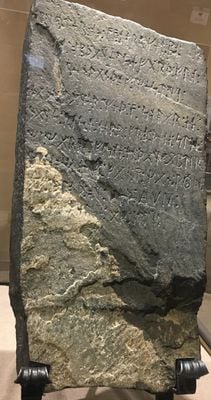
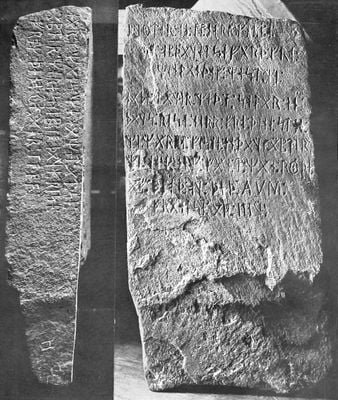
The Kensington Runestone is a carved gray slab displayed in Alexandria, Minnesota. Its surface shows about 200 inscribed characters arranged in nine lines across the face and three shorter lines along one edge.
A Swedish settler found the slab in 1898 tangled in tree roots on his farm near Kensington and later brought it to the local bank. Scholars soon began translating the text, which gives a date in the 14th century and describes a journey inland from Vinland.
The carved text records how travelers from the north sought divine help after a deadly event, mixing a Latin prayer into their rune alphabet. Visitors today read translations on nearby panels that explain the message and its possible connection to early Norse exploration.
The museum stands in downtown Alexandria and displays the stone in a climate-controlled room with information panels around it. Visitors find parking nearby and can view all exhibits in about half an hour.
Researchers have studied the weathering pattern inside the carved grooves to test whether the marks could be centuries old or made in recent times. These tests show different results, so some experts accept the authenticity while others doubt it.
The community of curious travelers
AroundUs brings together thousands of curated places, local tips, and hidden gems, enriched daily by 90,758 contributors worldwide.