United States Botanic Garden, Botanical garden at Capitol Hill, Washington, United States
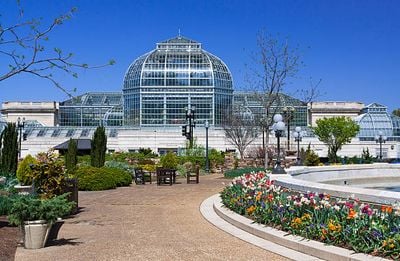
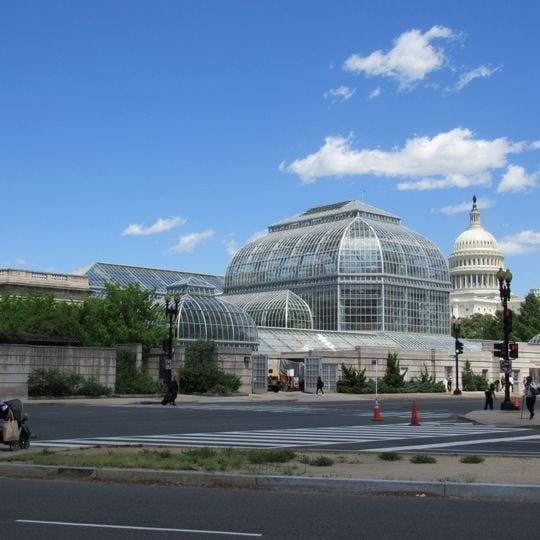
The United States Botanic Garden is a federal garden on Capitol Hill in Washington that displays more than 26,000 plant species from all climate zones in greenhouses and outdoor grounds. The main structure is a large glass conservatory with ten themed chambers recreating deserts, rainforests, and temperate zones.
The Columbian Institute for the Promotion of Arts and Sciences proposed a botanic garden in 1816, and in 1820 Congress granted land west of the Capitol; the site was swampy ground once owned by Scottish farmer David Burnes. Operations stopped in 1837, then resumed in 1842 with plants from Charles Wilkes's South Seas expedition. Congress funded the first greenhouse in 1867, and in 1933 the garden moved to its present site southwest of the Capitol.
The name reflects the federal mission to collect and study native and exotic plants for public education and research. Today visitors watch school groups move through the glass rooms and families explore the tropical spaces on weekends.
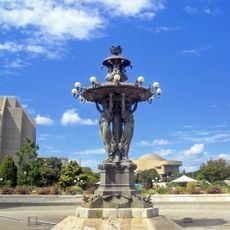
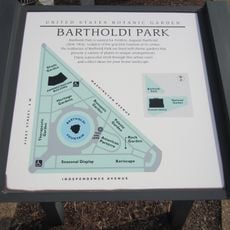
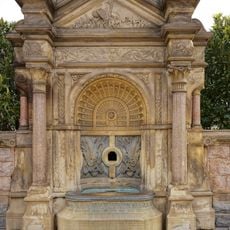
The garden lies southwest of the Capitol, bounded by Maryland Avenue on the north, First Street on the east, Independence Avenue on the south and Third Street on the west. It is open every day of the year, including federal holidays. Bartholdi Park sits across Independence Avenue, where the garden's administrative building stands.
Four plants in the collection trace directly to the Wilkes Expedition of 1838, including ferns descended from specimens gathered during the global sea voyage. These living connections to early American exploration continue to grow in the conservatory.
The community of curious travelers
AroundUs brings together thousands of curated places, local tips, and hidden gems, enriched daily by 94,726 contributors worldwide.