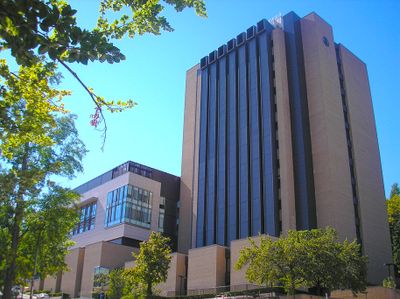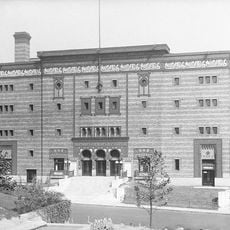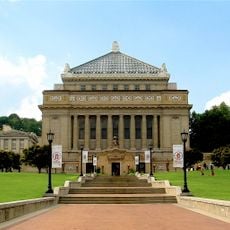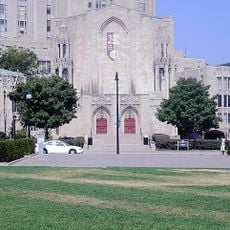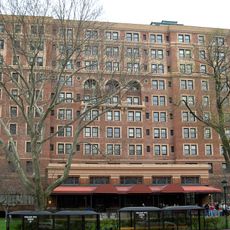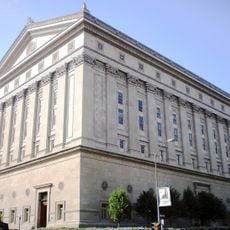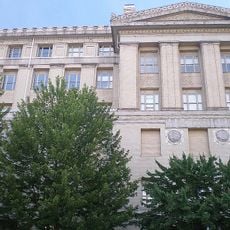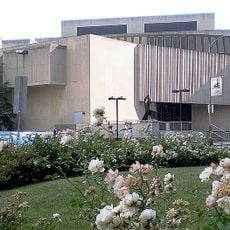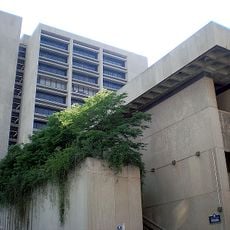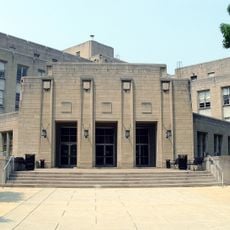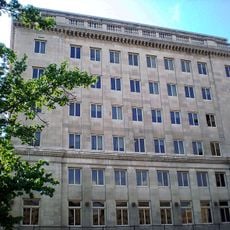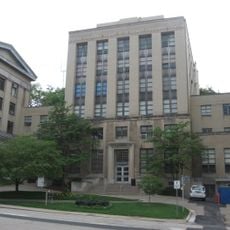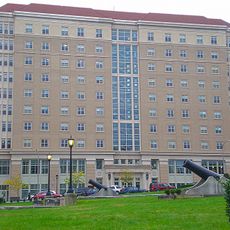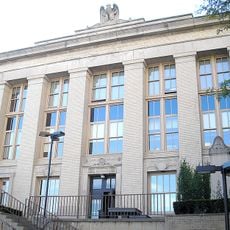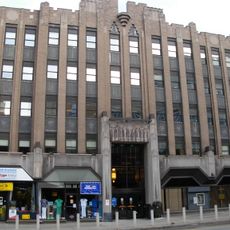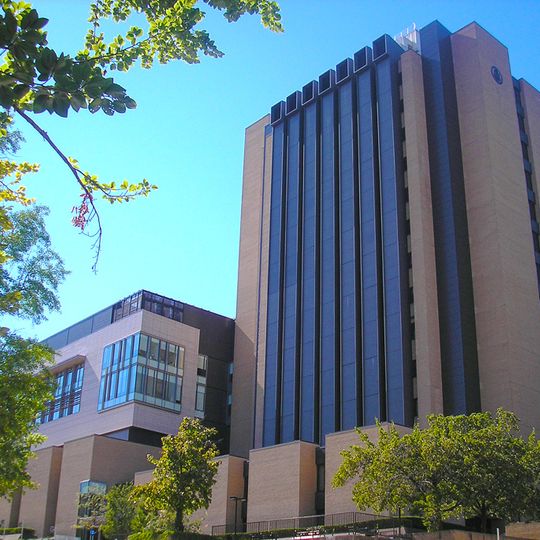
Chevron Science Center, Chemistry research facility at University of Pittsburgh, United States.
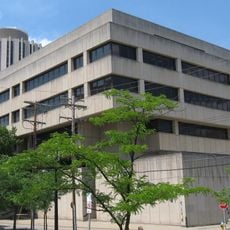
The Chevron Science Center is a 15-story research building at the University of Pittsburgh on Parkman Avenue housing laboratories, lecture halls, and chemistry department offices. The facility features modern organic chemistry labs, an electronic reference library, and a cafe serving students and researchers.
The building opened in 1974 on the former site of State Hall, becoming the largest chemistry school building east of the Mississippi River. This expansion reflected the university's growth in scientific research during the latter half of the twentieth century.
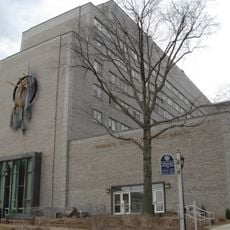
The main lobby displays a large porcelain enamel mural titled Science and Mankind by artist Virgil Cantini, showing the connection between scientific research and human progress. Visitors encounter this artwork immediately upon entering, giving them a sense of how art and science meet in this space.
The building is an active research facility on the University of Pittsburgh campus and can be viewed from outside, but has no public exhibition inside. Visitors should know that the interior is primarily for academic work, and access to laboratories is restricted to authorized personnel.
Nobel Prize winner Paul Lauterbur, who developed magnetic resonance imaging technology, studied chemistry in this department. His groundbreaking work on magnetic resonance methods became the foundation for one of modern medicine's most important imaging techniques.
The community of curious travelers
AroundUs brings together thousands of curated places, local tips, and hidden gems, enriched daily by 91,374 contributors worldwide.