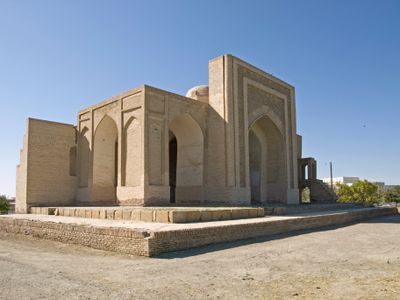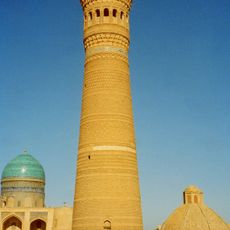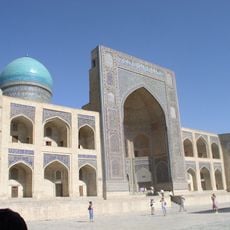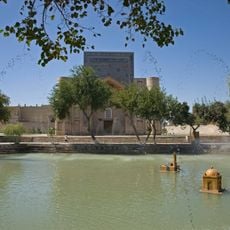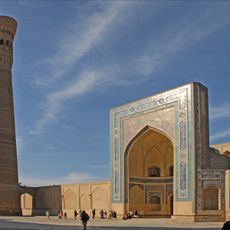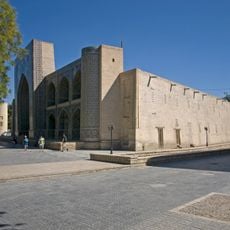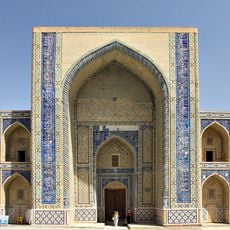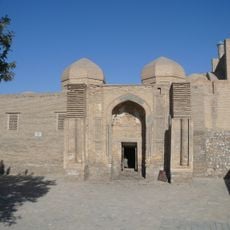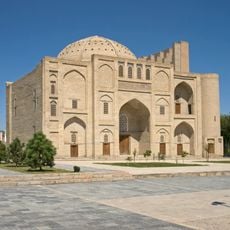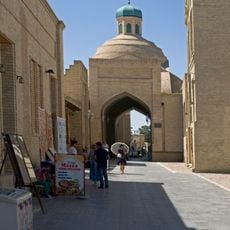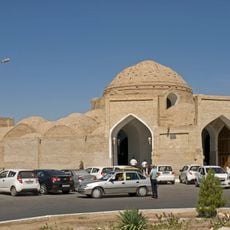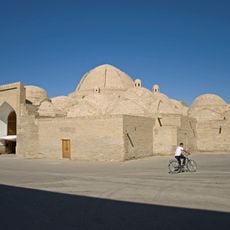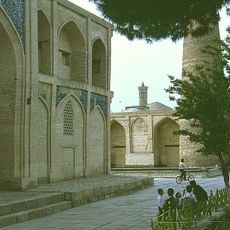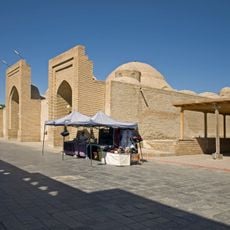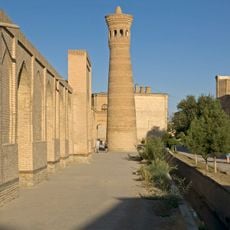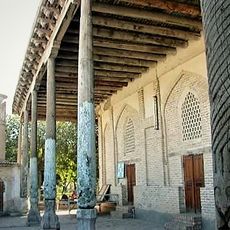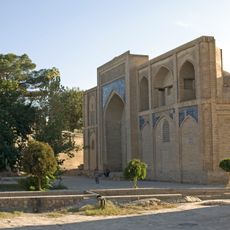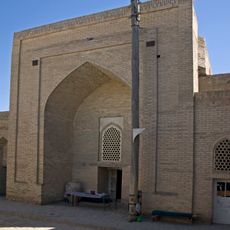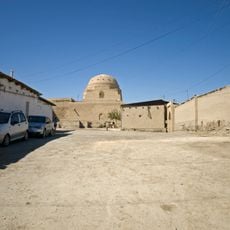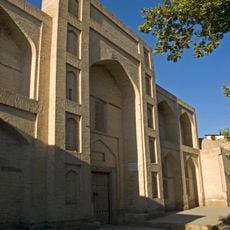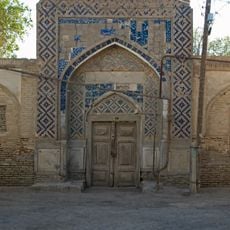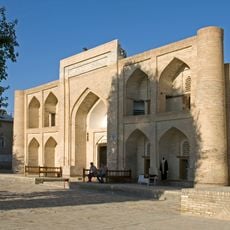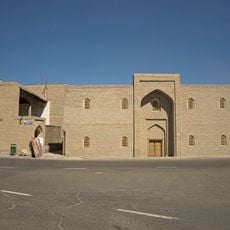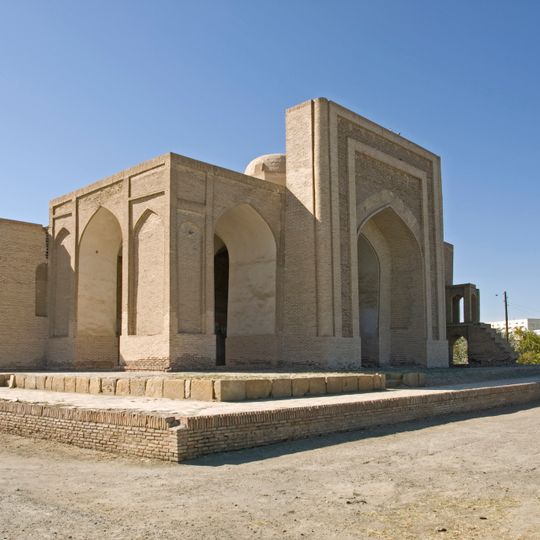
Namazgoh Mosque, Religious monument in south-west Bukhara, Uzbekistan.
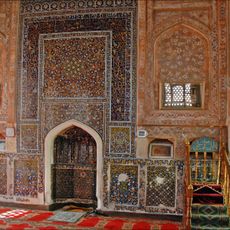
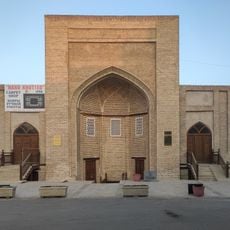
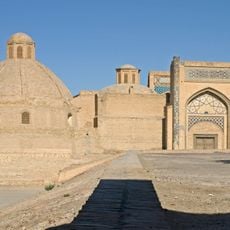
The Namazgoh Mosque is a historic open-air prayer site on the southwestern edge of Bukhara, built around a long brick wall oriented toward Mecca. At the center of this wall sits a mihrab decorated with mosaic tilework and alabaster geometric patterns.
The mosque was first built in 1119 under Arslan Khan of the Qarakhanid dynasty, making it one of the oldest surviving religious structures in Bukhara. It was later modified during the Timurid period, which left visible traces in the decorative work seen today.
The name Namazgoh comes from Persian and simply means "place of prayer," which reflects how the mosque was used: as an open-air gathering spot for large communal prayers on major Islamic holidays. The long wall facing the qibla gave worshippers a shared focal point during these outdoor ceremonies.
The mosque sits on the southwestern outskirts of Bukhara, a short ride from the city center, and is best reached on foot or by taxi. It functions mainly as a heritage site, so visitors are free to walk around and look at the architecture without following a set itinerary.
The Namazgoh Mosque was not a neighborhood place of worship but a dedicated outdoor prayer ground used only a few times a year for the largest congregational prayers of the Islamic calendar. This type of space, known as a musalla or namazgoh, was traditionally built outside city walls so that entire populations could gather without being confined by a building.
The community of curious travelers
AroundUs brings together thousands of curated places, local tips, and hidden gems, enriched daily by 91,262 contributors worldwide.