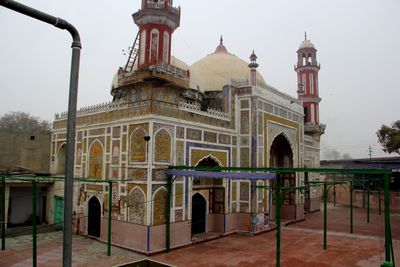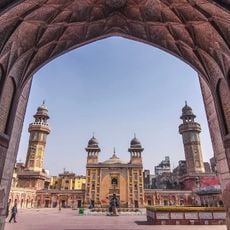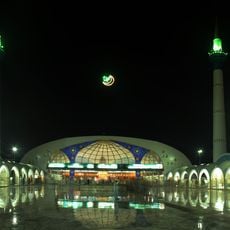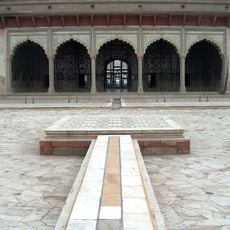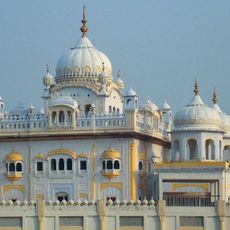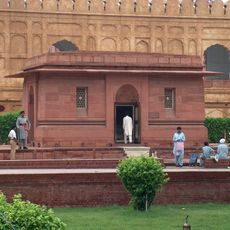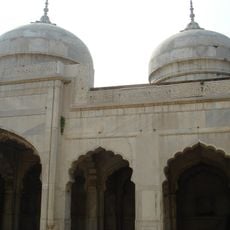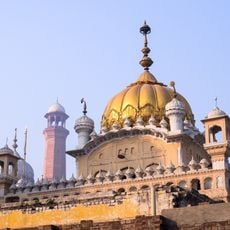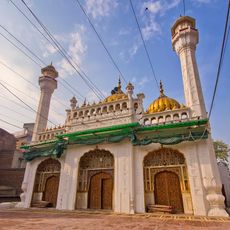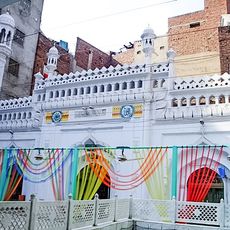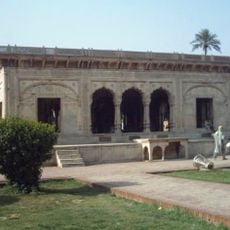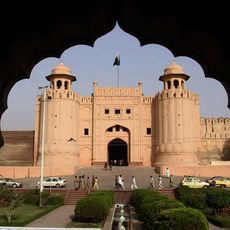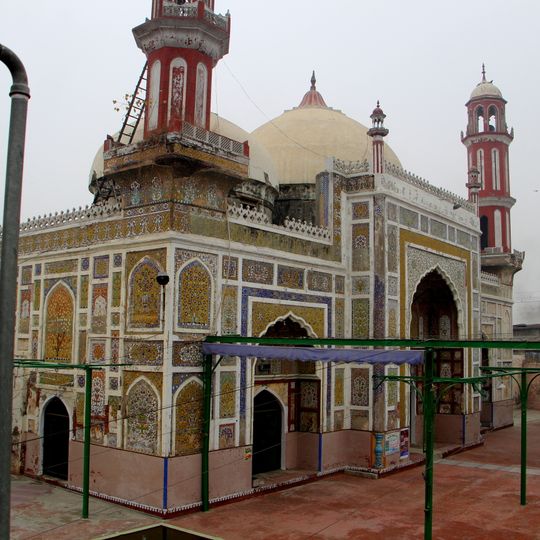
Dai Anga Mosque, Mosque in Naulakha neighborhood, Lahore, Pakistan.
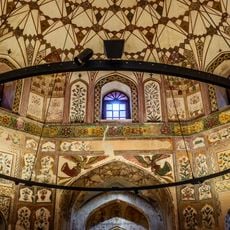
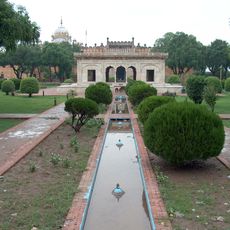
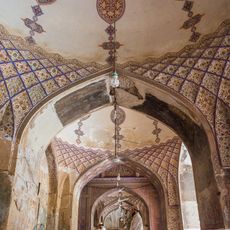
Dai Anga Mosque is a prayer house in Lahore, Pakistan, built from brick with Indo-Islamic architectural features that give it distinctive visual character. The interior contains three separate prayer spaces arranged around a central 19-foot dome flanked by two smaller 16-foot domes decorated with blue tilework.
The structure was built in 1635 by Dai Anga, the wet nurse of Emperor Shah Jahan, representing a significant moment in Lahore's development. It later served as a gunpowder magazine during Ranjit Singh's rule, showing how its purpose shifted over time.
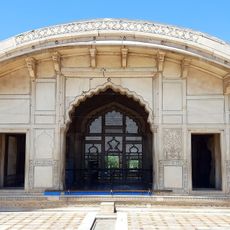
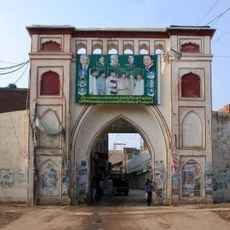
The building displays Indo-Islamic architectural elements through its arches, decorative wall panels, and colored tile patterns in blue, orange, and yellow that visitors can observe while moving through the space. These details reflect the artistic traditions valued by the community that built and maintains the structure.
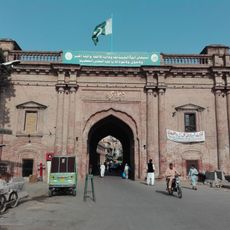
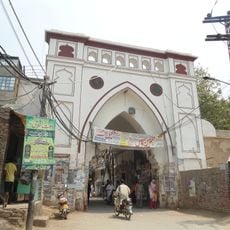
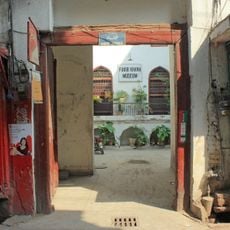
The building sits southeast of Lahore Railway Station and is reachable by following Nicholson Road from the Qila Gujjar Singh Chowk intersection. Visitors exploring the Naulakha neighborhood should check local signage and ask for directions to locate this historical site.
The building was converted into a residence during the 1800s and housed Henry Cope, editor of the Lahore Chronicle newspaper, a lesser-known chapter in the structure's history. This conversion shows how the site adapted to different uses and inhabitants over the centuries.
The community of curious travelers
AroundUs brings together thousands of curated places, local tips, and hidden gems, enriched daily by 90,750 contributors worldwide.