Shrine of Lal Shahbaz Qalandar, Sufi sanctuary in Sehwan, Pakistan
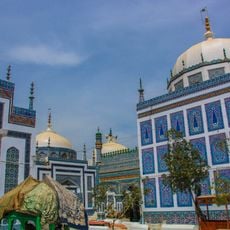
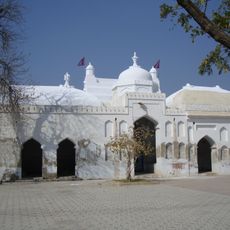
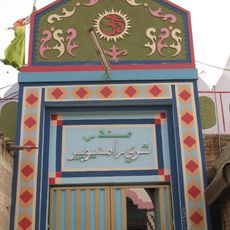
The Shrine of Lal Shahbaz Qalandar in Sehwan is a sanctuary with a gilded central dome 110 feet high and 56 feet across, its outer surface covered in gold-plated tiles from the United Arab Emirates. Two dark blue cylindrical minarets with lighter bands flank a facade edged in blue and yellow tilework, where a blue panel frames an arched opening and a plaque bearing Arabic-style script. Below sits a stone-faced entrance block with a grilled gate; inside, white marble, glazed tiles and mirror work surround the tomb, lit by small earthen oil lamps.
The mausoleum was built in 1356 under Shah Tughluq's rule to house the remains of the 13th-century Sufi saint Lal Shahbaz Qalandar. Over time, the shrine became a major pilgrimage destination that attracted followers from multiple faith communities across the region.
The shrine brings together Muslim and Hindu worshippers who share spiritual practices in the same space. Women called muridiani perform water offering ceremonies here, blending devotional customs from different faith traditions.
The shrine stands in Sehwan, Sindh, and draws up to one million visitors a year. The gold-plated main door was donated by Mohammad Reza Pahlavi, the last Shah of Iran, in the 1970s. The saint's tomb lies beneath the central dome, lit by small earthen oil lamps. The gilded dome, 110 feet high and 56 feet across, was rebuilt after its partial collapse in 1994.
The site hosts dhamaal ceremonies where participants perform rhythmic dances accompanied by rapid drumming, entering meditative states. This form of mystical dancing is deeply rooted in Sufi tradition and occurs regularly within these walls.
The community of curious travelers
AroundUs brings together thousands of curated places, local tips, and hidden gems, enriched daily by 94,661 contributors worldwide.