Kapova Cave, Prehistoric site in Southern Ural, Russia.
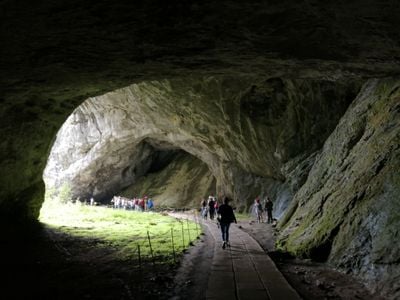
Kapova Cave is a vast limestone cave with multiple chambers spread through three distinct levels. The entrance opens like a natural gateway into the mountain, and its passages contain walls decorated with ancient paintings from prehistoric times.
People first used this cave around 16000 years ago, painting images of the large animals they hunted on its limestone walls. Scientific study began in the 1960s and continues to reveal details about how early humans inhabited this remote region.
The hand stencils and animal paintings reveal what mattered to the people living here thousands of years ago. They left behind a record of their hunting world and daily concerns on these stone walls.
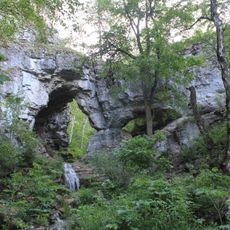
The cave lies in the Shulgan-Tash Nature Reserve on the Belaya River, about 200 km southeast of Ufa. Inside, air is stagnant beyond the Dome Hall, and the route to the upper tier uses a steel ladder and a 16-meter ladder. Wear sturdy shoes for uneven, wet ground.
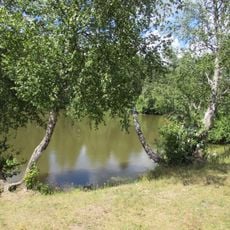
The pool at the cave mouth, called Blue Lake, is not a lake but a vertical stretch of the Shulgan riverbed about 3 m across and 85 m deep. Its water is undrinkable because of mineral impurities but has been used for medicinal baths. Below 33 m it opens into a huge underground water cavity.
The community of curious travelers
AroundUs brings together thousands of curated places, local tips, and hidden gems, enriched daily by 94,353 contributors worldwide.