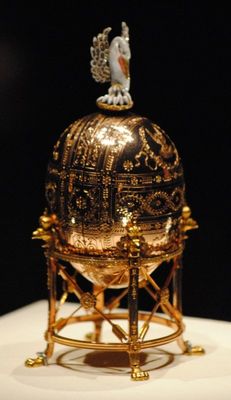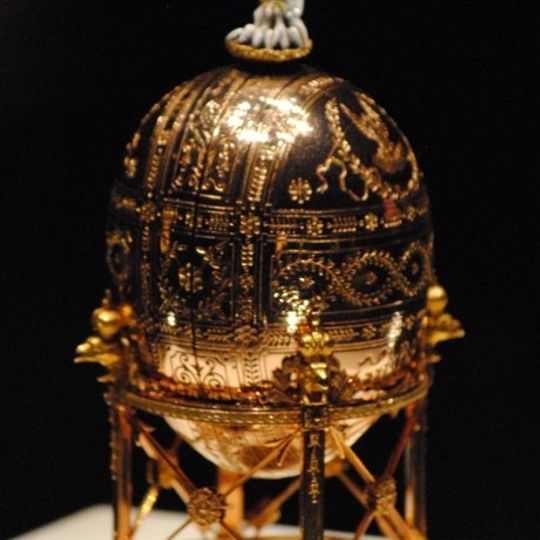
Pelican, Imperial Fabergé egg at Virginia Museum of Fine Arts, United States.
The Pelican egg is an ornately crafted object made of red gold with diamonds and vitreous enamel, standing about 10 centimeters tall and topped by a pelican figure. Inside are eight interconnected oval frames, each containing a hand-painted miniature scene on ivory.
This egg was created in 1898 by master jeweler Michael Perkhin as a gift from Tsar Nicholas II to his mother, the Dowager Empress Maria Feodorovna. Its creation was part of a long tradition of royal gifts that showcased the artistic excellence of the Fabergé workshop.
The pelican figure at the top symbolizes maternal care and generosity, a meaning reinforced by the eight hand-painted oval miniatures created by Danish artists. These paintings depict institutions supported by the Dowager Empress and reflect her role as a patron of charitable works.
The egg is displayed in a climate-controlled gallery space at the Virginia Museum of Fine Arts, where visitors can view it from a safe distance. Since it is a delicate historical object, it is protected behind glass and cannot be touched.
The eight miniatures inside depict specific favorite institutions of the Dowager Empress, making this gift a personal tribute to her charitable work. Each oval painting was created individually, showing the considerable hand-painted effort invested in this royal commission.
The community of curious travelers
AroundUs brings together thousands of curated places, local tips, and hidden gems, enriched daily by 91,972 contributors worldwide.