Alferaki Palace, Museum in a 19th-century palace in Taganrog, Russia
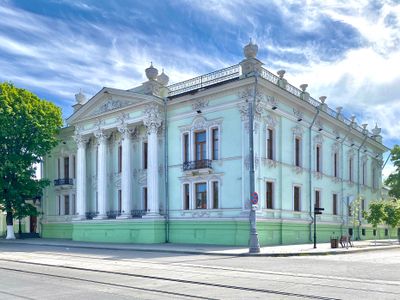
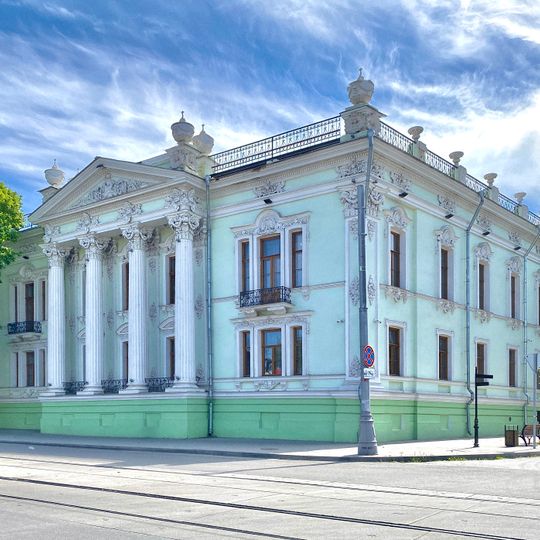
Alferaki Palace is a two-story neo-baroque mansion on Frunze Street in Taganrog, Russia, built in 1848. Its mint-green facade has a projecting portico with four white Corinthian columns and a pediment carved with figures; the Alferaki coat of arms sits in the pediment's centre. Inside, a marble staircase of 41 steps leads up, and the three-part hall has ceiling frescoes of Versailles salon scenes.
The building was put up in 1848 by architect Andrei Stackenschneider for the merchant Nikolay Alferaki. When the family ran into financial trouble in the 1870s, the property changed hands more than once before becoming a public museum.
The palace is named after the Alferaki family, Greek merchants who settled in Taganrog. Its halls hosted grand balls for the city's elite, and later the Commercial Assembly held concerts there; Anton Chekhov attended one and used the club and its garden in his stories "Ionych", "Mask" and "My Life".
The museum sits on Frunze Street, one of Taganrog's central roads, making it easy to reach on foot from nearby areas. Opening hours can change depending on the season, so it is worth checking locally before you visit.
During the German occupation in World War II, around 340 artworks were removed from the building. Most were never returned, which permanently changed the shape of the collection visitors see today.
The community of curious travelers
AroundUs brings together thousands of curated places, local tips, and hidden gems, enriched daily by 94,082 contributors worldwide.