See the monuments around you in AROpen chests in the app
Around Us is built for your phone — point your camera at the streets and discover the monuments and places around you in augmented reality.Around Us is built for your phone — chests unlock when you walk, explore and capture nearby places.
The Norwegian fjords offer far more than the familiar postcard views. This collection focuses on sites many visitors overlook: medieval stave churches with intricate timber construction, waterfalls that plunge behind hiking trails, and glaciers stretching across multiple valleys. From the Trollkirka cave system in Fraena to the reconstructed Viking village at Gudvangen, each location reveals a different aspect of Norway's landscape and history.
The selection includes natural formations like Kjeragbolten, a boulder wedged between two cliff faces, and Torghatten mountain with its perforated summit. Cultural sites such as Nidaros Cathedral in Trondheim and Heddal stave church document architectural evolution across centuries. Jostedalsbreen glacier and Lake Lovatnet provide access to alpine regions, while the old Strynefjellsvegen road winds through highland passes. These locations are scattered along the coast and through the valleys of western Norway, suitable for travelers with time to explore different areas and terrain types.
The Norwegian fjords offer far more than the familiar postcard views. This collection focuses on sites many visitors overlook: medieval stave churches with intricate timber construction, waterfalls that plunge behind hiking trails, and glaciers stretching across multiple valleys. From the Trollkirka cave system in Fraena to the reconstructed Viking village at Gudvangen, each location reveals a different aspect of Norway's landscape and history.
The selection includes natural formations like Kjeragbolten, a boulder wedged between two cliff faces, and Torghatten mountain with its perforated summit. Cultural sites such as Nidaros Cathedral in Trondheim and Heddal stave church document architectural evolution across centuries. Jostedalsbreen glacier and Lake Lovatnet provide access to alpine regions, while the old Strynefjellsvegen road winds through highland passes. These locations are scattered along the coast and through the valleys of western Norway, suitable for travelers with time to explore different areas and terrain types.
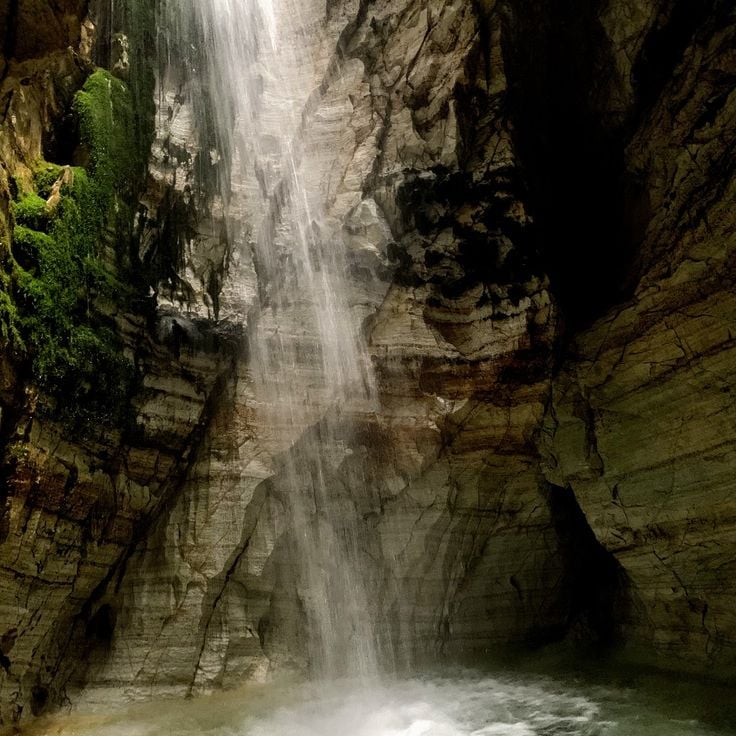
Trollkirka is a limestone cave system with underground waterfalls in the Norwegian fjord country. The caves sit in the Rauma mountains and require a steep two-hour hike to reach. Inside, a glacial stream runs through the chambers and forms waterfalls that drop between rock walls. The main chamber reaches a height of roughly 40 feet (12 meters). The cave system extends for several hundred yards and contains crevices that allow daylight to enter. The name means Troll Church and references Norwegian folklore. The caves are accessible from June through September when snow has melted.
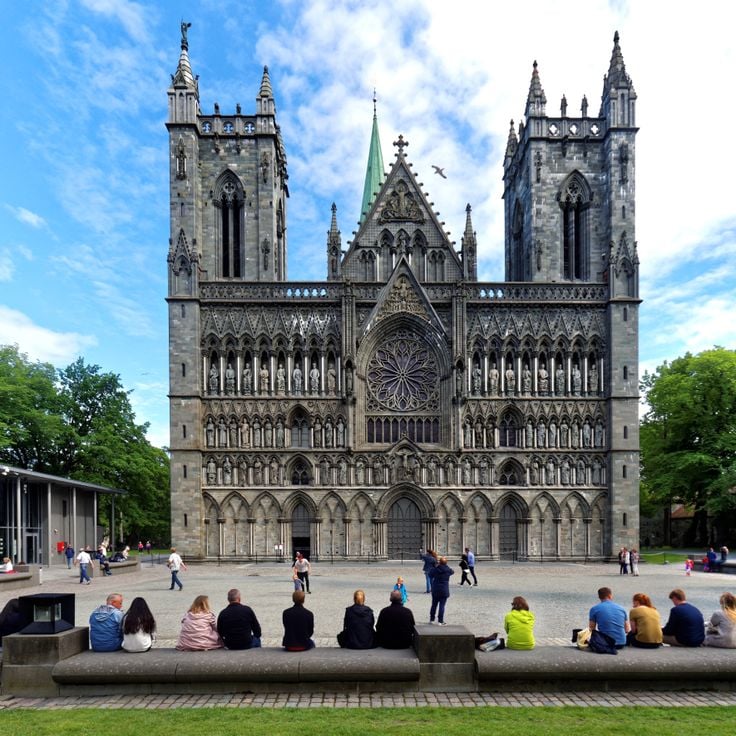
The Nidaros Cathedral in Trondheim served for centuries as Scandinavia's most important pilgrimage site and ranks among Norway's most significant medieval structures. The cathedral was built over the burial site of King Olav II, who fell in the Battle of Stiklestad in 1030 and was later canonized. The current building dates primarily from the 12th to 14th centuries in Gothic and Romanesque styles, with the west façade particularly notable for its numerous stone figures. After the Reformation the cathedral lost its function as a pilgrimage church but remained the coronation site for Norwegian monarchs until the early 20th century. Restoration work since the late 1800s has rebuilt large portions of the structure.
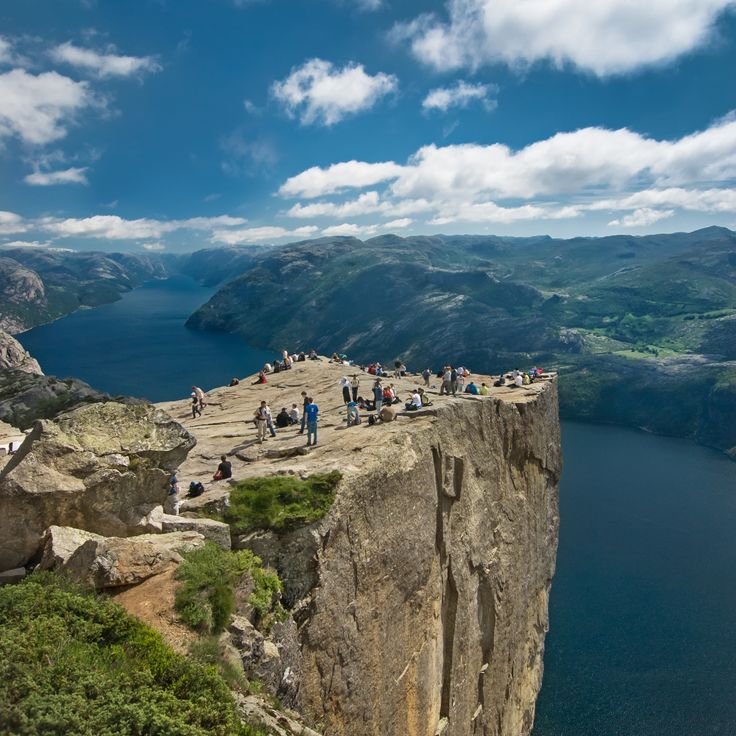
This rock formation rises 1,982 feet (604 meters) above the Lysefjorden and draws over 300,000 visitors annually. The flat platform of Preikestolen, formed by natural erosion during the Ice Age, measures approximately 82 by 82 feet (25 by 25 meters) and offers direct views of the green fjord waters below. The ascent takes about two hours and passes through Scandinavian mountain terrain with lakes and granite formations. The hike is considered challenging with steep sections and requires proper equipment, especially in changing weather conditions.
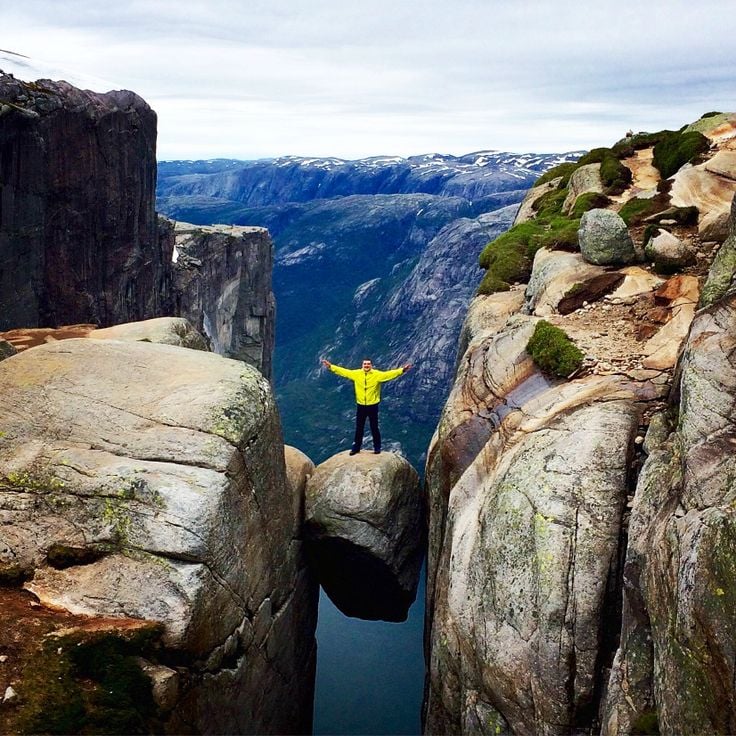
This 5-cubic-meter boulder sits wedged in a mountain crevice 3,230 feet (984 meters) above the Lysefjord. Reaching Kjeragbolten requires a five-hour hike across rocky terrain from the Øygardstøl parking area. The Kjerag summit stands at 3,556 feet (1,084 meters), and the trail demands three steep ascents with fixed chain supports in exposed sections. Standing on the boulder places you directly above a 3,280-foot (1,000-meter) drop to the fjord. The hiking season runs from mid-June through early October when the route is clear of snow.
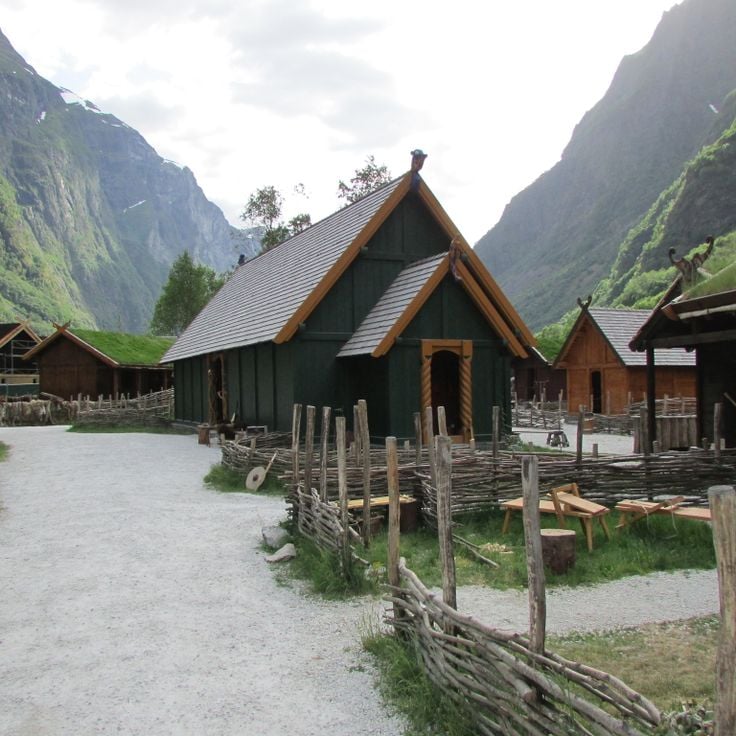
The Viking Village of Gudvangen offers visitors a look into the life and culture of Norse communities from over a thousand years ago. This reconstructed settlement includes several timber buildings such as dwellings, workshops and a gathering hall, built according to archaeological findings and historical records. Visitors can observe craft demonstrations featuring traditional techniques including metalworking, weaving and woodcarving. The village sits near the Nærøyfjord, a region with significant Viking history. The site provides insight into daily routines, trade networks and social structures of the Viking Age. Guided tours are available in multiple languages, and staff members wear period clothing to enhance the historical context.
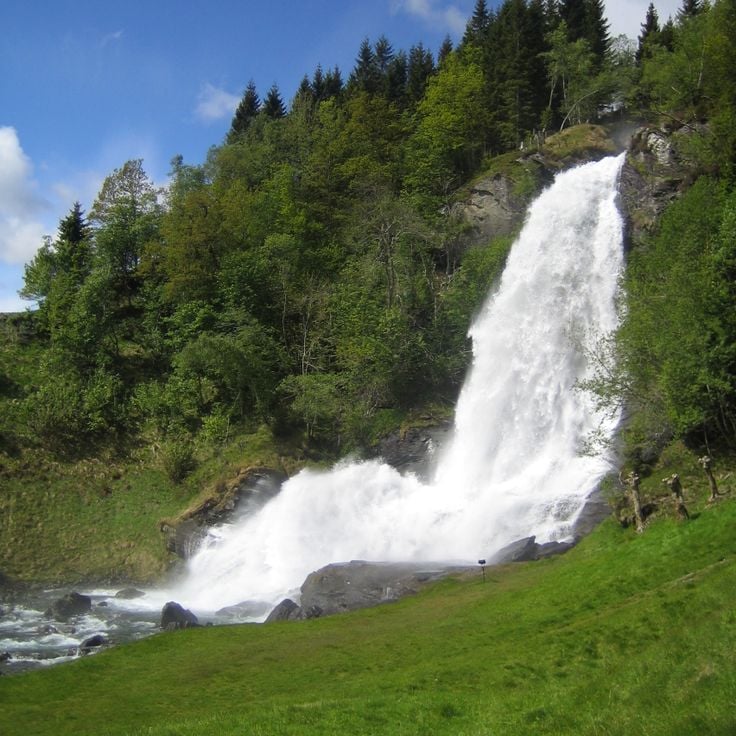
Steinsdalsfossen is a 165-foot waterfall that plunges into the Fosselva River about 1.2 miles (2 kilometers) east of Norheimsund. A paved path leads behind the curtain of water, allowing visitors to walk between the rock face and the cascading stream without getting wet. The waterfall sits directly alongside Road 7 and is accessible from a developed parking area and viewing platform. The surrounding area has been equipped with stairs and railings to facilitate access.
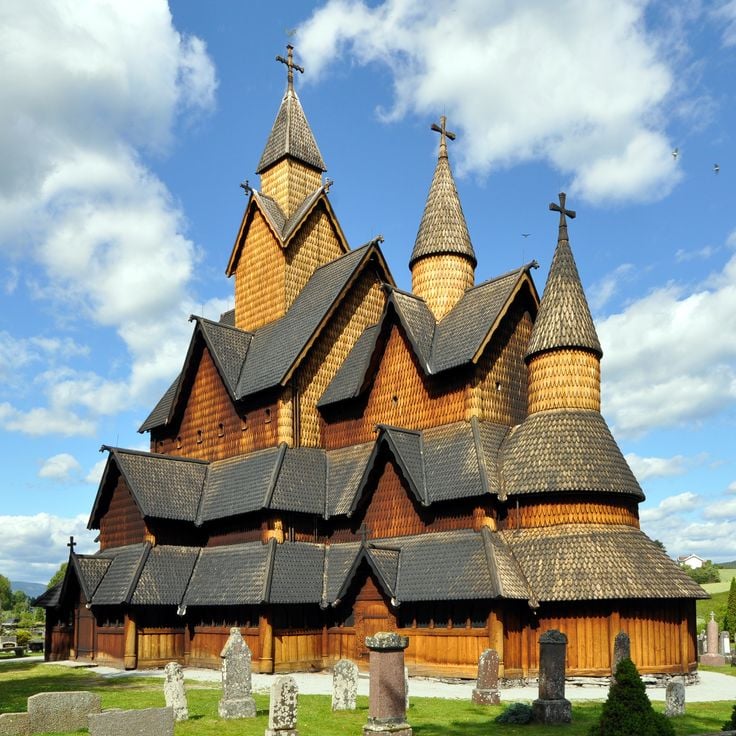
The Heddal Stave Church in Notodden is a largely intact medieval wooden church from the early 13th century and is the largest surviving stave church in Norway. The triple-nave structure displays characteristic architectural features of this building method, including carved portals, dragon ornaments on the roof gables, and load-bearing wooden posts inside. The building has undergone several restorations while preserving much of the original construction. The church continues to serve as a parish church and is open to visitors. An adjacent museum presents artifacts and information about the building's history.
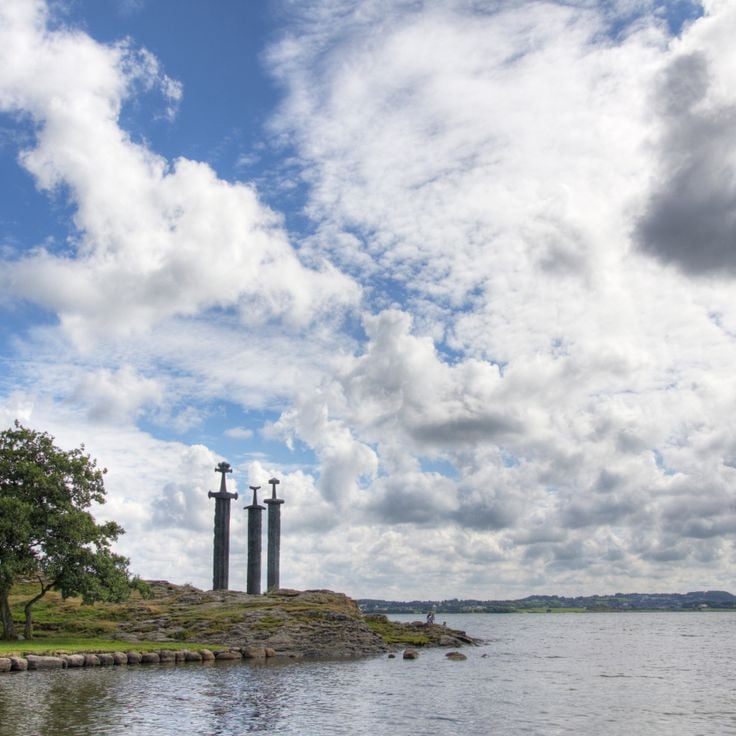
Sverd i fjell consists of three bronze swords installed at Hafrsfjord in 1983. The monument commemorates the 872 battle in which King Harald Fairhair unified the Norwegian tribes. The swords reach heights of up to 33 feet (10 m) and stand anchored in bedrock. Sculptor Fritz Røed designed the three different-sized blades to symbolize peace, unity and the end of tribal warfare. The monument sits directly on the waterfront with views across the fjord. The site includes a small park with information panels about the battle and the artwork's creation. Access is free and the monument can be visited at any time.
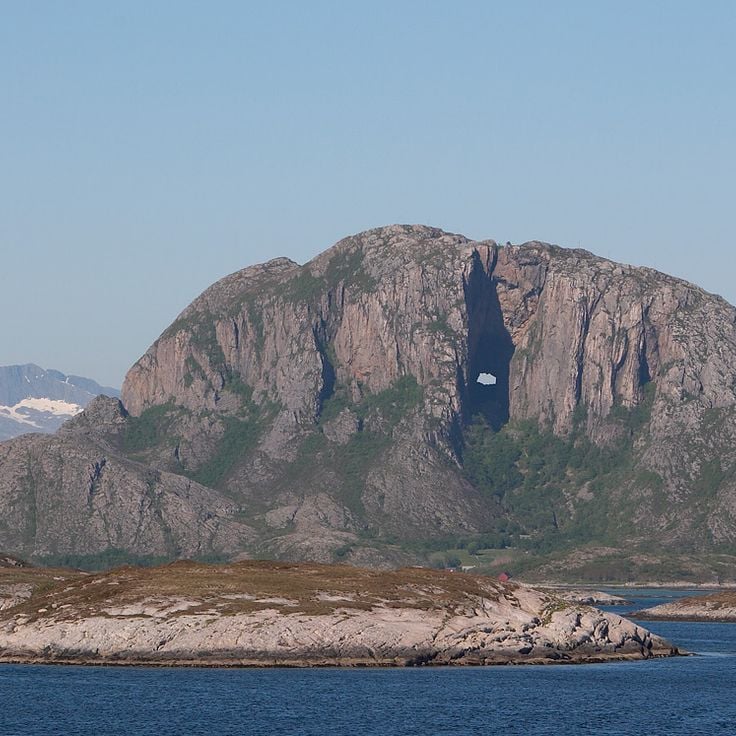
Torghatten is a 258-meter (846-foot) mountain in central Norway known for its natural through-hole that penetrates the entire rock formation. The cave formed through erosion during the last ice age and measures approximately 160 meters (525 feet) in length, 35 meters (115 feet) in height, and 20 meters (66 feet) in width. A marked hiking trail through pine forest leads to the hole and takes about 30 minutes. From the through-cave, visitors gain expansive views over the Helgeland archipelago and surrounding waters.
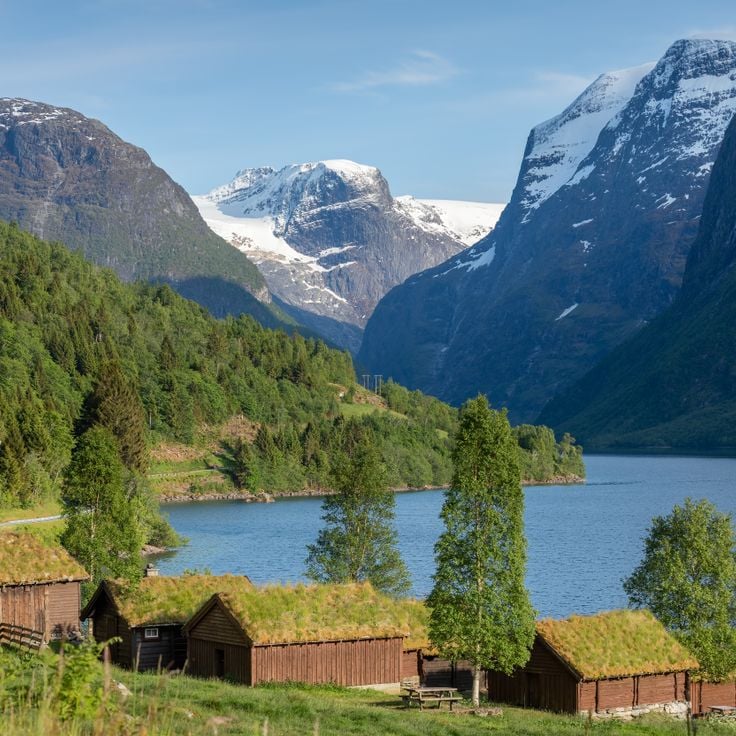
Lake Lovatnet is a glacial lake framed by steep rock faces and several waterfalls. The turquoise water originates from meltwater of surrounding glaciers and changes color depending on season and light conditions. The lake sits about 37 miles (60 kilometers) east of Stryn and extends 7 miles (11 kilometers) between the mountains of Jostedalsbreen National Park. Hiking trails run along the shore and climb to viewpoints on the surrounding heights. Boat trips cover the entire body of water and provide access to less frequented sections.
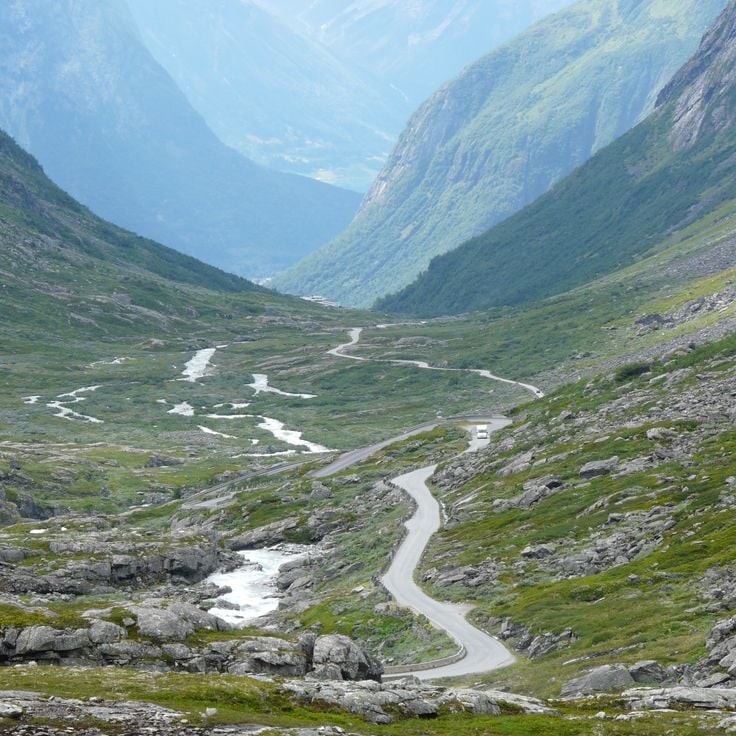
The Gamle Strynefjellsvegen is a historic mountain pass road that winds through a landscape of glaciers, waterfalls and mountain lakes. This road, which served as the main connection from 1894 until the 1970s, climbs to 3,737 feet (1,139 meters) and now operates as a summer route linking Videseter to Grotli. The route crosses through untouched alpine terrain with views of the Tystigbreen glacier and passes several traditional mountain farms still in operation.
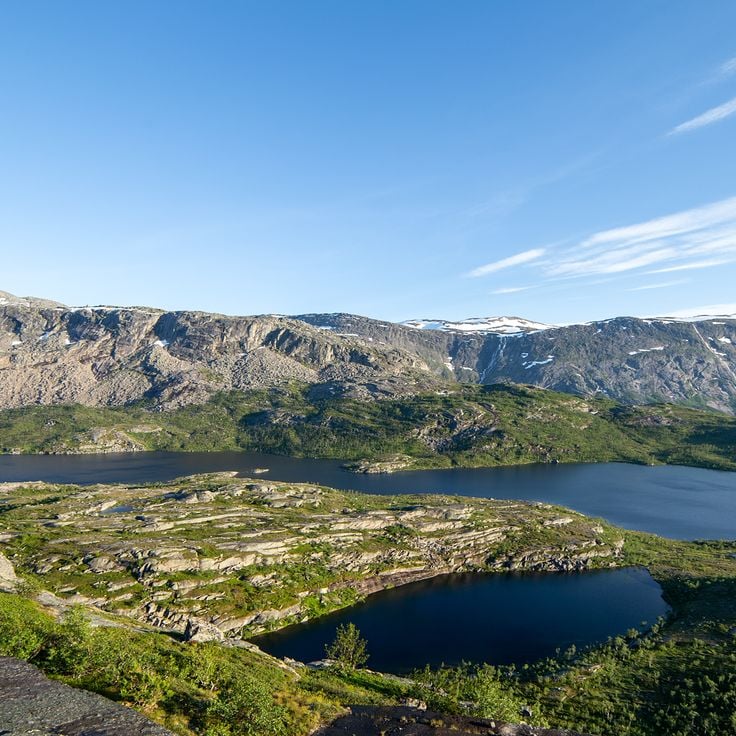
Rago National Park protects one of Norway's most remote wilderness areas, where dense birch forests transition into rugged granite peaks and glacial streams rush through deep valleys. The landscape spans 67 square miles (171 square kilometers) along the Swedish border, offering visitors access to terrain that only a few hundred hikers traverse each year.
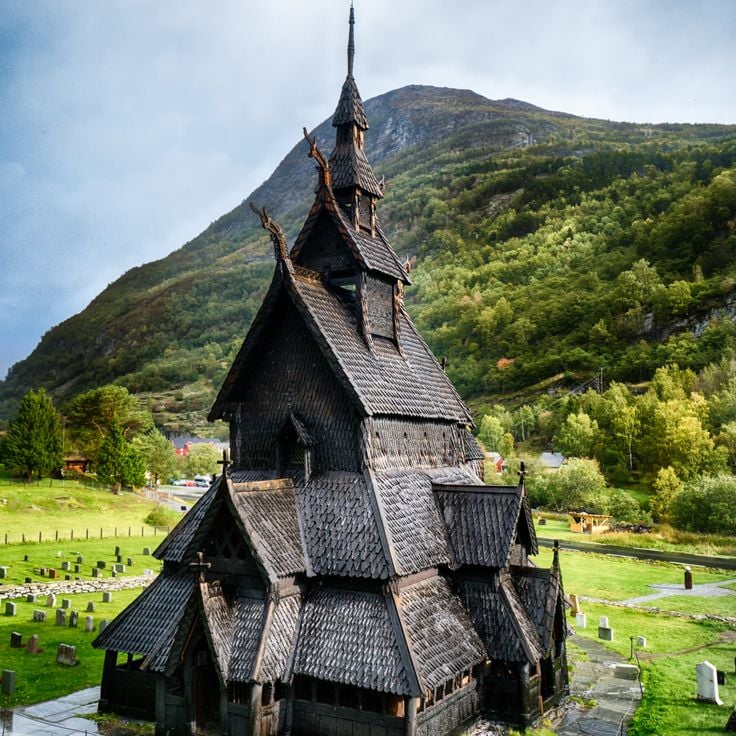
This wooden church from 1180 ranks among Norway's best-preserved stave churches and demonstrates medieval construction techniques with its tiered roofs, carved dragon heads and interior featuring freestanding wooden posts. The structure combines Christian and pre-Christian Norse elements in its ornamentation. Visitors can examine the complex carpentry work and runic inscriptions on the wooden walls, which provide insight into Scandinavia's religious transition period.
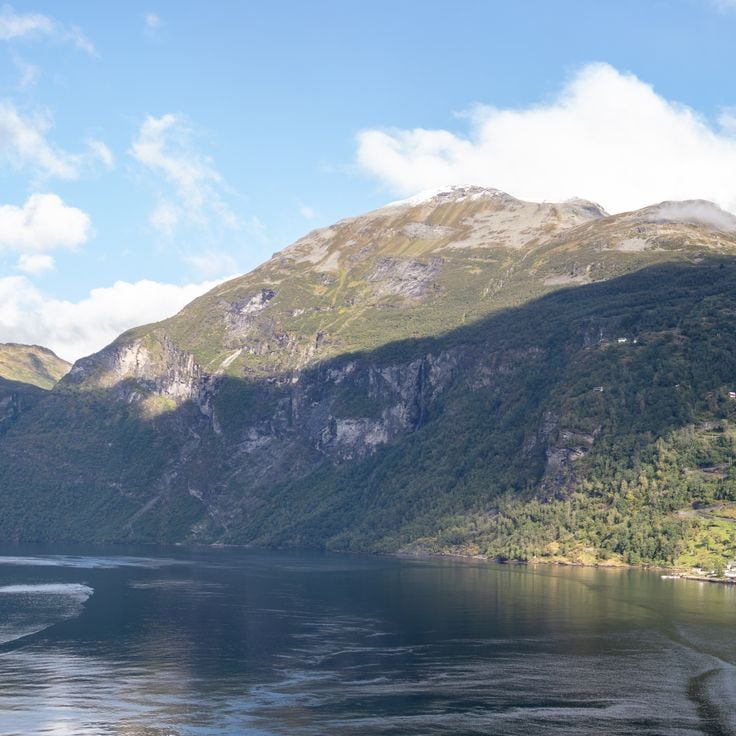
The Geirangerfjord, a UNESCO World Heritage site, extends 9 miles (15 kilometers) through Stranda and is bordered by steep rock walls rising up to 4,600 feet (1,400 meters) above the deep blue water. Several waterfalls, including the Seven Sisters and the Bridal Veil, cascade from the forested slopes into the fjord. The region offers hiking trails along the cliffs and viewpoints such as Dalsnibba and Flydalsjuvet that provide expansive views over the fjord and surrounding mountains.
Jostedalsbreen spreads across 188 square miles (487 square kilometers) between deep valleys in western Norway. This continental glacier feeds more than 50 glacier arms that descend into surrounding fjord landscapes. Several visitor centers offer guided glacier walks, while hiking trails run along the ice margins and to nearby waterfalls. The ice reaches depths exceeding 1,968 feet (600 meters) in places, and the glacier museum in Fjærland documents the geological history of the region.
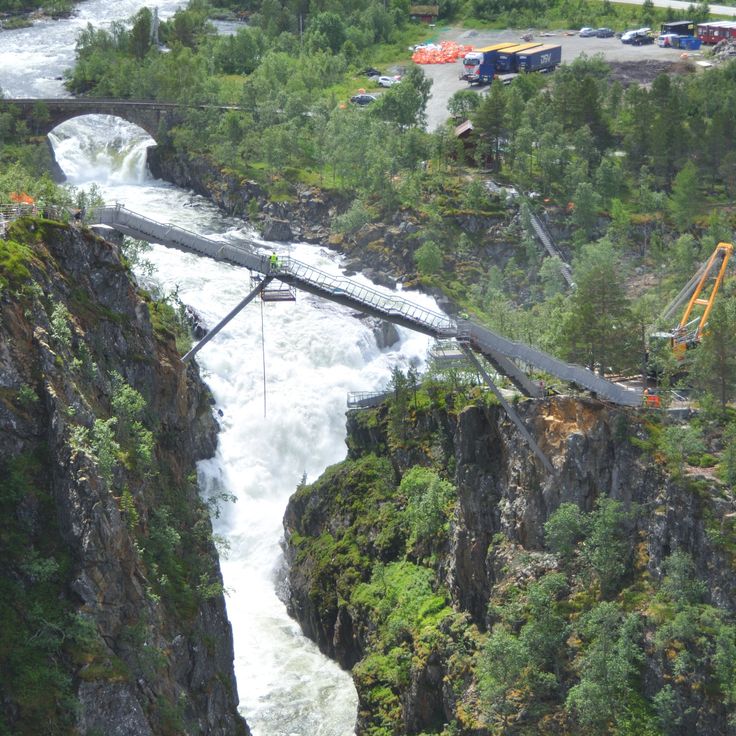
Vøringsfossen is a Norwegian waterfall with a free fall of 598 feet (182 meters), ranking among the country's most recognized natural landmarks. The water drops from the Hardangervidda plateau into the narrow Måbødalen valley, with several viewing platforms offering direct views of the entire drop. Recent platforms provide different perspectives on the cascade and surrounding valley, while the historic access route along the old road remains available. The waterfall sits on the main route between Oslo and Bergen and is most easily accessible from April through October.
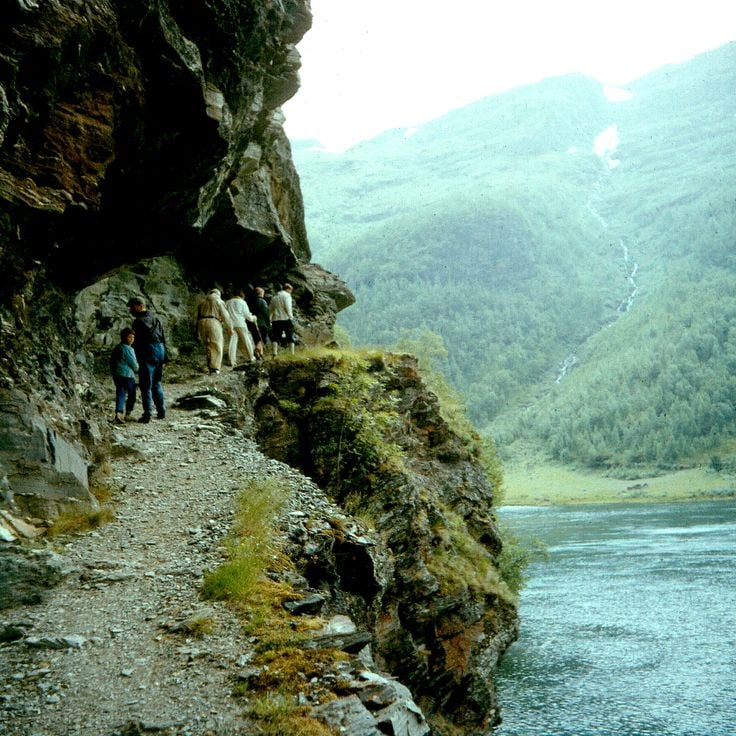
The Aurlandsdalen ranks among Norway's most celebrated hiking trails, covering 25 miles (40 kilometers) through an uninhabited glacial valley between Aurland and Finse. The path follows the Aurlandselva river through a succession of alpine plateaus, mountain passes and wooded valley floors, passing abandoned summer farms and smaller waterfalls. The route suits multi-day treks with overnight stays in staffed huts or campsites along the way.
Trollkirka is a limestone cave system with underground waterfalls in the Norwegian fjord country. The caves sit in the Rauma mountains and require a steep two-hour hike to reach. Inside, a glacial stream runs through the chambers and forms waterfalls that drop between rock walls. The main chamber reaches a height of roughly 40 feet (12 meters). The cave system extends for several hundred yards and contains crevices that allow daylight to enter. The name means Troll Church and references Norwegian folklore. The caves are accessible from June through September when snow has melted.
The Nidaros Cathedral in Trondheim served for centuries as Scandinavia's most important pilgrimage site and ranks among Norway's most significant medieval structures. The cathedral was built over the burial site of King Olav II, who fell in the Battle of Stiklestad in 1030 and was later canonized. The current building dates primarily from the 12th to 14th centuries in Gothic and Romanesque styles, with the west façade particularly notable for its numerous stone figures. After the Reformation the cathedral lost its function as a pilgrimage church but remained the coronation site for Norwegian monarchs until the early 20th century. Restoration work since the late 1800s has rebuilt large portions of the structure.
This rock formation rises 1,982 feet (604 meters) above the Lysefjorden and draws over 300,000 visitors annually. The flat platform of Preikestolen, formed by natural erosion during the Ice Age, measures approximately 82 by 82 feet (25 by 25 meters) and offers direct views of the green fjord waters below. The ascent takes about two hours and passes through Scandinavian mountain terrain with lakes and granite formations. The hike is considered challenging with steep sections and requires proper equipment, especially in changing weather conditions.
This 5-cubic-meter boulder sits wedged in a mountain crevice 3,230 feet (984 meters) above the Lysefjord. Reaching Kjeragbolten requires a five-hour hike across rocky terrain from the Øygardstøl parking area. The Kjerag summit stands at 3,556 feet (1,084 meters), and the trail demands three steep ascents with fixed chain supports in exposed sections. Standing on the boulder places you directly above a 3,280-foot (1,000-meter) drop to the fjord. The hiking season runs from mid-June through early October when the route is clear of snow.
The Viking Village of Gudvangen offers visitors a look into the life and culture of Norse communities from over a thousand years ago. This reconstructed settlement includes several timber buildings such as dwellings, workshops and a gathering hall, built according to archaeological findings and historical records. Visitors can observe craft demonstrations featuring traditional techniques including metalworking, weaving and woodcarving. The village sits near the Nærøyfjord, a region with significant Viking history. The site provides insight into daily routines, trade networks and social structures of the Viking Age. Guided tours are available in multiple languages, and staff members wear period clothing to enhance the historical context.
Steinsdalsfossen is a 165-foot waterfall that plunges into the Fosselva River about 1.2 miles (2 kilometers) east of Norheimsund. A paved path leads behind the curtain of water, allowing visitors to walk between the rock face and the cascading stream without getting wet. The waterfall sits directly alongside Road 7 and is accessible from a developed parking area and viewing platform. The surrounding area has been equipped with stairs and railings to facilitate access.
The Heddal Stave Church in Notodden is a largely intact medieval wooden church from the early 13th century and is the largest surviving stave church in Norway. The triple-nave structure displays characteristic architectural features of this building method, including carved portals, dragon ornaments on the roof gables, and load-bearing wooden posts inside. The building has undergone several restorations while preserving much of the original construction. The church continues to serve as a parish church and is open to visitors. An adjacent museum presents artifacts and information about the building's history.
Sverd i fjell consists of three bronze swords installed at Hafrsfjord in 1983. The monument commemorates the 872 battle in which King Harald Fairhair unified the Norwegian tribes. The swords reach heights of up to 33 feet (10 m) and stand anchored in bedrock. Sculptor Fritz Røed designed the three different-sized blades to symbolize peace, unity and the end of tribal warfare. The monument sits directly on the waterfront with views across the fjord. The site includes a small park with information panels about the battle and the artwork's creation. Access is free and the monument can be visited at any time.
Torghatten is a 258-meter (846-foot) mountain in central Norway known for its natural through-hole that penetrates the entire rock formation. The cave formed through erosion during the last ice age and measures approximately 160 meters (525 feet) in length, 35 meters (115 feet) in height, and 20 meters (66 feet) in width. A marked hiking trail through pine forest leads to the hole and takes about 30 minutes. From the through-cave, visitors gain expansive views over the Helgeland archipelago and surrounding waters.
Lake Lovatnet is a glacial lake framed by steep rock faces and several waterfalls. The turquoise water originates from meltwater of surrounding glaciers and changes color depending on season and light conditions. The lake sits about 37 miles (60 kilometers) east of Stryn and extends 7 miles (11 kilometers) between the mountains of Jostedalsbreen National Park. Hiking trails run along the shore and climb to viewpoints on the surrounding heights. Boat trips cover the entire body of water and provide access to less frequented sections.
The Gamle Strynefjellsvegen is a historic mountain pass road that winds through a landscape of glaciers, waterfalls and mountain lakes. This road, which served as the main connection from 1894 until the 1970s, climbs to 3,737 feet (1,139 meters) and now operates as a summer route linking Videseter to Grotli. The route crosses through untouched alpine terrain with views of the Tystigbreen glacier and passes several traditional mountain farms still in operation.
Rago National Park protects one of Norway's most remote wilderness areas, where dense birch forests transition into rugged granite peaks and glacial streams rush through deep valleys. The landscape spans 67 square miles (171 square kilometers) along the Swedish border, offering visitors access to terrain that only a few hundred hikers traverse each year.
This wooden church from 1180 ranks among Norway's best-preserved stave churches and demonstrates medieval construction techniques with its tiered roofs, carved dragon heads and interior featuring freestanding wooden posts. The structure combines Christian and pre-Christian Norse elements in its ornamentation. Visitors can examine the complex carpentry work and runic inscriptions on the wooden walls, which provide insight into Scandinavia's religious transition period.
The Geirangerfjord, a UNESCO World Heritage site, extends 9 miles (15 kilometers) through Stranda and is bordered by steep rock walls rising up to 4,600 feet (1,400 meters) above the deep blue water. Several waterfalls, including the Seven Sisters and the Bridal Veil, cascade from the forested slopes into the fjord. The region offers hiking trails along the cliffs and viewpoints such as Dalsnibba and Flydalsjuvet that provide expansive views over the fjord and surrounding mountains.
Jostedalsbreen spreads across 188 square miles (487 square kilometers) between deep valleys in western Norway. This continental glacier feeds more than 50 glacier arms that descend into surrounding fjord landscapes. Several visitor centers offer guided glacier walks, while hiking trails run along the ice margins and to nearby waterfalls. The ice reaches depths exceeding 1,968 feet (600 meters) in places, and the glacier museum in Fjærland documents the geological history of the region.
Vøringsfossen is a Norwegian waterfall with a free fall of 598 feet (182 meters), ranking among the country's most recognized natural landmarks. The water drops from the Hardangervidda plateau into the narrow Måbødalen valley, with several viewing platforms offering direct views of the entire drop. Recent platforms provide different perspectives on the cascade and surrounding valley, while the historic access route along the old road remains available. The waterfall sits on the main route between Oslo and Bergen and is most easily accessible from April through October.
The Aurlandsdalen ranks among Norway's most celebrated hiking trails, covering 25 miles (40 kilometers) through an uninhabited glacial valley between Aurland and Finse. The path follows the Aurlandselva river through a succession of alpine plateaus, mountain passes and wooded valley floors, passing abandoned summer farms and smaller waterfalls. The route suits multi-day treks with overnight stays in staffed huts or campsites along the way.
Trollkirka is a limestone cave system with underground waterfalls in the Norwegian fjord country. The caves sit in the Rauma mountains and require a steep two-hour hike to reach. Inside, a glacial stream runs through the chambers and forms waterfalls that drop between rock walls. The main chamber reaches a height of roughly 40 feet (12 meters). The cave system extends for several hundred yards and contains crevices that allow daylight to enter. The name means Troll Church and references Norwegian folklore. The caves are accessible from June through September when snow has melted.
The Nidaros Cathedral in Trondheim served for centuries as Scandinavia's most important pilgrimage site and ranks among Norway's most significant medieval structures. The cathedral was built over the burial site of King Olav II, who fell in the Battle of Stiklestad in 1030 and was later canonized. The current building dates primarily from the 12th to 14th centuries in Gothic and Romanesque styles, with the west façade particularly notable for its numerous stone figures. After the Reformation the cathedral lost its function as a pilgrimage church but remained the coronation site for Norwegian monarchs until the early 20th century. Restoration work since the late 1800s has rebuilt large portions of the structure.
This rock formation rises 1,982 feet (604 meters) above the Lysefjorden and draws over 300,000 visitors annually. The flat platform of Preikestolen, formed by natural erosion during the Ice Age, measures approximately 82 by 82 feet (25 by 25 meters) and offers direct views of the green fjord waters below. The ascent takes about two hours and passes through Scandinavian mountain terrain with lakes and granite formations. The hike is considered challenging with steep sections and requires proper equipment, especially in changing weather conditions.
This 5-cubic-meter boulder sits wedged in a mountain crevice 3,230 feet (984 meters) above the Lysefjord. Reaching Kjeragbolten requires a five-hour hike across rocky terrain from the Øygardstøl parking area. The Kjerag summit stands at 3,556 feet (1,084 meters), and the trail demands three steep ascents with fixed chain supports in exposed sections. Standing on the boulder places you directly above a 3,280-foot (1,000-meter) drop to the fjord. The hiking season runs from mid-June through early October when the route is clear of snow.
The Viking Village of Gudvangen offers visitors a look into the life and culture of Norse communities from over a thousand years ago. This reconstructed settlement includes several timber buildings such as dwellings, workshops and a gathering hall, built according to archaeological findings and historical records. Visitors can observe craft demonstrations featuring traditional techniques including metalworking, weaving and woodcarving. The village sits near the Nærøyfjord, a region with significant Viking history. The site provides insight into daily routines, trade networks and social structures of the Viking Age. Guided tours are available in multiple languages, and staff members wear period clothing to enhance the historical context.
Steinsdalsfossen is a 165-foot waterfall that plunges into the Fosselva River about 1.2 miles (2 kilometers) east of Norheimsund. A paved path leads behind the curtain of water, allowing visitors to walk between the rock face and the cascading stream without getting wet. The waterfall sits directly alongside Road 7 and is accessible from a developed parking area and viewing platform. The surrounding area has been equipped with stairs and railings to facilitate access.
The Heddal Stave Church in Notodden is a largely intact medieval wooden church from the early 13th century and is the largest surviving stave church in Norway. The triple-nave structure displays characteristic architectural features of this building method, including carved portals, dragon ornaments on the roof gables, and load-bearing wooden posts inside. The building has undergone several restorations while preserving much of the original construction. The church continues to serve as a parish church and is open to visitors. An adjacent museum presents artifacts and information about the building's history.
Sverd i fjell consists of three bronze swords installed at Hafrsfjord in 1983. The monument commemorates the 872 battle in which King Harald Fairhair unified the Norwegian tribes. The swords reach heights of up to 33 feet (10 m) and stand anchored in bedrock. Sculptor Fritz Røed designed the three different-sized blades to symbolize peace, unity and the end of tribal warfare. The monument sits directly on the waterfront with views across the fjord. The site includes a small park with information panels about the battle and the artwork's creation. Access is free and the monument can be visited at any time.
Torghatten is a 258-meter (846-foot) mountain in central Norway known for its natural through-hole that penetrates the entire rock formation. The cave formed through erosion during the last ice age and measures approximately 160 meters (525 feet) in length, 35 meters (115 feet) in height, and 20 meters (66 feet) in width. A marked hiking trail through pine forest leads to the hole and takes about 30 minutes. From the through-cave, visitors gain expansive views over the Helgeland archipelago and surrounding waters.
Lake Lovatnet is a glacial lake framed by steep rock faces and several waterfalls. The turquoise water originates from meltwater of surrounding glaciers and changes color depending on season and light conditions. The lake sits about 37 miles (60 kilometers) east of Stryn and extends 7 miles (11 kilometers) between the mountains of Jostedalsbreen National Park. Hiking trails run along the shore and climb to viewpoints on the surrounding heights. Boat trips cover the entire body of water and provide access to less frequented sections.
The Gamle Strynefjellsvegen is a historic mountain pass road that winds through a landscape of glaciers, waterfalls and mountain lakes. This road, which served as the main connection from 1894 until the 1970s, climbs to 3,737 feet (1,139 meters) and now operates as a summer route linking Videseter to Grotli. The route crosses through untouched alpine terrain with views of the Tystigbreen glacier and passes several traditional mountain farms still in operation.
Rago National Park protects one of Norway's most remote wilderness areas, where dense birch forests transition into rugged granite peaks and glacial streams rush through deep valleys. The landscape spans 67 square miles (171 square kilometers) along the Swedish border, offering visitors access to terrain that only a few hundred hikers traverse each year.
This wooden church from 1180 ranks among Norway's best-preserved stave churches and demonstrates medieval construction techniques with its tiered roofs, carved dragon heads and interior featuring freestanding wooden posts. The structure combines Christian and pre-Christian Norse elements in its ornamentation. Visitors can examine the complex carpentry work and runic inscriptions on the wooden walls, which provide insight into Scandinavia's religious transition period.
The Geirangerfjord, a UNESCO World Heritage site, extends 9 miles (15 kilometers) through Stranda and is bordered by steep rock walls rising up to 4,600 feet (1,400 meters) above the deep blue water. Several waterfalls, including the Seven Sisters and the Bridal Veil, cascade from the forested slopes into the fjord. The region offers hiking trails along the cliffs and viewpoints such as Dalsnibba and Flydalsjuvet that provide expansive views over the fjord and surrounding mountains.
Jostedalsbreen spreads across 188 square miles (487 square kilometers) between deep valleys in western Norway. This continental glacier feeds more than 50 glacier arms that descend into surrounding fjord landscapes. Several visitor centers offer guided glacier walks, while hiking trails run along the ice margins and to nearby waterfalls. The ice reaches depths exceeding 1,968 feet (600 meters) in places, and the glacier museum in Fjærland documents the geological history of the region.
Vøringsfossen is a Norwegian waterfall with a free fall of 598 feet (182 meters), ranking among the country's most recognized natural landmarks. The water drops from the Hardangervidda plateau into the narrow Måbødalen valley, with several viewing platforms offering direct views of the entire drop. Recent platforms provide different perspectives on the cascade and surrounding valley, while the historic access route along the old road remains available. The waterfall sits on the main route between Oslo and Bergen and is most easily accessible from April through October.
The Aurlandsdalen ranks among Norway's most celebrated hiking trails, covering 25 miles (40 kilometers) through an uninhabited glacial valley between Aurland and Finse. The path follows the Aurlandselva river through a succession of alpine plateaus, mountain passes and wooded valley floors, passing abandoned summer farms and smaller waterfalls. The route suits multi-day treks with overnight stays in staffed huts or campsites along the way.