See the monuments around you in AROpen chests in the app
Around Us is built for your phone — point your camera at the streets and discover the monuments and places around you in augmented reality.Around Us is built for your phone — chests unlock when you walk, explore and capture nearby places.
Santa Fe contains a concentrated collection of historic sites and cultural institutions that reflect the layered history of New Mexico. The city combines Spanish colonial architecture, Native American heritage, and contemporary art across its museums, galleries, and religious buildings. The New Mexico History Museum and the Palace of the Governors document over four centuries of regional history, while San Miguel Chapel and the Cathedral Basilica of St. Francis of Assisi rank among the oldest continuously used church structures in the region.
The museum landscape ranges from the Museum of International Folk Art, with its extensive collections of traditional crafts, to the Georgia O'Keeffe Museum dedicated to the American modernist. The Museum of Indian Arts and Culture and the Wheelwright Museum of the American Indian present the artistic traditions of Pueblo peoples and other indigenous groups of the Southwest. Canyon Road concentrates numerous galleries along a historic street, while venues like Meow Wolf Santa Fe and SITE Santa Fe focus on contemporary and experimental art forms. Outdoor recreation is available through the Santa Fe National Forest, Dale Ball Trails, and Atalaya Mountain Trail in the surrounding mountains.
Santa Fe contains a concentrated collection of historic sites and cultural institutions that reflect the layered history of New Mexico. The city combines Spanish colonial architecture, Native American heritage, and contemporary art across its museums, galleries, and religious buildings. The New Mexico History Museum and the Palace of the Governors document over four centuries of regional history, while San Miguel Chapel and the Cathedral Basilica of St. Francis of Assisi rank among the oldest continuously used church structures in the region.
The museum landscape ranges from the Museum of International Folk Art, with its extensive collections of traditional crafts, to the Georgia O'Keeffe Museum dedicated to the American modernist. The Museum of Indian Arts and Culture and the Wheelwright Museum of the American Indian present the artistic traditions of Pueblo peoples and other indigenous groups of the Southwest. Canyon Road concentrates numerous galleries along a historic street, while venues like Meow Wolf Santa Fe and SITE Santa Fe focus on contemporary and experimental art forms. Outdoor recreation is available through the Santa Fe National Forest, Dale Ball Trails, and Atalaya Mountain Trail in the surrounding mountains.
The Wheelwright Museum of the American Indian preserves an important collection of traditional objects, pottery, and textiles from the indigenous peoples of the Southwestern United States. This institution provides visitors with informed perspectives on the material cultures of the region and complements Santa Fe's cultural offerings through regularly changing special exhibitions that examine different aspects of Native American artistic traditions and deepen understanding of New Mexico's history.
This adobe palace was built in 1610 and served as the seat of government for three centuries under Spanish, Mexican and United States territorial rule. The structure survived the Pueblo Revolt of 1680 and was later rebuilt. Today this historic building houses the New Mexico History Museum, which documents the colonial past and cultural evolution of the region. The portal along the north side of the Plaza has served for decades as a marketplace for Pueblo artisans. Exhibits inside cover subjects ranging from the Spanish conquest to New Mexico's incorporation into the Union.
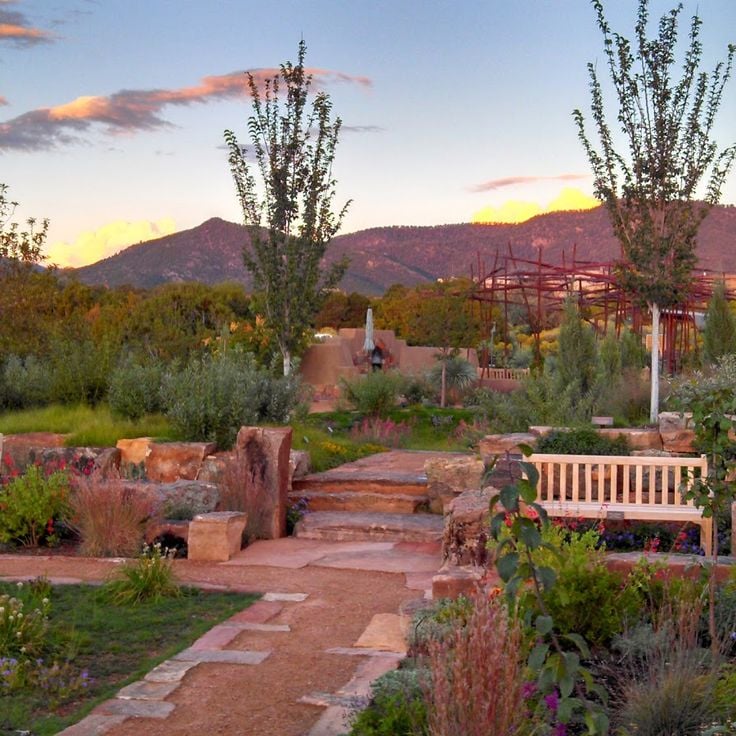
This 20-acre (8-hectare) park includes landscaped trails where desert plants, cacti, and wildflowers native to New Mexico grow. The site showcases the natural flora of the region and complements Santa Fe's cultural and historical collections with a botanical focus. Visitors can learn about native plant species adapted to the high-altitude and arid climate of northern New Mexico. The trails wind through various garden areas representing different habitats and plant communities.
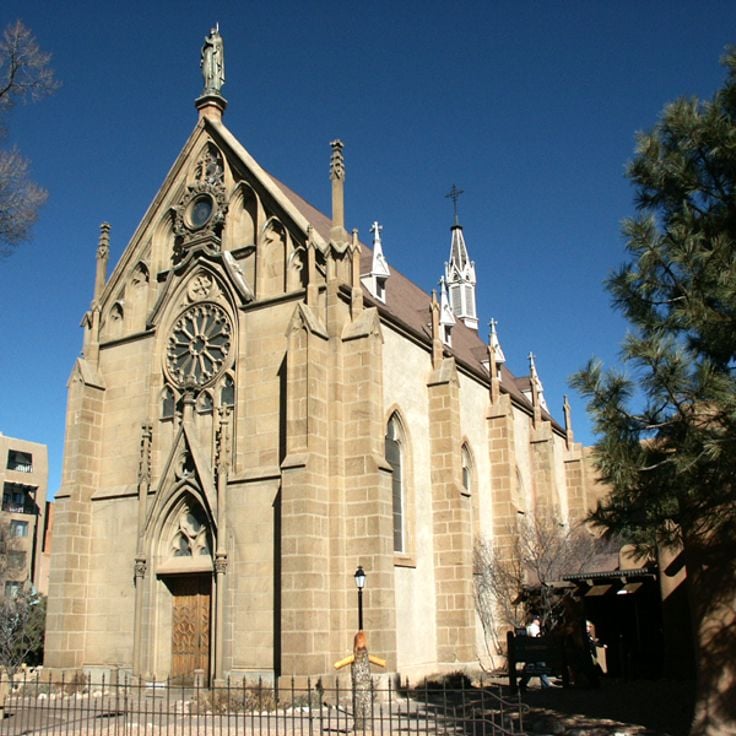
This neo-Gothic chapel built in 1878 illustrates the role of Catholic institutions in Santa Fe's development through its construction and furnishings. The Loretto Chapel was erected for the Sisters of Loretto and contains a spiral staircase with two complete turns, constructed without nails or a central support pillar. The staircase's engineering has occupied craftsmen and engineers since its installation. Located within walking distance of the Plaza, this structure documents the architectural traditions of religious establishments in 19th-century New Mexico.
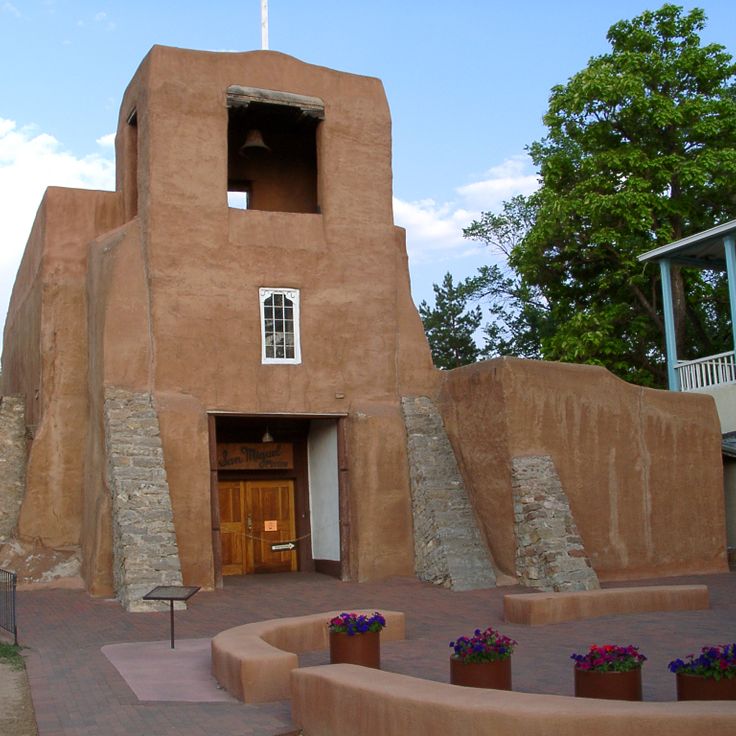
This chapel in Santa Fe stands as one of the oldest active church buildings in the United States, founded by Spanish settlers in 1610. The adobe walls and traditional wooden beams of the church demonstrate the characteristic construction methods of colonial New Mexico, while the interior preserves religious artworks from the Spanish colonial period. Visitors can examine original features such as the thick mud brick walls and wooden roof structure that have withstood the climatic conditions for over four centuries. The chapel documents the early Spanish missionary activity and religious traditions of the region.
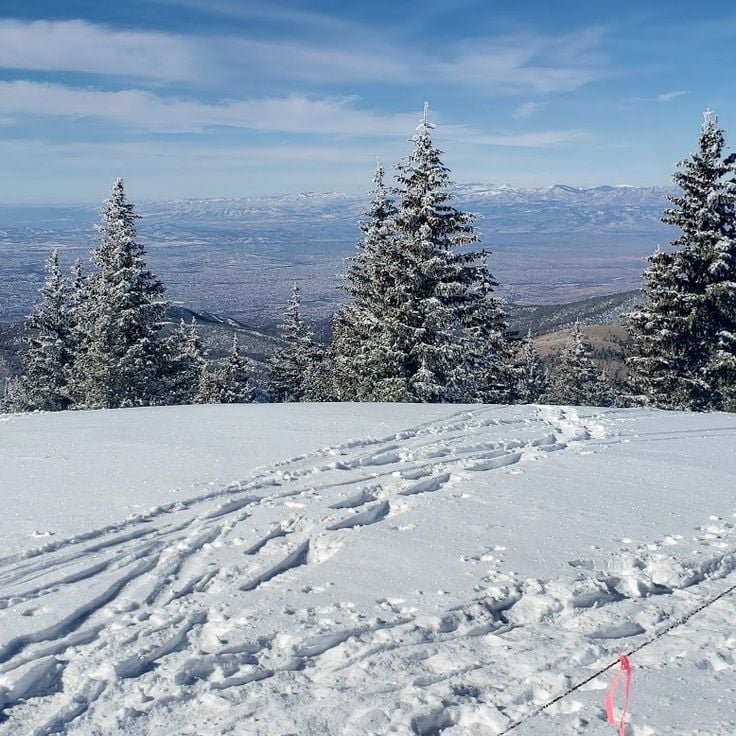
Ski Santa Fe sits on the slopes of the Sangre de Cristo Mountains and offers 86 runs across 780 acres. The base lodge stands at 10,350 feet (3,162 meters) elevation. This ski area complements the cultural offerings of Santa Fe by providing visitors access to the alpine terrain of New Mexico alongside the city's historic sites and museums. The winter season draws skiers and snowboarders who appreciate the dry snow conditions and frequent sunshine typical of the region.
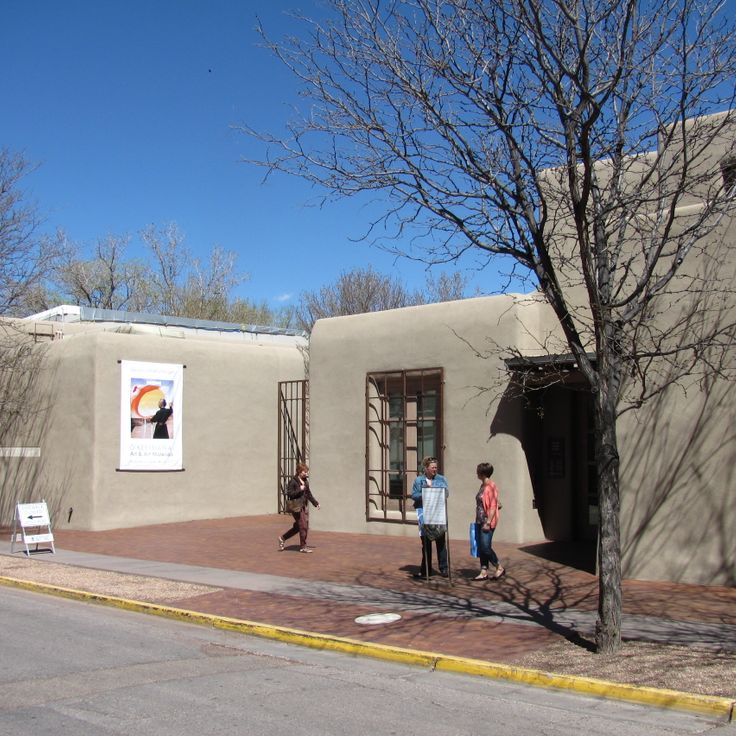
This museum holds the world's largest collection of works by American modernist Georgia O'Keeffe, with approximately 3,000 paintings, drawings and sculptures spanning her entire career from 1901 to 1984. The downtown Santa Fe galleries document the artist's development and display her famous flower subjects, New Mexico landscapes and abstract compositions that established her as one of the most significant figures in 20th-century American art.
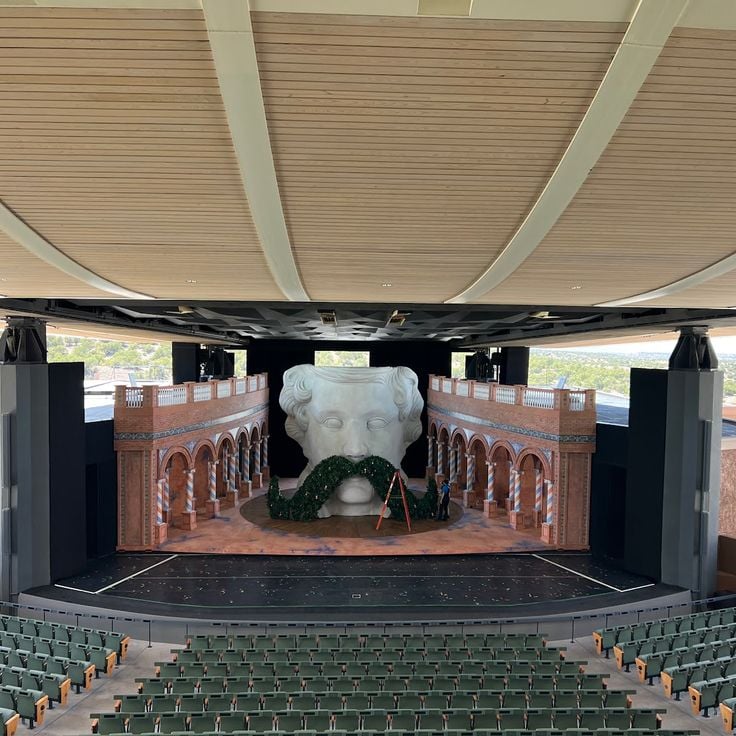
This outdoor opera house on the outskirts of Santa Fe was founded in 1957 and ranks among the leading opera companies in the United States. The theater seats 2,128 and sits on a hillside overlooking the mountains north of the city. The season runs from late June through late August and typically features five productions per season, including both classic works and premieres of contemporary operas. The partially open design allows patrons to view the sunset and surrounding landscape during performances. The opera house has earned an international reputation for innovative stagings and its support of young singers through apprentice programs.
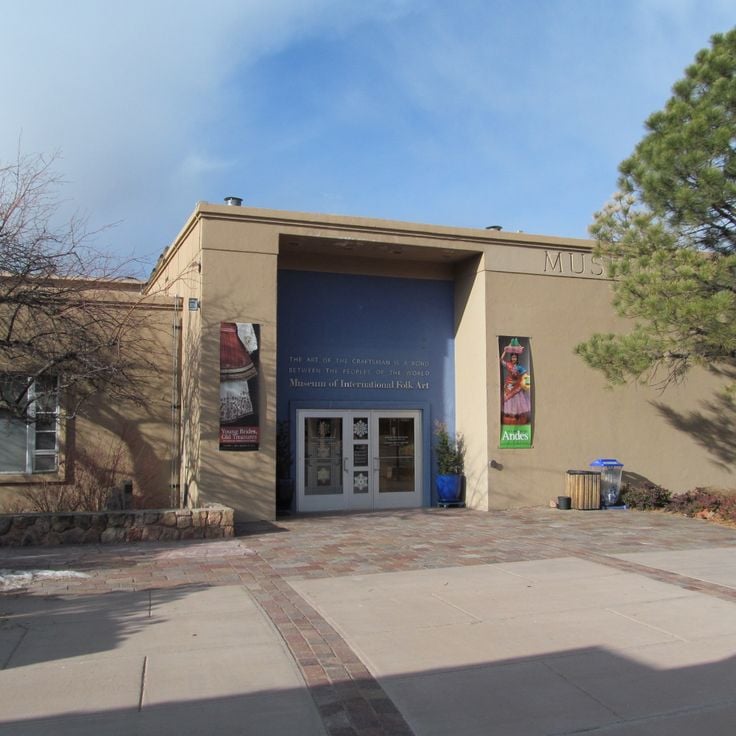
This museum maintains a permanent collection of more than 20,000 works of folk art, representing artistic practices from various world cultures. As a significant institution in Santa Fe, this museum contributes to the presentation of New Mexico's cultural diversity by displaying objects including textiles, ceramics, woodcarvings and other traditional craft techniques. The exhibitions feature works from Latin America, Africa, Asia and Europe, allowing visitors to understand the connections between different artistic traditions. This museum documents the historical importance of folk art in preserving cultural identities.
This art center in Santa Fe presents interactive installations across two floors of a former bowling alley. Meow Wolf Santa Fe opened in 2016 and features work by more than 135 New Mexico artists. The permanent exhibition House of Eternal Return combines narrative elements with walk-through sculptures, projections and sound installations. Visitors move through themed rooms ranging from Victorian parlors to alien landscapes, discovering hidden passages and narrative clues that tell a fictional story about a missing family.
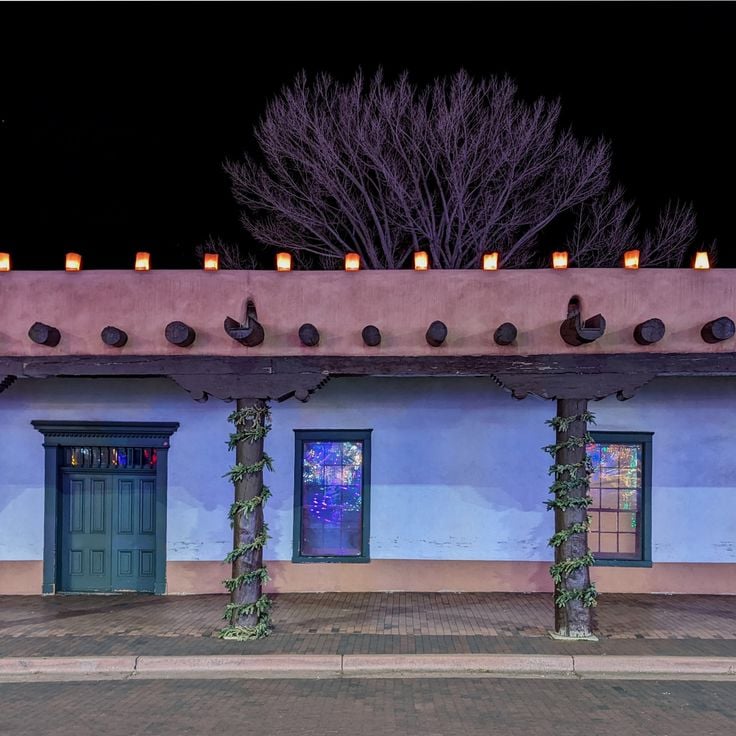
This roughly one-kilometer street has served as the center of Santa Fe's art scene since the 1920s. Canyon Road runs from Paseo de Peralta to Camino del Monte Sol and contains over one hundred galleries, craft shops and restaurants housed in traditional adobe structures. The street follows an old Pueblo trading route and developed into an artist colony in the early twentieth century. Today the galleries display a wide range of work, from traditional Southwestern art to contemporary pieces. On Friday evenings during summer months, the galleries open their doors for visitors to explore the collections.
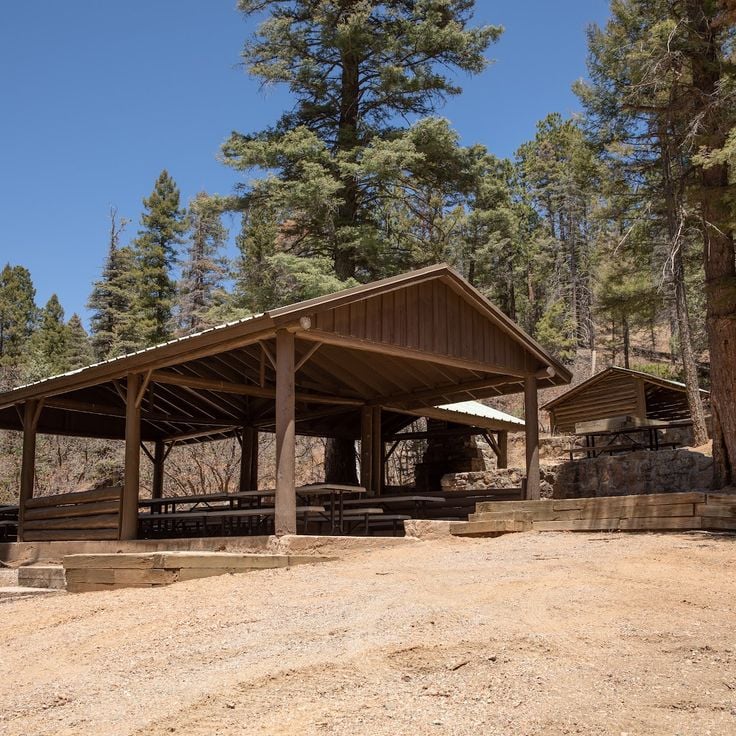
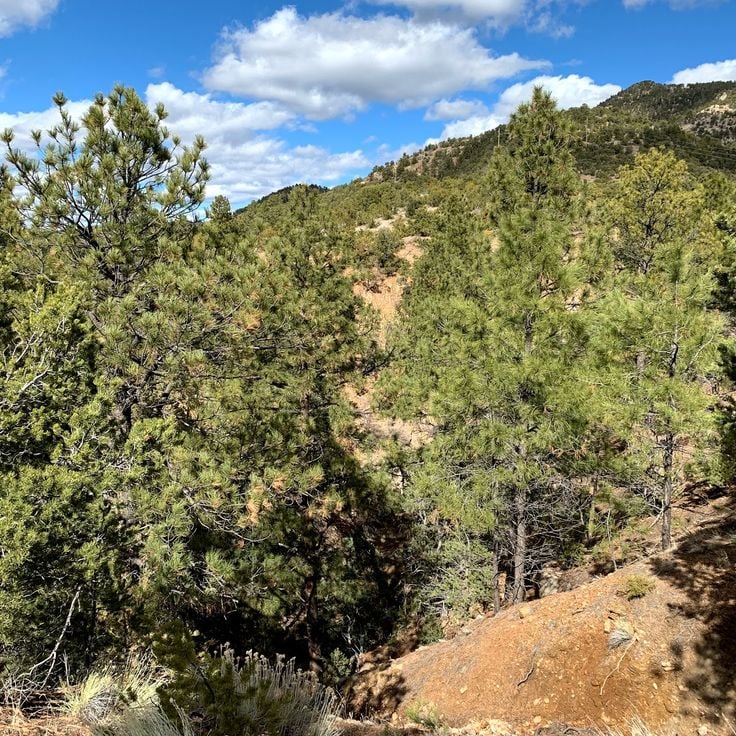
This natural area covers mountains, lakes, and a network of trails for hiking, biking, and horseback riding in the Sangre de Cristo range, providing visitors with access to the landscapes surrounding Santa Fe. The forest spans roughly 2,500 square miles (6,500 square kilometers) and contains several ecosystems from desert valleys to alpine peaks. Trails lead to historic sites and natural overlooks, while campgrounds and picnic areas make the terrain accessible for day trips and extended stays.
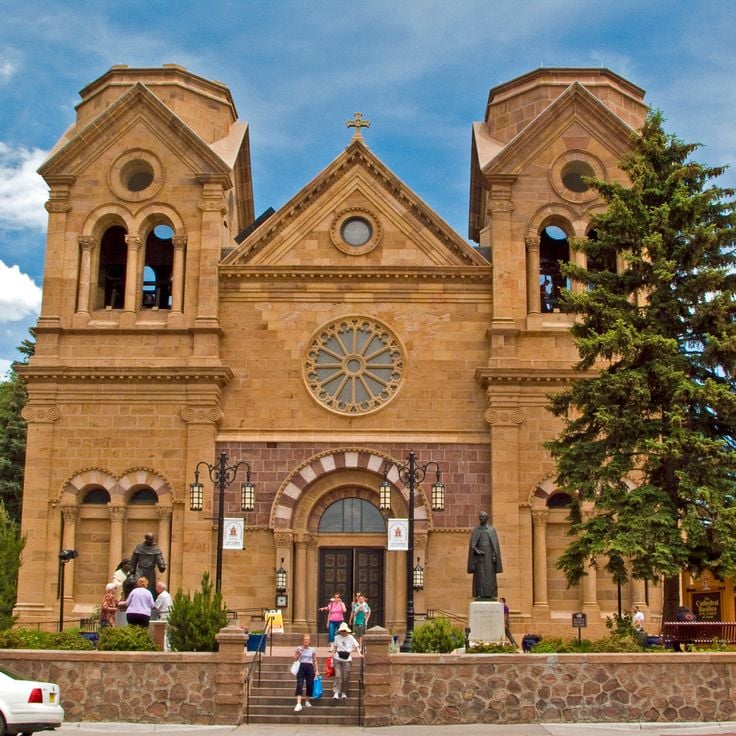
This Roman Catholic cathedral stands on the site of an earlier 17th-century adobe church and was built between 1869 and 1886 under Archbishop Jean-Baptiste Lamy. The yellow sandstone facade shows Romanesque and Byzantine influences, flanked by two 26-meter (85-foot) towers. The interior preserves the small La Conquistadora chapel from the original adobe church, along with stained glass windows imported from France. The basilica represents a critical period in Santa Fe's religious history when the Catholic Church reasserted its authority following the American takeover of New Mexico. The construction marked a deliberate break from local Pueblo adobe traditions and introduced European architectural styles to the region.
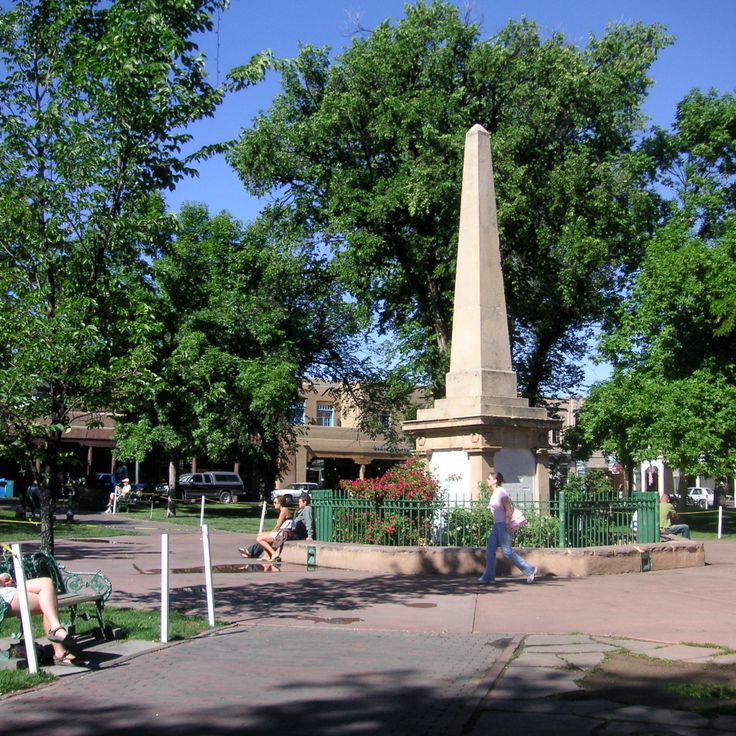
This plaza has served as the historic center of the city since 1610 and functions as a gathering place for markets, concerts and festivals throughout the year. The Santa Fe Plaza documents more than four centuries of New Mexico history, from the Spanish colonial period through Mexican rule to the American territorial era. Native American vendors sell jewelry, pottery and other handcrafted goods under the portal arcades surrounding the square. The plaza continues to operate as the central public space of the city, where residents and visitors converge for commerce, cultural events and civic gatherings.
This museum preserves 75,000 artworks and artifacts from indigenous peoples of the American Southwest within a territorial-style building. The collection spans pottery, textiles, jewelry, and basketry from prehistoric times to the present, documenting artistic traditions of Pueblo, Navajo, and Apache communities. Permanent exhibitions explore cultural development across the region and demonstrate craft techniques passed through generations. The museum sits on Museum Hill in Santa Fe, complementing the city's historic buildings and cultural sites that trace New Mexico's heritage.
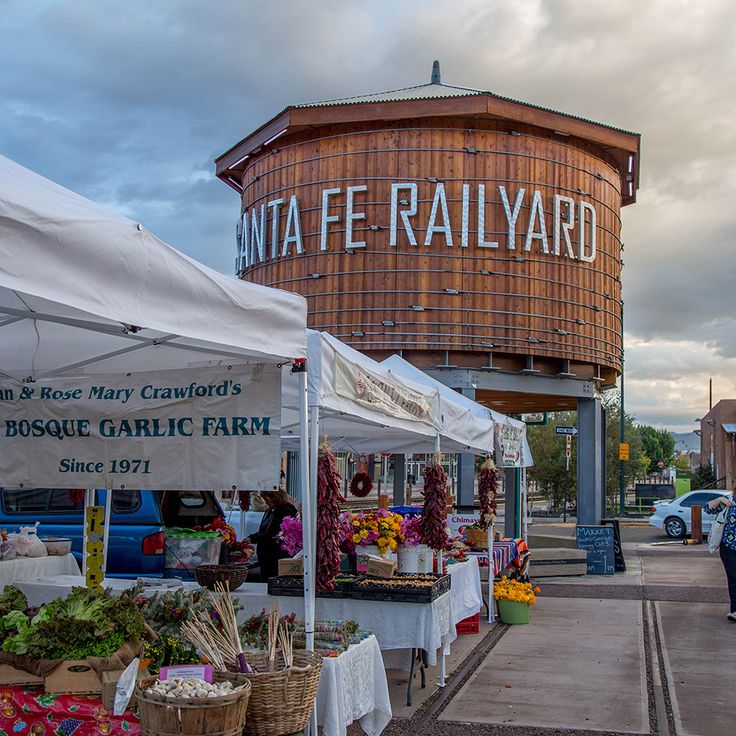
This farmers market occupies the former railway station building, gathering around 150 local producers on Saturdays and Tuesdays to sell fresh fruits, vegetables, baked goods, cheeses and handcrafted items. The Santa Fe Farmers Market was established in 1968 and moved to the renovated Railyard sheds in 2008, where covered stalls allow year round operations. Visitors find produce from the greater Santa Fe region, including New Mexico chiles, honey, herbs and seasonal vegetables. The market serves as a gathering point for locals and travelers alike, showcasing the agricultural diversity of the Rio Grande valley.
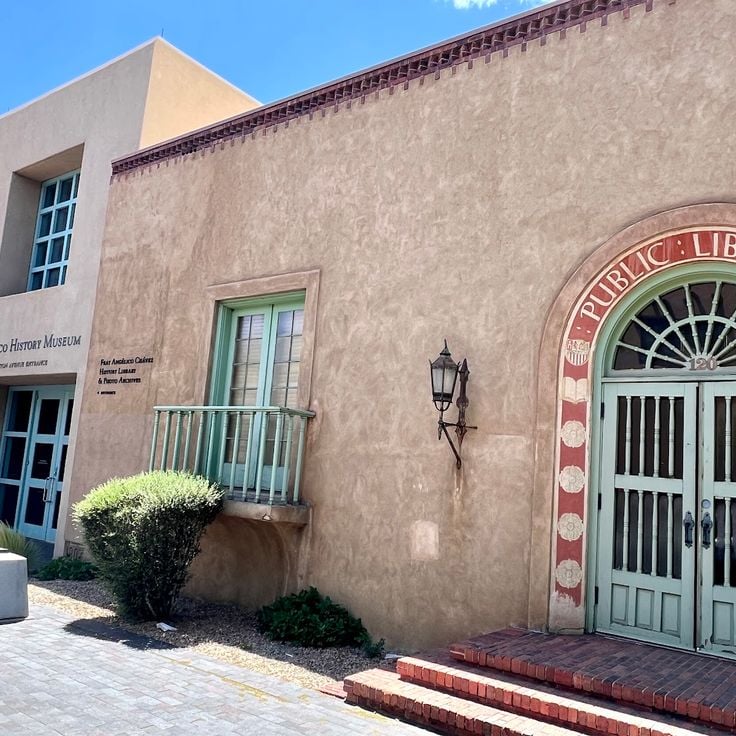
This museum covers more than 12,000 years of human history in New Mexico through exhibitions documenting prehistoric settlement, Spanish colonial rule and modern development. The collections include artifacts from indigenous cultures, documents from the Mexican and American territorial periods and photographic archives. Visitors find displays on New Mexico's role in the Spanish-American War, railroad expansion and cultural changes through the 20th century. The building stands on Santa Fe Plaza and connects historic structures with modern exhibition spaces. Rotating exhibits complement the permanent collection and examine specific aspects of regional history.
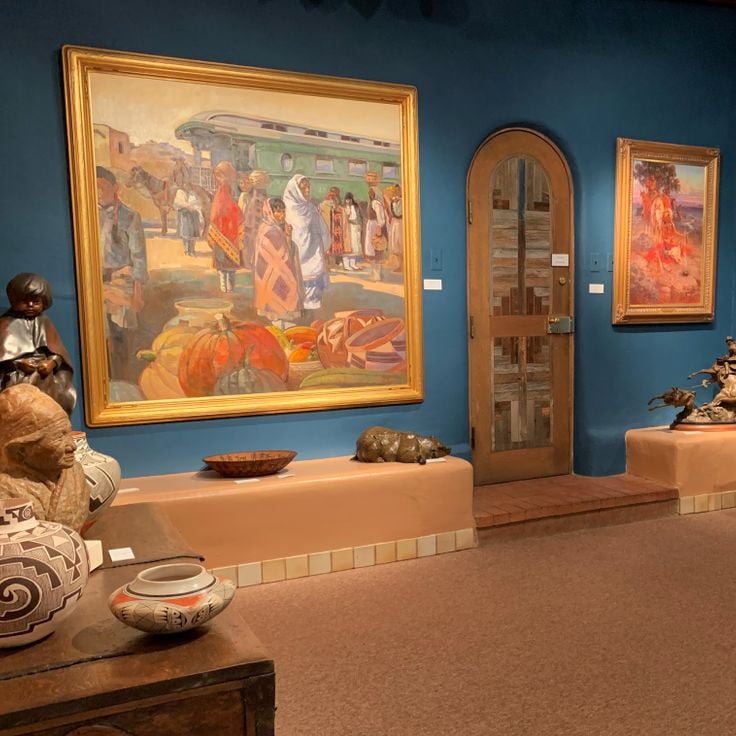
This gallery presents paintings and sculptures by American artists from the Southwest within a traditional adobe building, contributing to the documentation of Santa Fe's regional art scene. The space serves as an exhibition venue for contemporary and historical works that reflect New Mexico's artistic heritage. A visit provides insights into the development of Southwestern art traditions and features works by established regional artists. The exhibitions rotate regularly and encompass various styles and media.
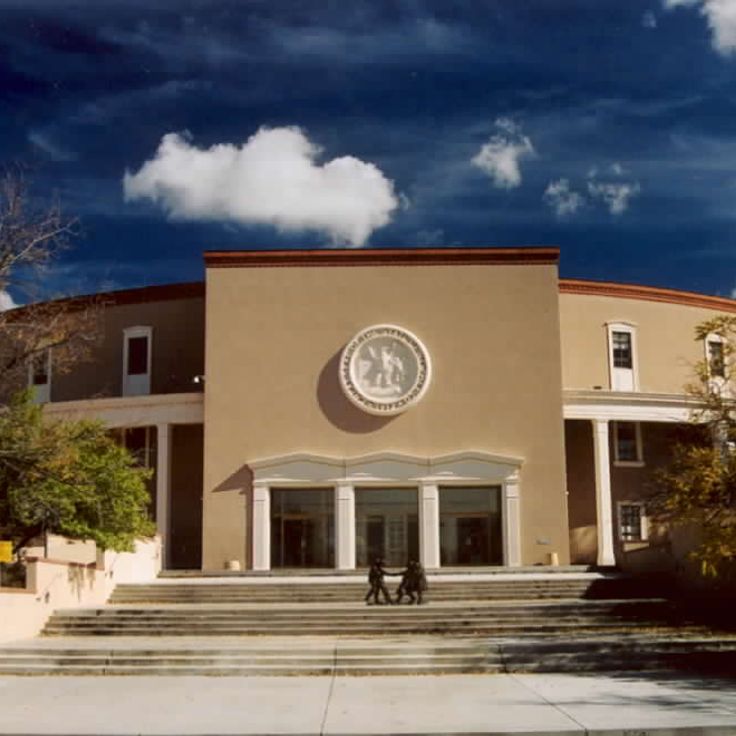
This circular government building houses the state legislature and a permanent collection of 600 artworks by local artists. The New Mexico State Capitol, also known as the Roundhouse, was completed in 1966 and stands as the only round capitol building in the United States. The architecture reflects the Zia sun symbol, an important emblem of New Mexico culture. The art collection includes works in various media, among them paintings, sculptures and photographs that document the state's history and artistic heritage.
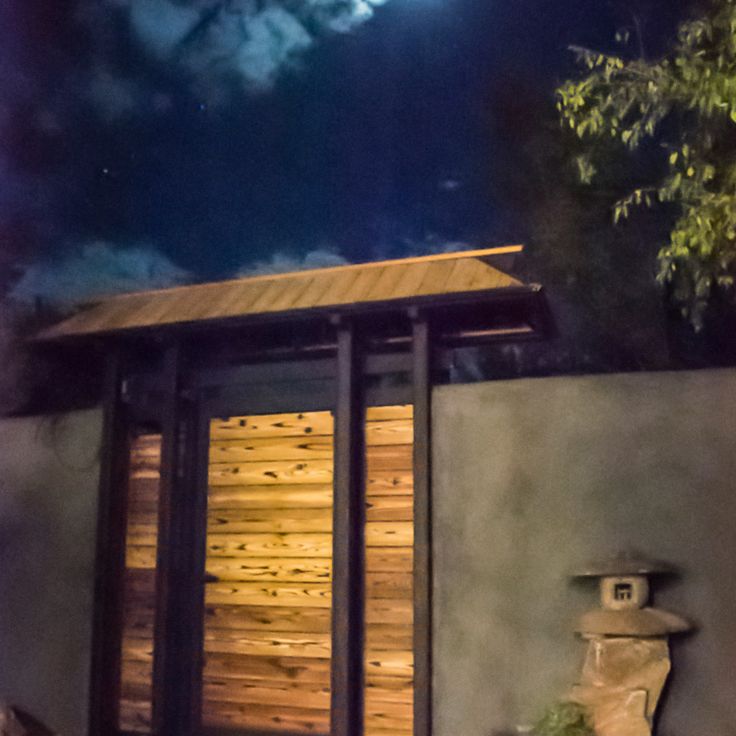
This Japanese-inspired thermal establishment sits in the mountains outside Santa Fe, offering outdoor baths, massage rooms, and a restaurant. Ten Thousand Waves combines traditional onsen elements with the mountain landscape of New Mexico, serving as a retreat from the city's historic sites. The facility includes private and communal baths as well as treatment rooms for various therapies. This thermal establishment complements a visit to Santa Fe's monuments and museums by providing a place for relaxation in a natural setting.
This natural park covers 350 acres (142 hectares) in the Sangre de Cristo Mountains and provides hiking trails, camping areas, and picnic facilities. Hyde Memorial State Park sits at roughly 8,500 feet (2,600 meters) elevation and serves as a gateway to the surrounding mountain landscape. The park complements Santa Fe's cultural sites by offering a nearby natural retreat, allowing visitors to explore the forests and peaks of northern New Mexico.
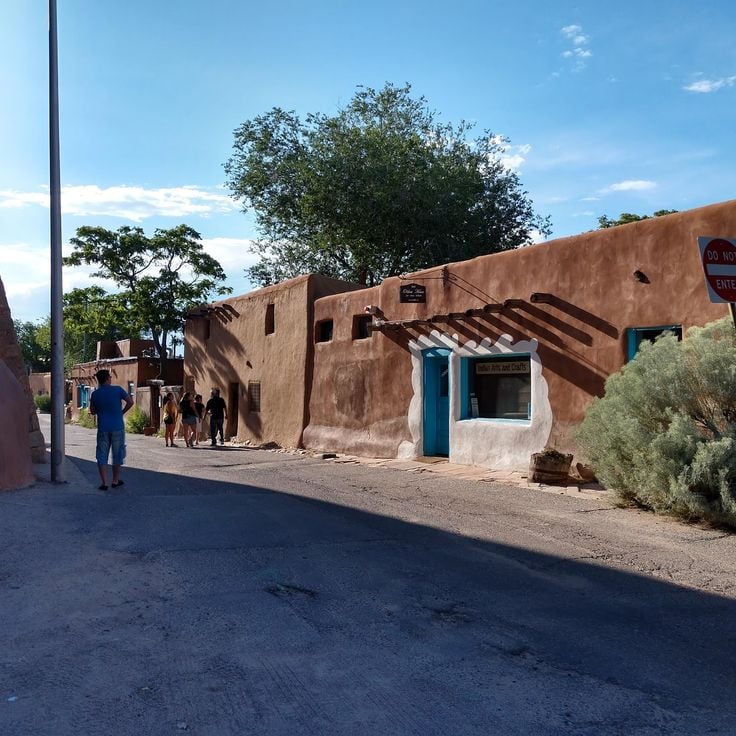
This historic adobe building near the Plaza was constructed in the 1600s and stands as one of the oldest surviving residential structures in Santa Fe. The Oldest House demonstrates Spanish colonial architecture in New Mexico with its massive adobe walls and low wooden beam ceilings. The construction follows traditional building techniques of early Spanish settlers who used local materials. As part of the collection of major monuments and museums in Santa Fe, this building illustrates the architectural foundations of the city during the Spanish colonial period and provides insight into living conditions of the 17th century.
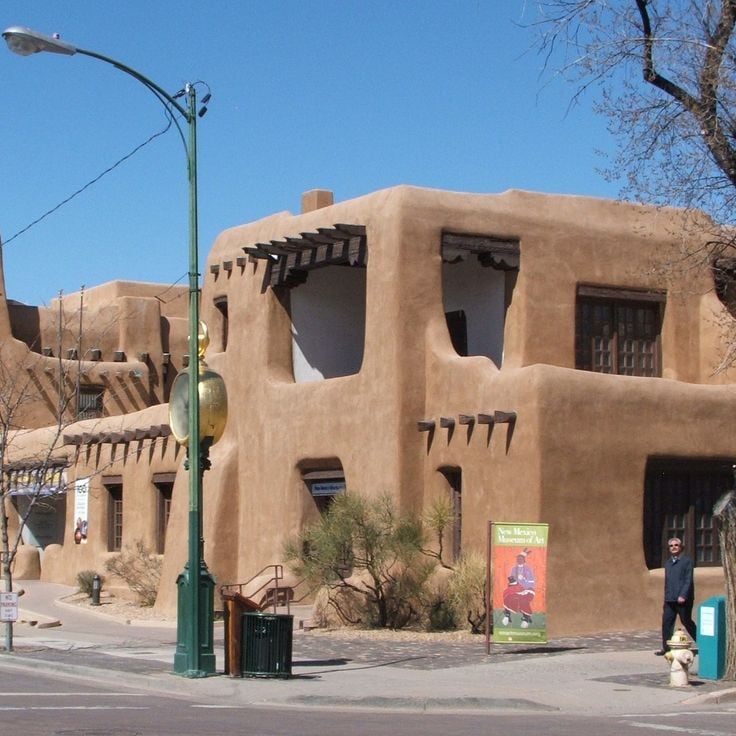
This museum presents paintings, sculptures, and photographs by artists from the American Southwest, including Hispanic artworks and contemporary pieces. The collection documents the artistic development of New Mexico from the early 20th century to the present day. The building itself was constructed in 1917 in the Pueblo Revival style and stands as one of the first museums dedicated to regional Southwestern art. Visitors can view works by painters from the Santa Fe and Taos art colonies, along with modern interpretations of New Mexico's culture and landscape.
The Randall Davey Audubon Center covers 135 acres (54 hectares) north of downtown and offers trails through forested terrain at the edge of the Sangre de Cristo Mountains. This preserve presents Santa Fe's natural environment and serves as an observation point for resident and migratory bird species. The paths lead through varied habitats with ponderosa pine and juniper, while the historic main house once owned by artist Randall Davey documents the connection between art and nature in New Mexico.
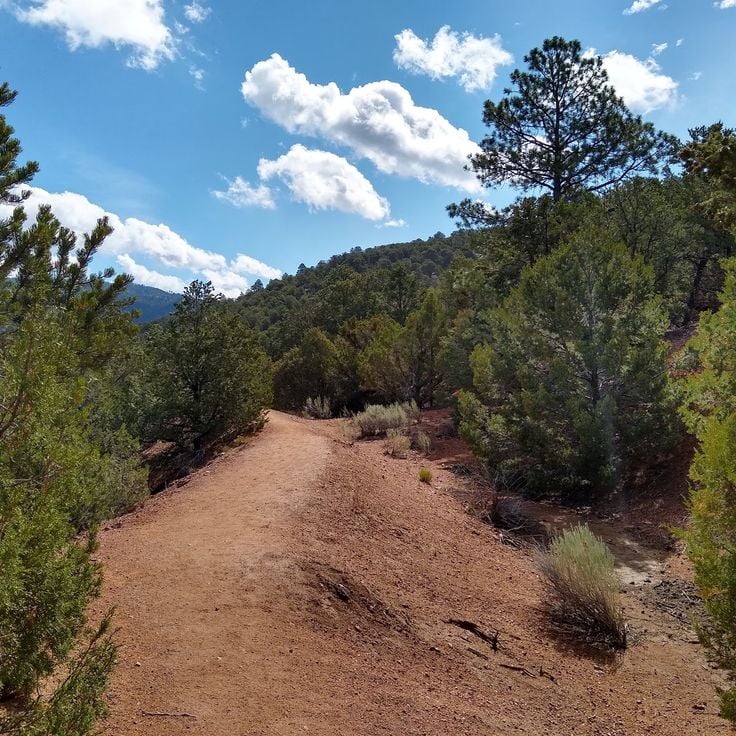
This trail network extends across 22 miles (35 kilometers) through the Sangre de Cristo Mountains and provides well-developed paths for hikers and cyclists throughout the year. The Dale Ball Trails connect several trailheads around Santa Fe and pass through pine forests, juniper groves and open meadows with views toward the city and surrounding mountains. The routes vary in difficulty from easy walks to more demanding ascents and allow visitors to explore the New Mexico landscape in close proximity to the city. The system serves as a practical example of the connection between urban area and natural environment in the region.
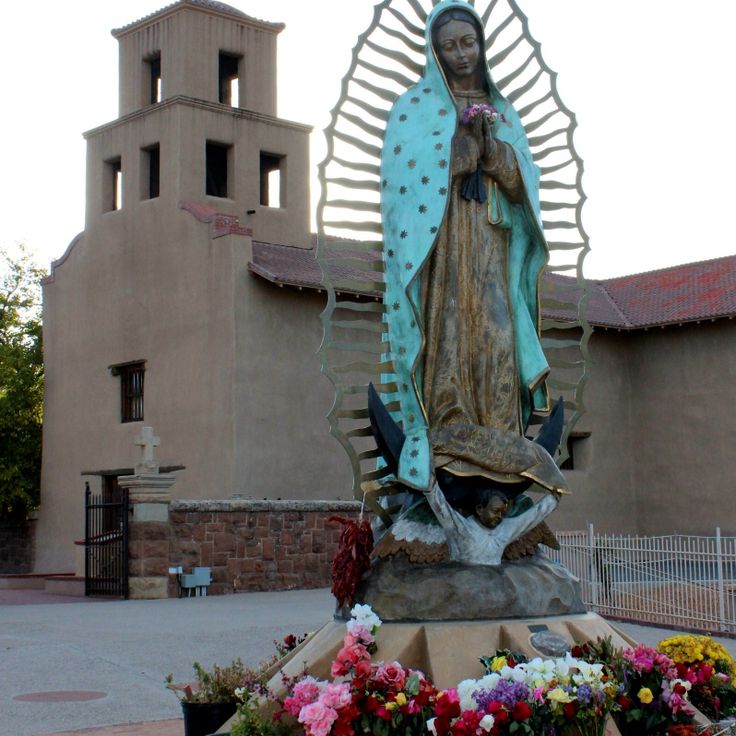
The Sanctuary of Our Lady of Guadalupe is the first American church dedicated to Mexico's patron saint. Built in the late 1700s, this sanctuary displays Spanish colonial architecture with thick adobe walls and a simple facade. Inside, several historical altarpieces include a large oil painting from 1783 depicting the Virgin's apparition. The church served for over two centuries as the endpoint of the Camino Real de Tierra Adentro, the trade route connecting Mexico City to Santa Fe. The sanctuary documents Catholic mission work in New Mexico and preserves examples of colonial-era religious art.
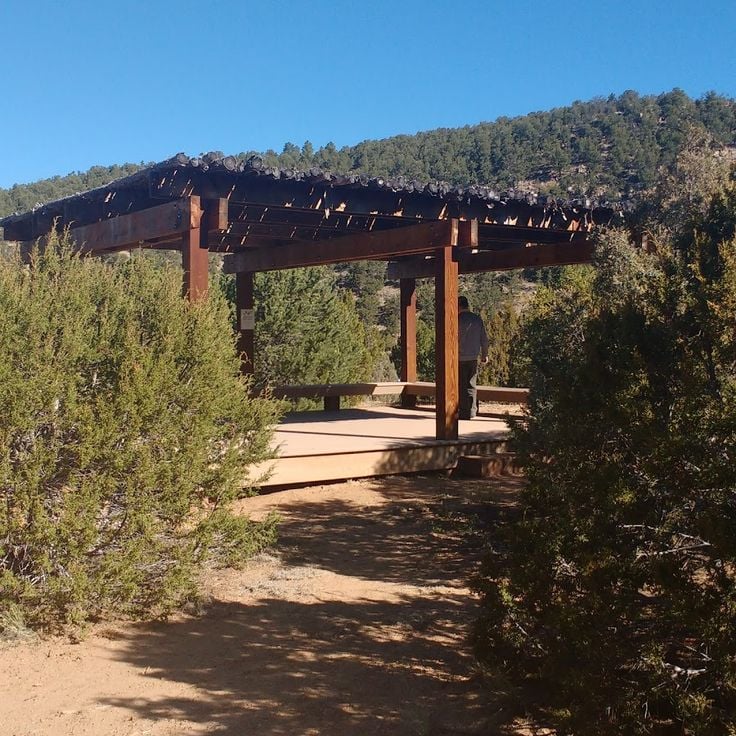
This trail runs 10 kilometers (6.2 miles) round trip to the summit of Atalaya Mountain at 9,186 feet (2,800 meters). The route passes through sections of pine and juniper forest and offers a moderate climb with views across Santa Fe and the surrounding mountain ranges. The trailhead sits near the St. John's College campus, and the path remains accessible year-round, though winter snow conditions can complicate the upper sections.
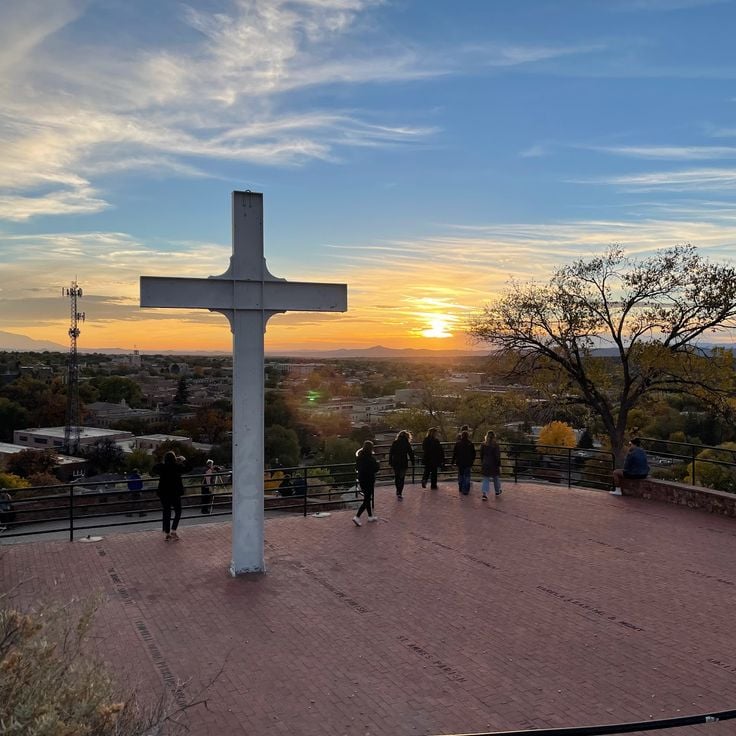
This monument, built in 1920 on a hill above Santa Fe, commemorates the Franciscan missionaries who lost their lives during the Pueblo Revolt of 1680. The Cross of the Martyrs stands as one of the city's key historical markers, documenting a defining moment in New Mexico's past when the region's Pueblo peoples rose up against Spanish colonial rule. A path leads from downtown to the site, offering views across Santa Fe and the Sangre de Cristo Mountains beyond. The cross marks a place of reflection and connects the colonial era with the city's present day multicultural identity.
This winery has used traditional Champagne fermentation methods to produce sparkling wines since 1984, offering visitors to Santa Fe the chance to sample award-winning products. The Gruet family originally came from France and brought their expertise in méthode champenoise to New Mexico, where the high elevation and climate create favorable conditions for viticulture. The tasting room showcases the various vintages and cuvées, while tours provide insights into the production process that distinguishes this operation from other regional wineries.
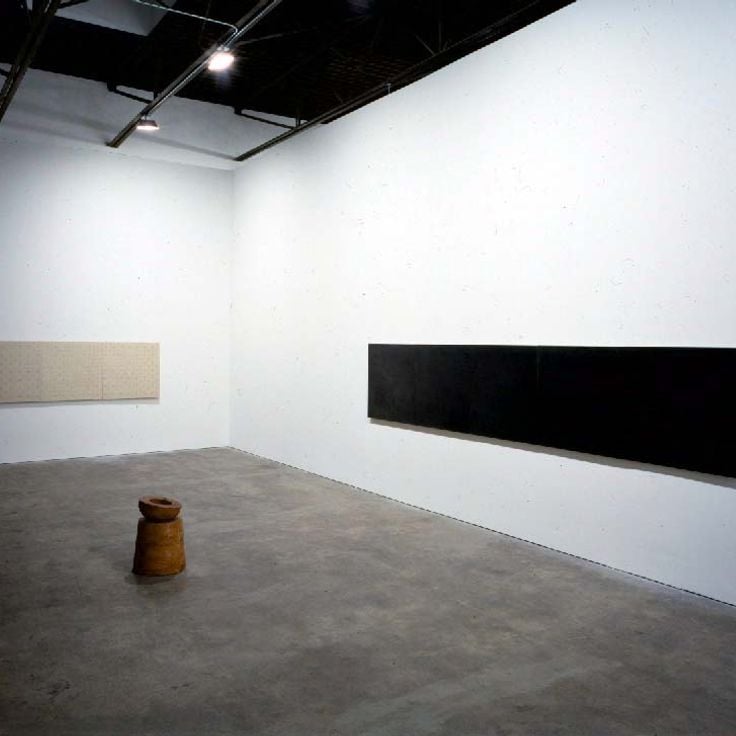
This contemporary art center opened in 1995 in a converted industrial building and presents international exhibitions featuring works by established and emerging artists. SITE Santa Fe collaborates with curators from different countries and organizes educational programs that engage with current artistic developments. The institution contributes to Santa Fe's art scene and provides visitors with opportunities to encounter diverse perspectives in contemporary art.
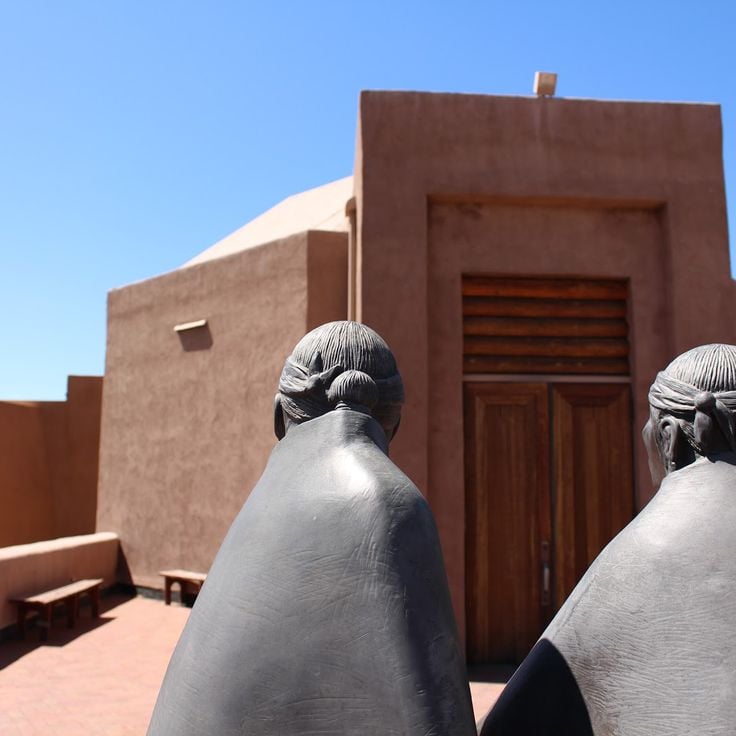
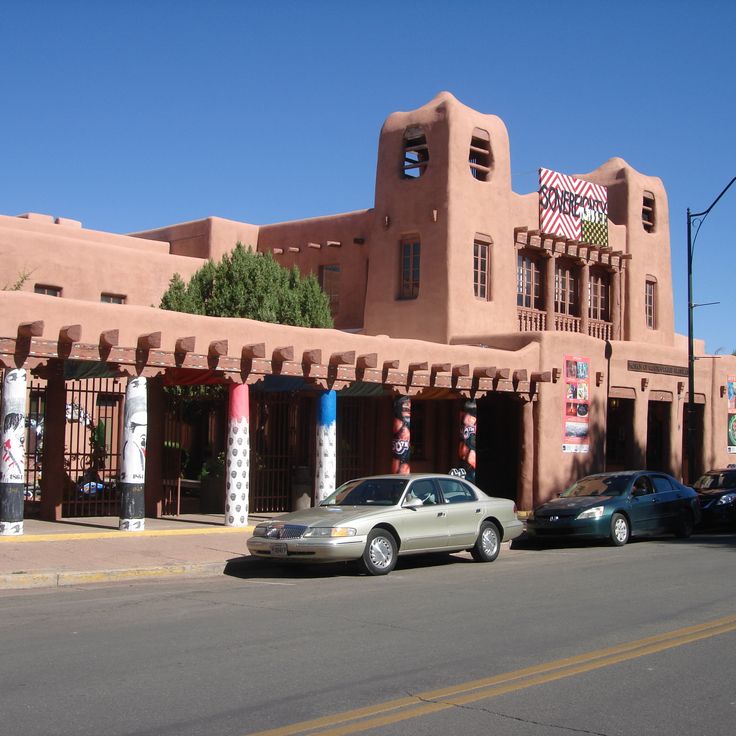
This museum focuses on contemporary works by Native American artists, presenting paintings, sculptures and installations across 8,600 square feet (800 square meters) of exhibition space. The collection provides insight into the modern artistic practice of indigenous peoples across North America and complements the cultural offerings of Santa Fe, where Native traditions merge with contemporary forms of expression. The museum occupies a location in the historic center of town and displays rotating exhibitions alongside a permanent collection representing various media and artistic approaches. Visitors can trace the development of Native American art from traditional forms to current experimental works.
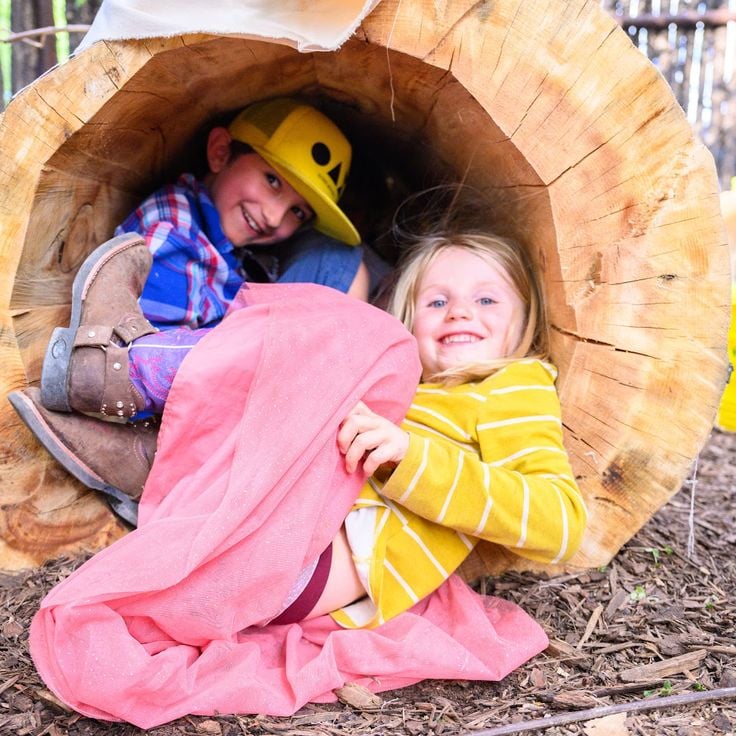
This museum spans multiple levels and combines hands-on science demonstrations with creative workshops designed for young visitors. The Santa Fe Children's Museum complements the city's cultural offerings by providing a space where children can learn through interactive exhibits and educational programs. The facility focuses on age-appropriate activities that encourage curiosity while introducing regional aspects of New Mexico in an accessible format. This museum offers a contrast to Santa Fe's historic monuments and art collections, specifically catering to families traveling with children.
The Wheelwright Museum of the American Indian preserves an important collection of traditional objects, pottery, and textiles from the indigenous peoples of the Southwestern United States. This institution provides visitors with informed perspectives on the material cultures of the region and complements Santa Fe's cultural offerings through regularly changing special exhibitions that examine different aspects of Native American artistic traditions and deepen understanding of New Mexico's history.
This adobe palace was built in 1610 and served as the seat of government for three centuries under Spanish, Mexican and United States territorial rule. The structure survived the Pueblo Revolt of 1680 and was later rebuilt. Today this historic building houses the New Mexico History Museum, which documents the colonial past and cultural evolution of the region. The portal along the north side of the Plaza has served for decades as a marketplace for Pueblo artisans. Exhibits inside cover subjects ranging from the Spanish conquest to New Mexico's incorporation into the Union.
This 20-acre (8-hectare) park includes landscaped trails where desert plants, cacti, and wildflowers native to New Mexico grow. The site showcases the natural flora of the region and complements Santa Fe's cultural and historical collections with a botanical focus. Visitors can learn about native plant species adapted to the high-altitude and arid climate of northern New Mexico. The trails wind through various garden areas representing different habitats and plant communities.
This neo-Gothic chapel built in 1878 illustrates the role of Catholic institutions in Santa Fe's development through its construction and furnishings. The Loretto Chapel was erected for the Sisters of Loretto and contains a spiral staircase with two complete turns, constructed without nails or a central support pillar. The staircase's engineering has occupied craftsmen and engineers since its installation. Located within walking distance of the Plaza, this structure documents the architectural traditions of religious establishments in 19th-century New Mexico.
This chapel in Santa Fe stands as one of the oldest active church buildings in the United States, founded by Spanish settlers in 1610. The adobe walls and traditional wooden beams of the church demonstrate the characteristic construction methods of colonial New Mexico, while the interior preserves religious artworks from the Spanish colonial period. Visitors can examine original features such as the thick mud brick walls and wooden roof structure that have withstood the climatic conditions for over four centuries. The chapel documents the early Spanish missionary activity and religious traditions of the region.
Ski Santa Fe sits on the slopes of the Sangre de Cristo Mountains and offers 86 runs across 780 acres. The base lodge stands at 10,350 feet (3,162 meters) elevation. This ski area complements the cultural offerings of Santa Fe by providing visitors access to the alpine terrain of New Mexico alongside the city's historic sites and museums. The winter season draws skiers and snowboarders who appreciate the dry snow conditions and frequent sunshine typical of the region.
This museum holds the world's largest collection of works by American modernist Georgia O'Keeffe, with approximately 3,000 paintings, drawings and sculptures spanning her entire career from 1901 to 1984. The downtown Santa Fe galleries document the artist's development and display her famous flower subjects, New Mexico landscapes and abstract compositions that established her as one of the most significant figures in 20th-century American art.
This outdoor opera house on the outskirts of Santa Fe was founded in 1957 and ranks among the leading opera companies in the United States. The theater seats 2,128 and sits on a hillside overlooking the mountains north of the city. The season runs from late June through late August and typically features five productions per season, including both classic works and premieres of contemporary operas. The partially open design allows patrons to view the sunset and surrounding landscape during performances. The opera house has earned an international reputation for innovative stagings and its support of young singers through apprentice programs.
This museum maintains a permanent collection of more than 20,000 works of folk art, representing artistic practices from various world cultures. As a significant institution in Santa Fe, this museum contributes to the presentation of New Mexico's cultural diversity by displaying objects including textiles, ceramics, woodcarvings and other traditional craft techniques. The exhibitions feature works from Latin America, Africa, Asia and Europe, allowing visitors to understand the connections between different artistic traditions. This museum documents the historical importance of folk art in preserving cultural identities.
This art center in Santa Fe presents interactive installations across two floors of a former bowling alley. Meow Wolf Santa Fe opened in 2016 and features work by more than 135 New Mexico artists. The permanent exhibition House of Eternal Return combines narrative elements with walk-through sculptures, projections and sound installations. Visitors move through themed rooms ranging from Victorian parlors to alien landscapes, discovering hidden passages and narrative clues that tell a fictional story about a missing family.
This roughly one-kilometer street has served as the center of Santa Fe's art scene since the 1920s. Canyon Road runs from Paseo de Peralta to Camino del Monte Sol and contains over one hundred galleries, craft shops and restaurants housed in traditional adobe structures. The street follows an old Pueblo trading route and developed into an artist colony in the early twentieth century. Today the galleries display a wide range of work, from traditional Southwestern art to contemporary pieces. On Friday evenings during summer months, the galleries open their doors for visitors to explore the collections.
This natural area covers mountains, lakes, and a network of trails for hiking, biking, and horseback riding in the Sangre de Cristo range, providing visitors with access to the landscapes surrounding Santa Fe. The forest spans roughly 2,500 square miles (6,500 square kilometers) and contains several ecosystems from desert valleys to alpine peaks. Trails lead to historic sites and natural overlooks, while campgrounds and picnic areas make the terrain accessible for day trips and extended stays.
This Roman Catholic cathedral stands on the site of an earlier 17th-century adobe church and was built between 1869 and 1886 under Archbishop Jean-Baptiste Lamy. The yellow sandstone facade shows Romanesque and Byzantine influences, flanked by two 26-meter (85-foot) towers. The interior preserves the small La Conquistadora chapel from the original adobe church, along with stained glass windows imported from France. The basilica represents a critical period in Santa Fe's religious history when the Catholic Church reasserted its authority following the American takeover of New Mexico. The construction marked a deliberate break from local Pueblo adobe traditions and introduced European architectural styles to the region.
This plaza has served as the historic center of the city since 1610 and functions as a gathering place for markets, concerts and festivals throughout the year. The Santa Fe Plaza documents more than four centuries of New Mexico history, from the Spanish colonial period through Mexican rule to the American territorial era. Native American vendors sell jewelry, pottery and other handcrafted goods under the portal arcades surrounding the square. The plaza continues to operate as the central public space of the city, where residents and visitors converge for commerce, cultural events and civic gatherings.
This museum preserves 75,000 artworks and artifacts from indigenous peoples of the American Southwest within a territorial-style building. The collection spans pottery, textiles, jewelry, and basketry from prehistoric times to the present, documenting artistic traditions of Pueblo, Navajo, and Apache communities. Permanent exhibitions explore cultural development across the region and demonstrate craft techniques passed through generations. The museum sits on Museum Hill in Santa Fe, complementing the city's historic buildings and cultural sites that trace New Mexico's heritage.
This farmers market occupies the former railway station building, gathering around 150 local producers on Saturdays and Tuesdays to sell fresh fruits, vegetables, baked goods, cheeses and handcrafted items. The Santa Fe Farmers Market was established in 1968 and moved to the renovated Railyard sheds in 2008, where covered stalls allow year round operations. Visitors find produce from the greater Santa Fe region, including New Mexico chiles, honey, herbs and seasonal vegetables. The market serves as a gathering point for locals and travelers alike, showcasing the agricultural diversity of the Rio Grande valley.
This museum covers more than 12,000 years of human history in New Mexico through exhibitions documenting prehistoric settlement, Spanish colonial rule and modern development. The collections include artifacts from indigenous cultures, documents from the Mexican and American territorial periods and photographic archives. Visitors find displays on New Mexico's role in the Spanish-American War, railroad expansion and cultural changes through the 20th century. The building stands on Santa Fe Plaza and connects historic structures with modern exhibition spaces. Rotating exhibits complement the permanent collection and examine specific aspects of regional history.
This gallery presents paintings and sculptures by American artists from the Southwest within a traditional adobe building, contributing to the documentation of Santa Fe's regional art scene. The space serves as an exhibition venue for contemporary and historical works that reflect New Mexico's artistic heritage. A visit provides insights into the development of Southwestern art traditions and features works by established regional artists. The exhibitions rotate regularly and encompass various styles and media.
This circular government building houses the state legislature and a permanent collection of 600 artworks by local artists. The New Mexico State Capitol, also known as the Roundhouse, was completed in 1966 and stands as the only round capitol building in the United States. The architecture reflects the Zia sun symbol, an important emblem of New Mexico culture. The art collection includes works in various media, among them paintings, sculptures and photographs that document the state's history and artistic heritage.
This Japanese-inspired thermal establishment sits in the mountains outside Santa Fe, offering outdoor baths, massage rooms, and a restaurant. Ten Thousand Waves combines traditional onsen elements with the mountain landscape of New Mexico, serving as a retreat from the city's historic sites. The facility includes private and communal baths as well as treatment rooms for various therapies. This thermal establishment complements a visit to Santa Fe's monuments and museums by providing a place for relaxation in a natural setting.
This natural park covers 350 acres (142 hectares) in the Sangre de Cristo Mountains and provides hiking trails, camping areas, and picnic facilities. Hyde Memorial State Park sits at roughly 8,500 feet (2,600 meters) elevation and serves as a gateway to the surrounding mountain landscape. The park complements Santa Fe's cultural sites by offering a nearby natural retreat, allowing visitors to explore the forests and peaks of northern New Mexico.
This historic adobe building near the Plaza was constructed in the 1600s and stands as one of the oldest surviving residential structures in Santa Fe. The Oldest House demonstrates Spanish colonial architecture in New Mexico with its massive adobe walls and low wooden beam ceilings. The construction follows traditional building techniques of early Spanish settlers who used local materials. As part of the collection of major monuments and museums in Santa Fe, this building illustrates the architectural foundations of the city during the Spanish colonial period and provides insight into living conditions of the 17th century.
This museum presents paintings, sculptures, and photographs by artists from the American Southwest, including Hispanic artworks and contemporary pieces. The collection documents the artistic development of New Mexico from the early 20th century to the present day. The building itself was constructed in 1917 in the Pueblo Revival style and stands as one of the first museums dedicated to regional Southwestern art. Visitors can view works by painters from the Santa Fe and Taos art colonies, along with modern interpretations of New Mexico's culture and landscape.
The Randall Davey Audubon Center covers 135 acres (54 hectares) north of downtown and offers trails through forested terrain at the edge of the Sangre de Cristo Mountains. This preserve presents Santa Fe's natural environment and serves as an observation point for resident and migratory bird species. The paths lead through varied habitats with ponderosa pine and juniper, while the historic main house once owned by artist Randall Davey documents the connection between art and nature in New Mexico.
This trail network extends across 22 miles (35 kilometers) through the Sangre de Cristo Mountains and provides well-developed paths for hikers and cyclists throughout the year. The Dale Ball Trails connect several trailheads around Santa Fe and pass through pine forests, juniper groves and open meadows with views toward the city and surrounding mountains. The routes vary in difficulty from easy walks to more demanding ascents and allow visitors to explore the New Mexico landscape in close proximity to the city. The system serves as a practical example of the connection between urban area and natural environment in the region.
The Sanctuary of Our Lady of Guadalupe is the first American church dedicated to Mexico's patron saint. Built in the late 1700s, this sanctuary displays Spanish colonial architecture with thick adobe walls and a simple facade. Inside, several historical altarpieces include a large oil painting from 1783 depicting the Virgin's apparition. The church served for over two centuries as the endpoint of the Camino Real de Tierra Adentro, the trade route connecting Mexico City to Santa Fe. The sanctuary documents Catholic mission work in New Mexico and preserves examples of colonial-era religious art.
This trail runs 10 kilometers (6.2 miles) round trip to the summit of Atalaya Mountain at 9,186 feet (2,800 meters). The route passes through sections of pine and juniper forest and offers a moderate climb with views across Santa Fe and the surrounding mountain ranges. The trailhead sits near the St. John's College campus, and the path remains accessible year-round, though winter snow conditions can complicate the upper sections.
This monument, built in 1920 on a hill above Santa Fe, commemorates the Franciscan missionaries who lost their lives during the Pueblo Revolt of 1680. The Cross of the Martyrs stands as one of the city's key historical markers, documenting a defining moment in New Mexico's past when the region's Pueblo peoples rose up against Spanish colonial rule. A path leads from downtown to the site, offering views across Santa Fe and the Sangre de Cristo Mountains beyond. The cross marks a place of reflection and connects the colonial era with the city's present day multicultural identity.
This winery has used traditional Champagne fermentation methods to produce sparkling wines since 1984, offering visitors to Santa Fe the chance to sample award-winning products. The Gruet family originally came from France and brought their expertise in méthode champenoise to New Mexico, where the high elevation and climate create favorable conditions for viticulture. The tasting room showcases the various vintages and cuvées, while tours provide insights into the production process that distinguishes this operation from other regional wineries.
This contemporary art center opened in 1995 in a converted industrial building and presents international exhibitions featuring works by established and emerging artists. SITE Santa Fe collaborates with curators from different countries and organizes educational programs that engage with current artistic developments. The institution contributes to Santa Fe's art scene and provides visitors with opportunities to encounter diverse perspectives in contemporary art.
This museum focuses on contemporary works by Native American artists, presenting paintings, sculptures and installations across 8,600 square feet (800 square meters) of exhibition space. The collection provides insight into the modern artistic practice of indigenous peoples across North America and complements the cultural offerings of Santa Fe, where Native traditions merge with contemporary forms of expression. The museum occupies a location in the historic center of town and displays rotating exhibitions alongside a permanent collection representing various media and artistic approaches. Visitors can trace the development of Native American art from traditional forms to current experimental works.
This museum spans multiple levels and combines hands-on science demonstrations with creative workshops designed for young visitors. The Santa Fe Children's Museum complements the city's cultural offerings by providing a space where children can learn through interactive exhibits and educational programs. The facility focuses on age-appropriate activities that encourage curiosity while introducing regional aspects of New Mexico in an accessible format. This museum offers a contrast to Santa Fe's historic monuments and art collections, specifically catering to families traveling with children.
The Wheelwright Museum of the American Indian preserves an important collection of traditional objects, pottery, and textiles from the indigenous peoples of the Southwestern United States. This institution provides visitors with informed perspectives on the material cultures of the region and complements Santa Fe's cultural offerings through regularly changing special exhibitions that examine different aspects of Native American artistic traditions and deepen understanding of New Mexico's history.
This adobe palace was built in 1610 and served as the seat of government for three centuries under Spanish, Mexican and United States territorial rule. The structure survived the Pueblo Revolt of 1680 and was later rebuilt. Today this historic building houses the New Mexico History Museum, which documents the colonial past and cultural evolution of the region. The portal along the north side of the Plaza has served for decades as a marketplace for Pueblo artisans. Exhibits inside cover subjects ranging from the Spanish conquest to New Mexico's incorporation into the Union.
This 20-acre (8-hectare) park includes landscaped trails where desert plants, cacti, and wildflowers native to New Mexico grow. The site showcases the natural flora of the region and complements Santa Fe's cultural and historical collections with a botanical focus. Visitors can learn about native plant species adapted to the high-altitude and arid climate of northern New Mexico. The trails wind through various garden areas representing different habitats and plant communities.
This neo-Gothic chapel built in 1878 illustrates the role of Catholic institutions in Santa Fe's development through its construction and furnishings. The Loretto Chapel was erected for the Sisters of Loretto and contains a spiral staircase with two complete turns, constructed without nails or a central support pillar. The staircase's engineering has occupied craftsmen and engineers since its installation. Located within walking distance of the Plaza, this structure documents the architectural traditions of religious establishments in 19th-century New Mexico.
This chapel in Santa Fe stands as one of the oldest active church buildings in the United States, founded by Spanish settlers in 1610. The adobe walls and traditional wooden beams of the church demonstrate the characteristic construction methods of colonial New Mexico, while the interior preserves religious artworks from the Spanish colonial period. Visitors can examine original features such as the thick mud brick walls and wooden roof structure that have withstood the climatic conditions for over four centuries. The chapel documents the early Spanish missionary activity and religious traditions of the region.
Ski Santa Fe sits on the slopes of the Sangre de Cristo Mountains and offers 86 runs across 780 acres. The base lodge stands at 10,350 feet (3,162 meters) elevation. This ski area complements the cultural offerings of Santa Fe by providing visitors access to the alpine terrain of New Mexico alongside the city's historic sites and museums. The winter season draws skiers and snowboarders who appreciate the dry snow conditions and frequent sunshine typical of the region.
This museum holds the world's largest collection of works by American modernist Georgia O'Keeffe, with approximately 3,000 paintings, drawings and sculptures spanning her entire career from 1901 to 1984. The downtown Santa Fe galleries document the artist's development and display her famous flower subjects, New Mexico landscapes and abstract compositions that established her as one of the most significant figures in 20th-century American art.
This outdoor opera house on the outskirts of Santa Fe was founded in 1957 and ranks among the leading opera companies in the United States. The theater seats 2,128 and sits on a hillside overlooking the mountains north of the city. The season runs from late June through late August and typically features five productions per season, including both classic works and premieres of contemporary operas. The partially open design allows patrons to view the sunset and surrounding landscape during performances. The opera house has earned an international reputation for innovative stagings and its support of young singers through apprentice programs.
This museum maintains a permanent collection of more than 20,000 works of folk art, representing artistic practices from various world cultures. As a significant institution in Santa Fe, this museum contributes to the presentation of New Mexico's cultural diversity by displaying objects including textiles, ceramics, woodcarvings and other traditional craft techniques. The exhibitions feature works from Latin America, Africa, Asia and Europe, allowing visitors to understand the connections between different artistic traditions. This museum documents the historical importance of folk art in preserving cultural identities.
This art center in Santa Fe presents interactive installations across two floors of a former bowling alley. Meow Wolf Santa Fe opened in 2016 and features work by more than 135 New Mexico artists. The permanent exhibition House of Eternal Return combines narrative elements with walk-through sculptures, projections and sound installations. Visitors move through themed rooms ranging from Victorian parlors to alien landscapes, discovering hidden passages and narrative clues that tell a fictional story about a missing family.
This roughly one-kilometer street has served as the center of Santa Fe's art scene since the 1920s. Canyon Road runs from Paseo de Peralta to Camino del Monte Sol and contains over one hundred galleries, craft shops and restaurants housed in traditional adobe structures. The street follows an old Pueblo trading route and developed into an artist colony in the early twentieth century. Today the galleries display a wide range of work, from traditional Southwestern art to contemporary pieces. On Friday evenings during summer months, the galleries open their doors for visitors to explore the collections.
This natural area covers mountains, lakes, and a network of trails for hiking, biking, and horseback riding in the Sangre de Cristo range, providing visitors with access to the landscapes surrounding Santa Fe. The forest spans roughly 2,500 square miles (6,500 square kilometers) and contains several ecosystems from desert valleys to alpine peaks. Trails lead to historic sites and natural overlooks, while campgrounds and picnic areas make the terrain accessible for day trips and extended stays.
This Roman Catholic cathedral stands on the site of an earlier 17th-century adobe church and was built between 1869 and 1886 under Archbishop Jean-Baptiste Lamy. The yellow sandstone facade shows Romanesque and Byzantine influences, flanked by two 26-meter (85-foot) towers. The interior preserves the small La Conquistadora chapel from the original adobe church, along with stained glass windows imported from France. The basilica represents a critical period in Santa Fe's religious history when the Catholic Church reasserted its authority following the American takeover of New Mexico. The construction marked a deliberate break from local Pueblo adobe traditions and introduced European architectural styles to the region.
This plaza has served as the historic center of the city since 1610 and functions as a gathering place for markets, concerts and festivals throughout the year. The Santa Fe Plaza documents more than four centuries of New Mexico history, from the Spanish colonial period through Mexican rule to the American territorial era. Native American vendors sell jewelry, pottery and other handcrafted goods under the portal arcades surrounding the square. The plaza continues to operate as the central public space of the city, where residents and visitors converge for commerce, cultural events and civic gatherings.
This museum preserves 75,000 artworks and artifacts from indigenous peoples of the American Southwest within a territorial-style building. The collection spans pottery, textiles, jewelry, and basketry from prehistoric times to the present, documenting artistic traditions of Pueblo, Navajo, and Apache communities. Permanent exhibitions explore cultural development across the region and demonstrate craft techniques passed through generations. The museum sits on Museum Hill in Santa Fe, complementing the city's historic buildings and cultural sites that trace New Mexico's heritage.
This farmers market occupies the former railway station building, gathering around 150 local producers on Saturdays and Tuesdays to sell fresh fruits, vegetables, baked goods, cheeses and handcrafted items. The Santa Fe Farmers Market was established in 1968 and moved to the renovated Railyard sheds in 2008, where covered stalls allow year round operations. Visitors find produce from the greater Santa Fe region, including New Mexico chiles, honey, herbs and seasonal vegetables. The market serves as a gathering point for locals and travelers alike, showcasing the agricultural diversity of the Rio Grande valley.
This museum covers more than 12,000 years of human history in New Mexico through exhibitions documenting prehistoric settlement, Spanish colonial rule and modern development. The collections include artifacts from indigenous cultures, documents from the Mexican and American territorial periods and photographic archives. Visitors find displays on New Mexico's role in the Spanish-American War, railroad expansion and cultural changes through the 20th century. The building stands on Santa Fe Plaza and connects historic structures with modern exhibition spaces. Rotating exhibits complement the permanent collection and examine specific aspects of regional history.
This gallery presents paintings and sculptures by American artists from the Southwest within a traditional adobe building, contributing to the documentation of Santa Fe's regional art scene. The space serves as an exhibition venue for contemporary and historical works that reflect New Mexico's artistic heritage. A visit provides insights into the development of Southwestern art traditions and features works by established regional artists. The exhibitions rotate regularly and encompass various styles and media.
This circular government building houses the state legislature and a permanent collection of 600 artworks by local artists. The New Mexico State Capitol, also known as the Roundhouse, was completed in 1966 and stands as the only round capitol building in the United States. The architecture reflects the Zia sun symbol, an important emblem of New Mexico culture. The art collection includes works in various media, among them paintings, sculptures and photographs that document the state's history and artistic heritage.
This Japanese-inspired thermal establishment sits in the mountains outside Santa Fe, offering outdoor baths, massage rooms, and a restaurant. Ten Thousand Waves combines traditional onsen elements with the mountain landscape of New Mexico, serving as a retreat from the city's historic sites. The facility includes private and communal baths as well as treatment rooms for various therapies. This thermal establishment complements a visit to Santa Fe's monuments and museums by providing a place for relaxation in a natural setting.
This natural park covers 350 acres (142 hectares) in the Sangre de Cristo Mountains and provides hiking trails, camping areas, and picnic facilities. Hyde Memorial State Park sits at roughly 8,500 feet (2,600 meters) elevation and serves as a gateway to the surrounding mountain landscape. The park complements Santa Fe's cultural sites by offering a nearby natural retreat, allowing visitors to explore the forests and peaks of northern New Mexico.
This historic adobe building near the Plaza was constructed in the 1600s and stands as one of the oldest surviving residential structures in Santa Fe. The Oldest House demonstrates Spanish colonial architecture in New Mexico with its massive adobe walls and low wooden beam ceilings. The construction follows traditional building techniques of early Spanish settlers who used local materials. As part of the collection of major monuments and museums in Santa Fe, this building illustrates the architectural foundations of the city during the Spanish colonial period and provides insight into living conditions of the 17th century.
This museum presents paintings, sculptures, and photographs by artists from the American Southwest, including Hispanic artworks and contemporary pieces. The collection documents the artistic development of New Mexico from the early 20th century to the present day. The building itself was constructed in 1917 in the Pueblo Revival style and stands as one of the first museums dedicated to regional Southwestern art. Visitors can view works by painters from the Santa Fe and Taos art colonies, along with modern interpretations of New Mexico's culture and landscape.
The Randall Davey Audubon Center covers 135 acres (54 hectares) north of downtown and offers trails through forested terrain at the edge of the Sangre de Cristo Mountains. This preserve presents Santa Fe's natural environment and serves as an observation point for resident and migratory bird species. The paths lead through varied habitats with ponderosa pine and juniper, while the historic main house once owned by artist Randall Davey documents the connection between art and nature in New Mexico.
This trail network extends across 22 miles (35 kilometers) through the Sangre de Cristo Mountains and provides well-developed paths for hikers and cyclists throughout the year. The Dale Ball Trails connect several trailheads around Santa Fe and pass through pine forests, juniper groves and open meadows with views toward the city and surrounding mountains. The routes vary in difficulty from easy walks to more demanding ascents and allow visitors to explore the New Mexico landscape in close proximity to the city. The system serves as a practical example of the connection between urban area and natural environment in the region.
The Sanctuary of Our Lady of Guadalupe is the first American church dedicated to Mexico's patron saint. Built in the late 1700s, this sanctuary displays Spanish colonial architecture with thick adobe walls and a simple facade. Inside, several historical altarpieces include a large oil painting from 1783 depicting the Virgin's apparition. The church served for over two centuries as the endpoint of the Camino Real de Tierra Adentro, the trade route connecting Mexico City to Santa Fe. The sanctuary documents Catholic mission work in New Mexico and preserves examples of colonial-era religious art.
This trail runs 10 kilometers (6.2 miles) round trip to the summit of Atalaya Mountain at 9,186 feet (2,800 meters). The route passes through sections of pine and juniper forest and offers a moderate climb with views across Santa Fe and the surrounding mountain ranges. The trailhead sits near the St. John's College campus, and the path remains accessible year-round, though winter snow conditions can complicate the upper sections.
This monument, built in 1920 on a hill above Santa Fe, commemorates the Franciscan missionaries who lost their lives during the Pueblo Revolt of 1680. The Cross of the Martyrs stands as one of the city's key historical markers, documenting a defining moment in New Mexico's past when the region's Pueblo peoples rose up against Spanish colonial rule. A path leads from downtown to the site, offering views across Santa Fe and the Sangre de Cristo Mountains beyond. The cross marks a place of reflection and connects the colonial era with the city's present day multicultural identity.
This winery has used traditional Champagne fermentation methods to produce sparkling wines since 1984, offering visitors to Santa Fe the chance to sample award-winning products. The Gruet family originally came from France and brought their expertise in méthode champenoise to New Mexico, where the high elevation and climate create favorable conditions for viticulture. The tasting room showcases the various vintages and cuvées, while tours provide insights into the production process that distinguishes this operation from other regional wineries.
This contemporary art center opened in 1995 in a converted industrial building and presents international exhibitions featuring works by established and emerging artists. SITE Santa Fe collaborates with curators from different countries and organizes educational programs that engage with current artistic developments. The institution contributes to Santa Fe's art scene and provides visitors with opportunities to encounter diverse perspectives in contemporary art.
This museum focuses on contemporary works by Native American artists, presenting paintings, sculptures and installations across 8,600 square feet (800 square meters) of exhibition space. The collection provides insight into the modern artistic practice of indigenous peoples across North America and complements the cultural offerings of Santa Fe, where Native traditions merge with contemporary forms of expression. The museum occupies a location in the historic center of town and displays rotating exhibitions alongside a permanent collection representing various media and artistic approaches. Visitors can trace the development of Native American art from traditional forms to current experimental works.
This museum spans multiple levels and combines hands-on science demonstrations with creative workshops designed for young visitors. The Santa Fe Children's Museum complements the city's cultural offerings by providing a space where children can learn through interactive exhibits and educational programs. The facility focuses on age-appropriate activities that encourage curiosity while introducing regional aspects of New Mexico in an accessible format. This museum offers a contrast to Santa Fe's historic monuments and art collections, specifically catering to families traveling with children.