See the monuments around you in AROpen chests in the app
Around Us is built for your phone — point your camera at the streets and discover the monuments and places around you in augmented reality.Around Us is built for your phone — chests unlock when you walk, explore and capture nearby places.
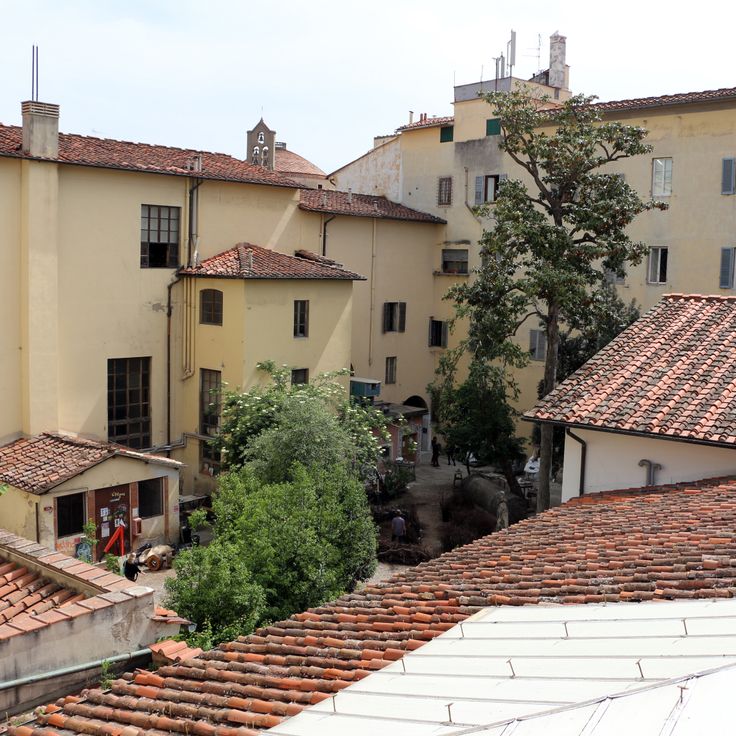
Florence displays Renaissance architecture and art at every street corner. The city features 15th-century buildings, churches with marble facades, and museums filled with old master paintings. The Arno River divides the city while Ponte Vecchio spans across. From the hills, views extend over the red roofs and the cathedral dome.
This collection leads to places where history, architecture, and city life come together. Piazzale Michelangelo offers a panoramic view over the entire city. The Uffizi Gallery houses paintings by Botticelli and Leonardo da Vinci. Boboli Gardens spread behind Pitti Palace across several terraces. The Basilica of Santa Croce preserves the tombs of Michelangelo, Galileo, and Machiavelli. Mercato Centrale brings locals and visitors together over fresh produce and local specialties. Each location shows a different aspect of the city, from its public squares to its quiet chapels.
Florence displays Renaissance architecture and art at every street corner. The city features 15th-century buildings, churches with marble facades, and museums filled with old master paintings. The Arno River divides the city while Ponte Vecchio spans across. From the hills, views extend over the red roofs and the cathedral dome.
This collection leads to places where history, architecture, and city life come together. Piazzale Michelangelo offers a panoramic view over the entire city. The Uffizi Gallery houses paintings by Botticelli and Leonardo da Vinci. Boboli Gardens spread behind Pitti Palace across several terraces. The Basilica of Santa Croce preserves the tombs of Michelangelo, Galileo, and Machiavelli. Mercato Centrale brings locals and visitors together over fresh produce and local specialties. Each location shows a different aspect of the city, from its public squares to its quiet chapels.
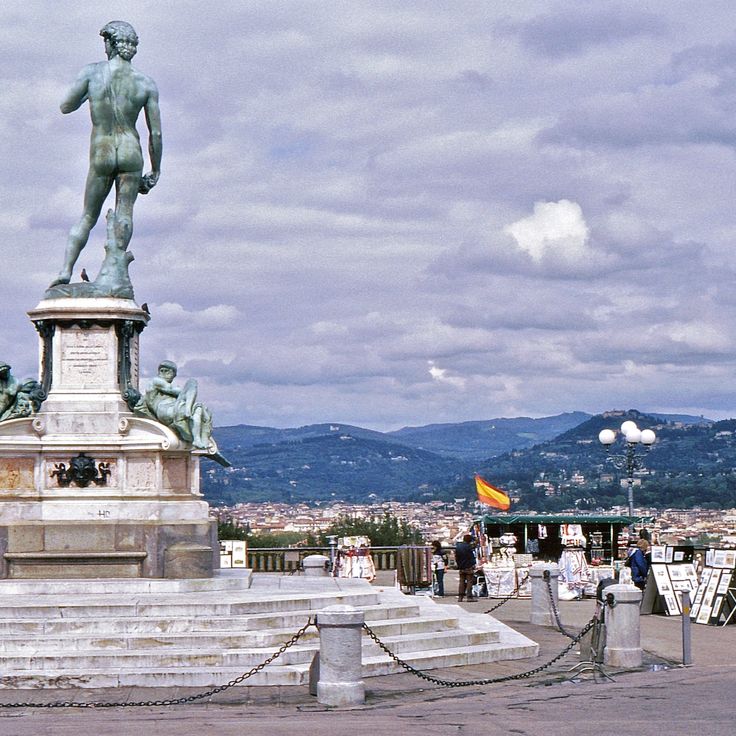
This observation terrace offers a wide view of the old town, the river, and the hills around. Visitors see the cathedral dome, church towers, and the closely built neighborhoods with their red tile roofs from here. The terrace is a spot for taking photographs, especially at sunset when light casts warm colors over the buildings.
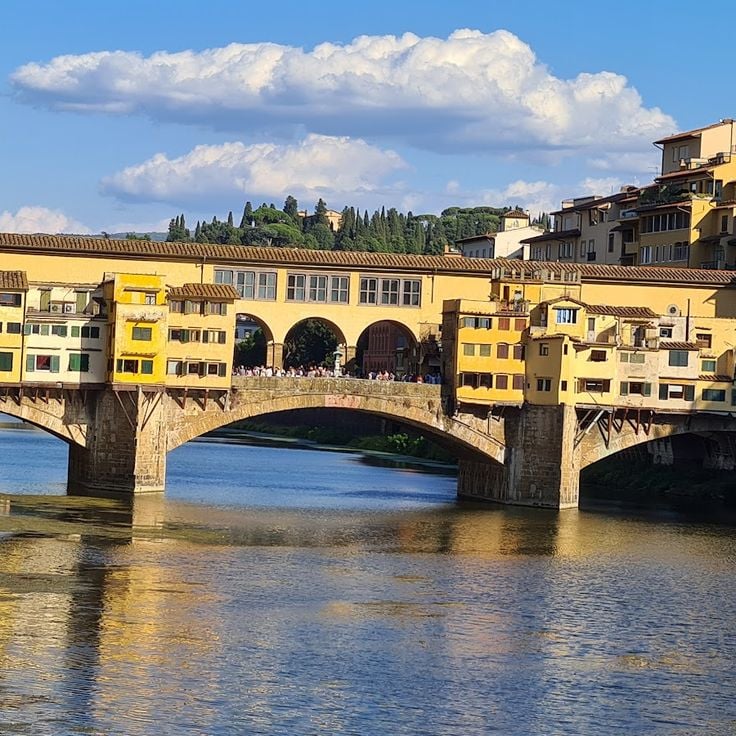
This bridge stretches across the Arno with a stone passage that dates from the Middle Ages. Ponte Vecchio carried goldsmith workshops since the 16th century, their craft continuing in the narrow storefronts. The structure rests on several arches while the upper story was added in the Renaissance to allow the Medici family to cross the river. Walking across, you move between shop windows and feel the centuries in the worn stones.
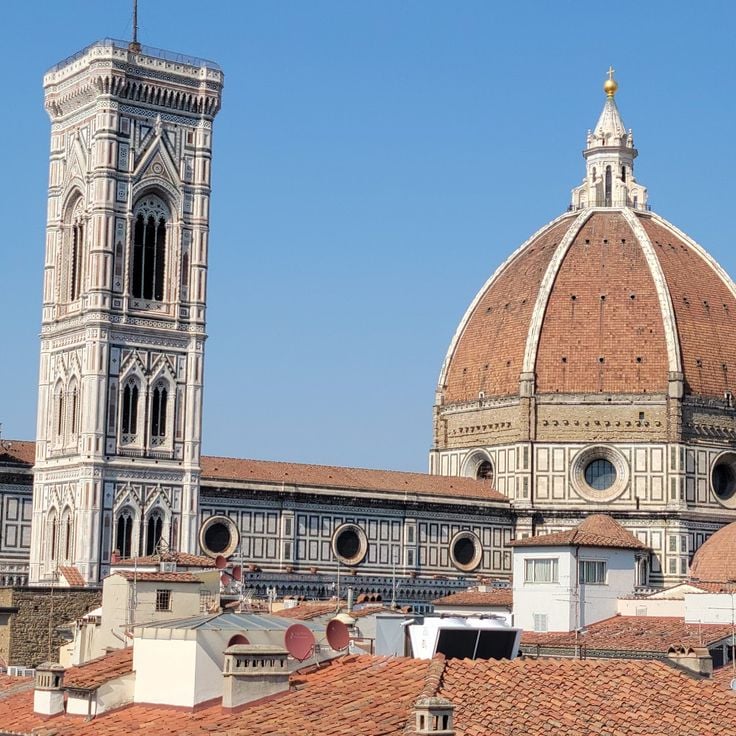
This cathedral dominates the skyline with its terracotta dome and a bell tower rising 85 meters (280 feet). The facade displays white and green marble panels arranged in geometric patterns that catch the sunlight. The interior spans several naves with high vaults. From the top of the dome, views open across the red rooftops of the city toward the hills on the horizon.
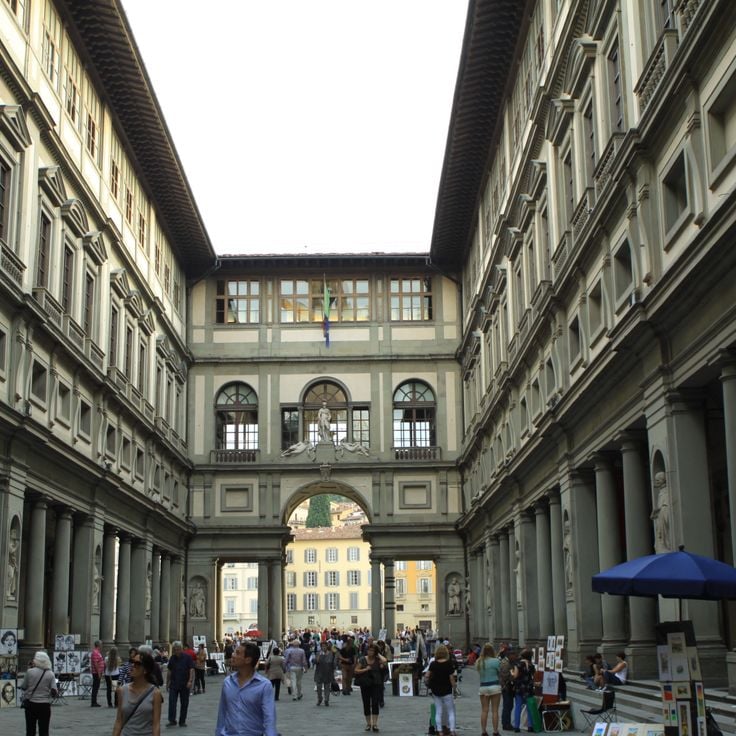
The Uffizi Gallery displays Italian paintings and Roman sculptures inside a 16th-century palace. This museum complex along the Arno presents works by Botticelli, Leonardo da Vinci, and Michelangelo in long corridors with windows facing the river. The rooms move through eras of Italian art, from medieval altarpieces to portraits of the Medici family. On the top floor, paintings hang on walls beneath painted ceilings, while marble figures from ancient times stand between the halls.
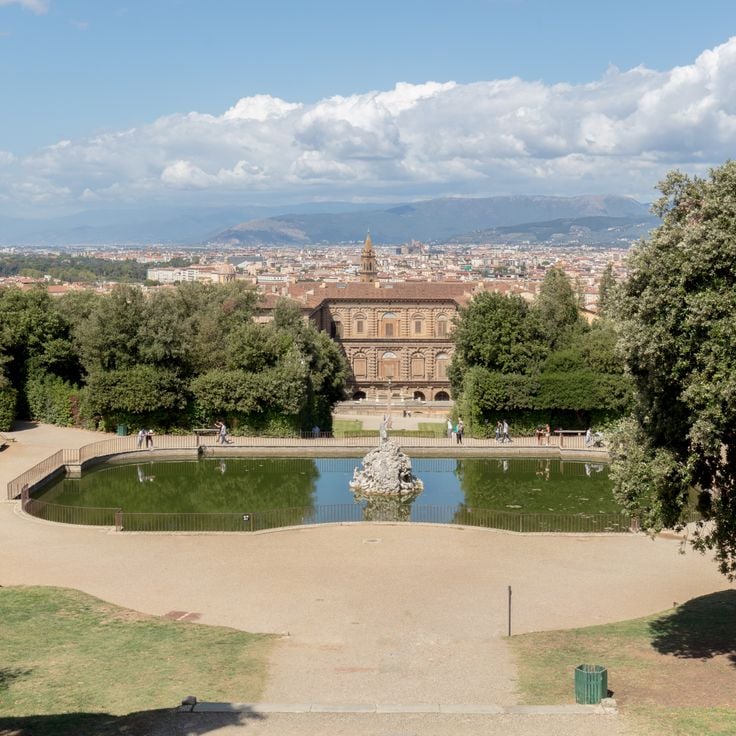
This Renaissance garden shows Italian design with statues, grottoes and geometric flower beds across multiple terraces. The Boboli Gardens stretch behind Palazzo Pitti and offer views over Florence and its rooftops. Visitors find fountains, stone sculptures and avenues lined with cypress trees. The paths lead through different levels, past niches with figures from mythology and history. On sunny afternoons, locals come for walks while tourists seek out the viewpoints to take photos of the city.
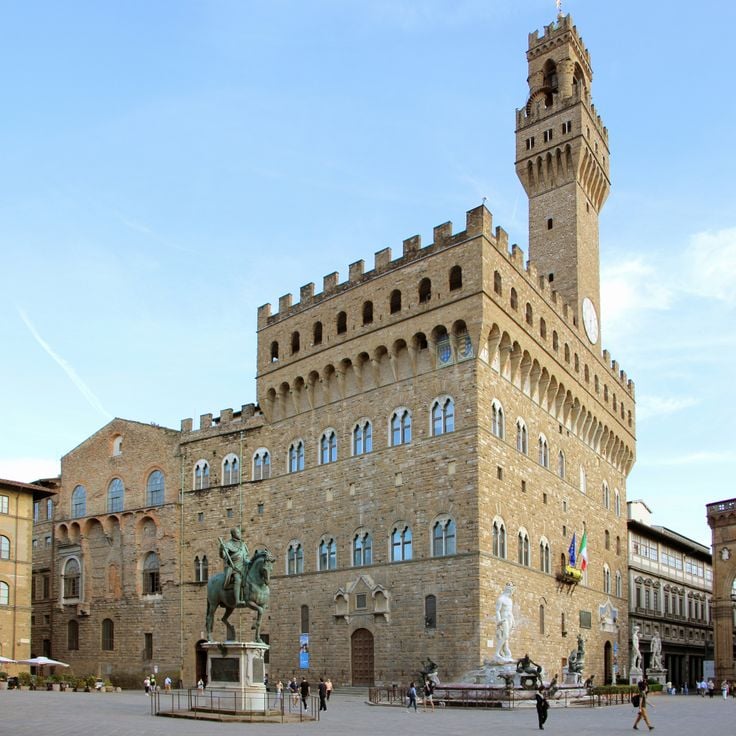
This medieval town hall with its 13th-century tower holds wall paintings from the 16th century and a Renaissance museum. The rooms show frescoes by Vasari, bronze statues, and ceiling paintings that represent Florence and its history. The tower, Torre d'Arnolfo, rises above Piazza della Signoria and offers views over the red roofs and the cathedral dome. Courtyards with columns and fountains lead to rooms where the Medici family once held power. The historic rooms show how politics and art intertwined during the Renaissance.
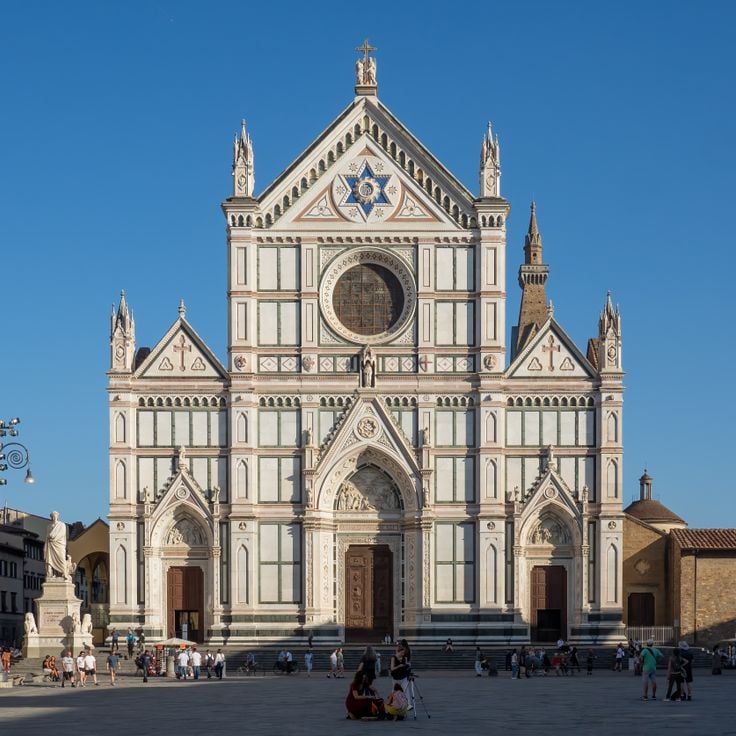
This Franciscan church preserves the tombs of Michelangelo, Galileo and Machiavelli behind its marble facade. Inside, frescoes by Giotto show scenes from the life of Saint Francis on the walls of the chapels. A leather craft school in the monastery building continues the city's artisan tradition. The nave extends over 377 feet (115 meters) and is among the largest Franciscan churches. The cloister connects different chapels where Florentine families established their burial places.
The Accademia Gallery displays Michelangelo's full-size David statue and offers a collection of Tuscan paintings from medieval and Renaissance periods. This museum houses additional sculptures by Michelangelo along with religious artworks from the Florentine tradition. The gallery attracts visitors who want to see the famous masterwork and learn about the region's artistic development. The rooms present altarpieces, wooden panels, and sacred art spanning several centuries.
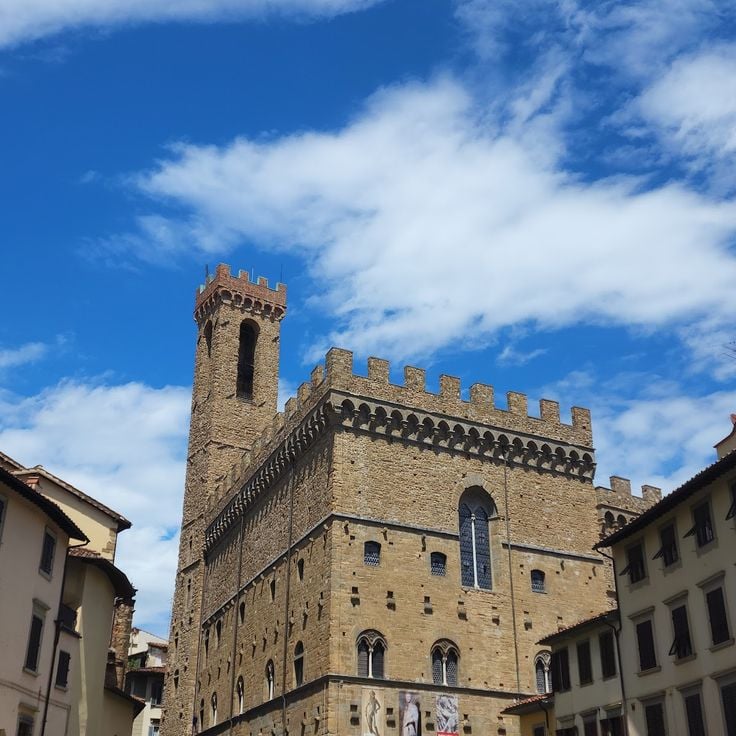
This Gothic palace from the 13th century displays Italian sculptures spanning four centuries. The collection includes works by Donatello, Michelangelo and other Renaissance sculptors. The rooms preserve medieval frescoes and the building's architecture tells of its history as a prison and courtroom.
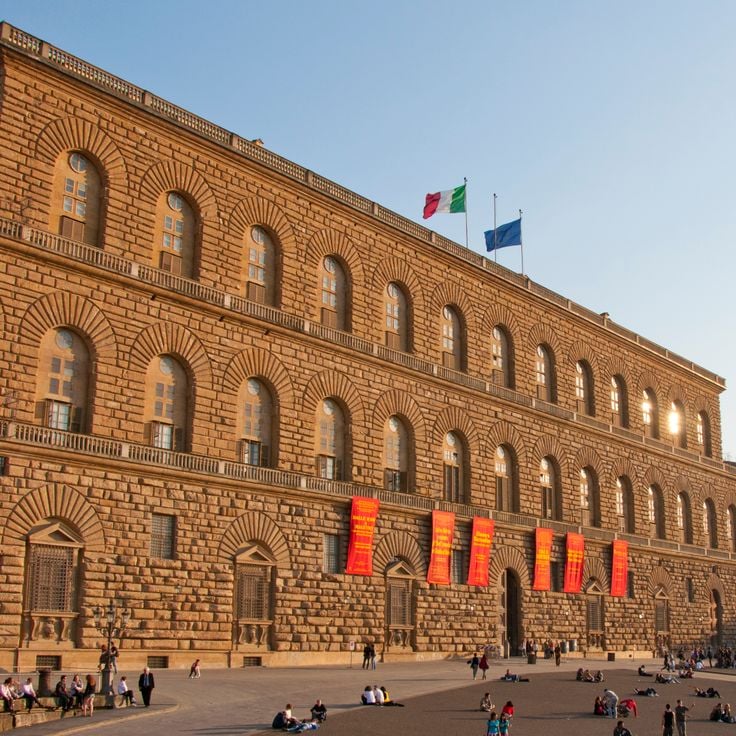
This 15th-century palace houses several museums displaying paintings that document different periods of Italian art, alongside collections of historical costumes and silverwork. The rooms show wood paneling, ceiling frescoes, and Renaissance furniture. The courtyard opens onto a garden that climbs the hill, with terraces, statues, and fountains among the greenery. From above, the view extends over the city's rooftops to the churches and towers across the river.
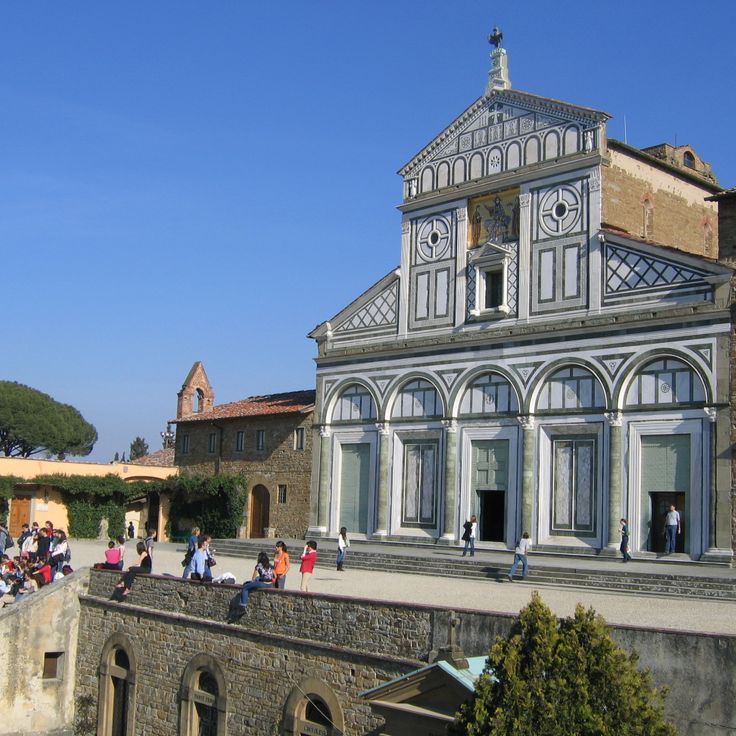
This church sits on a hill above Florence and dates from the 11th century. The facade shows geometric patterns in white and green marble, typical of Romanesque architecture in Tuscany. Inside you find medieval frescoes and a golden mosaic in the apse. The terrace in front offers views over the city, including the cathedral dome and the Arno River. The place is quiet and away from the crowded streets below.
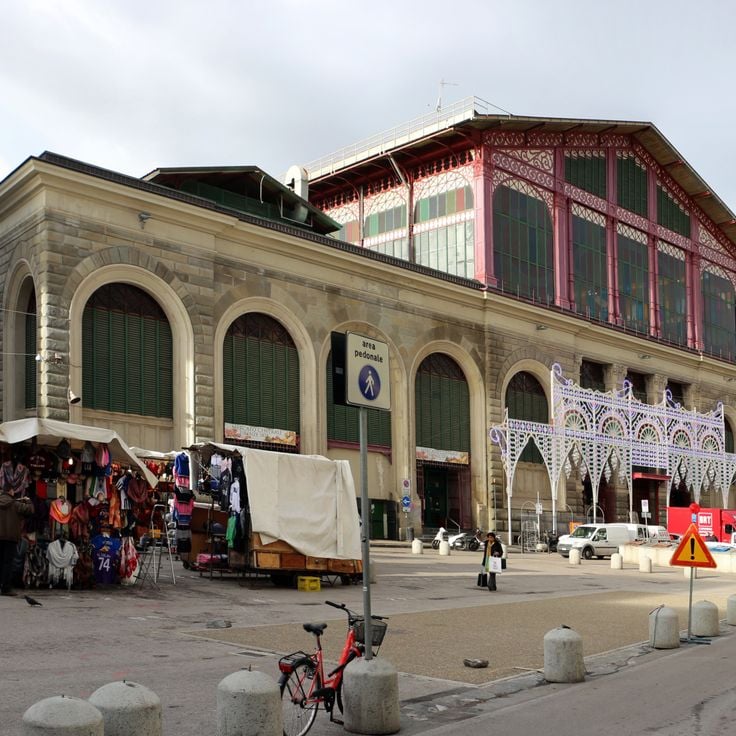
This market sits inside a 19th-century building where stalls sell fresh vegetables, meats, cheeses, and local products on the ground floor, while upstairs restaurants and food counters prepare regional dishes and visitors eat at long shared tables, making it a place to experience the food culture of Florence while sitting beneath tall iron beams.
This 15th-century Renaissance palace hosts international art exhibitions in its historical halls. The rough stone walls and tall ceilings create a setting for modern and classical art. Visitors can walk through the rooms to see rotating exhibitions that present both contemporary and historical works. The inner courtyard opens to the sky, bringing light and space into the building.
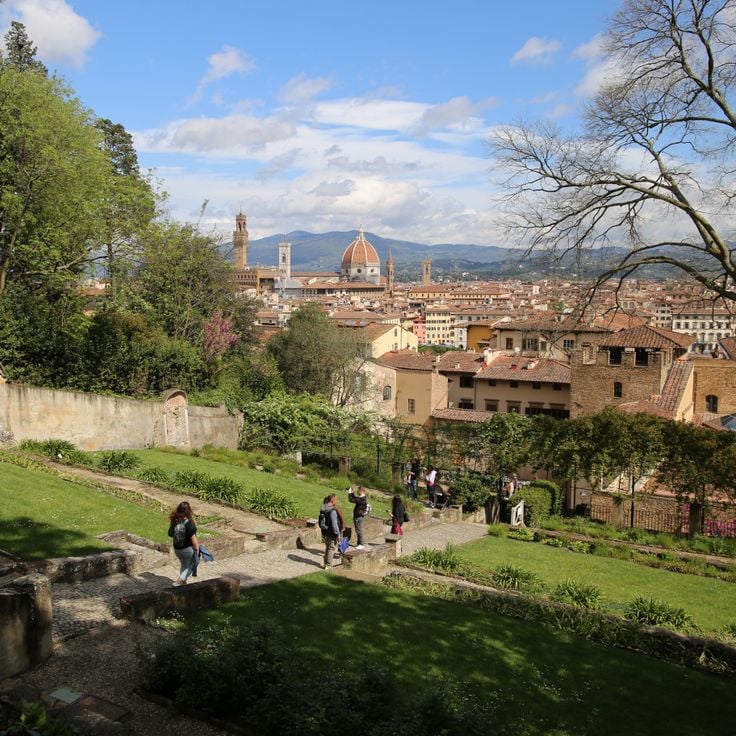
This historic garden sits on several terraces on the south side of the Arno and climbs through a baroque stone staircase to the upper plateau. From there, the view opens over the red roofs of the old city, the cathedral dome, and the bridges crossing the river. Old wisteria, cypress trees, and rose bushes grow between the terraces. The paths are narrow and often empty. A small pavilion stands at the edge, and in spring the wisteria blooms over the staircase. The garden was originally part of a 17th-century villa and was later reshaped by antique dealer Stefano Bardini. Today it belongs to the city and is open to visitors. The climb is steep, but at the end a wide view of Florence awaits.
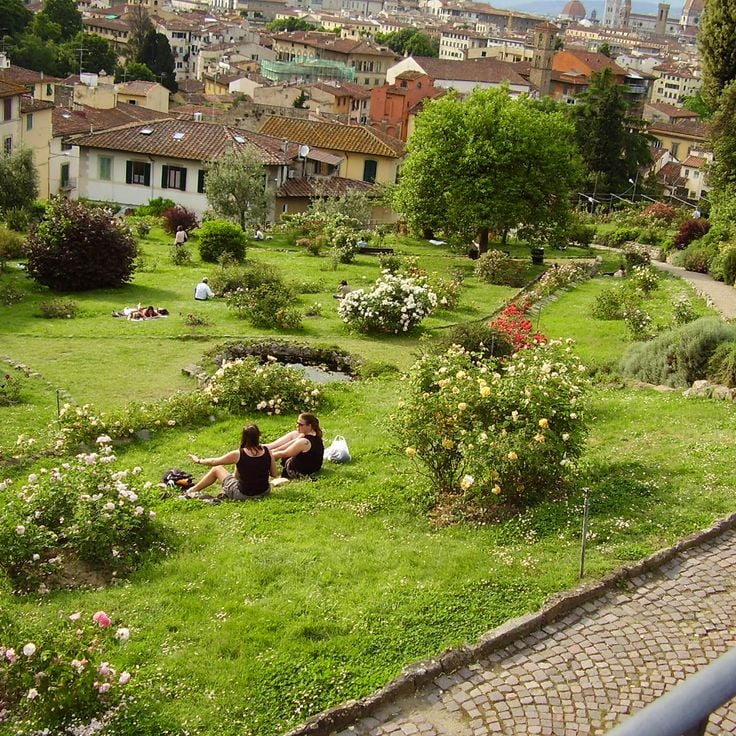
This public garden displays 350 varieties of roses and sits on a slope above the city. From here, the view reaches the cathedral with its large dome and extends over the red rooftops of the old center. Paths wind between the rose beds while Renaissance architecture forms the background. Visitors come here to photograph the blooms and at the same time capture the view over Florence.
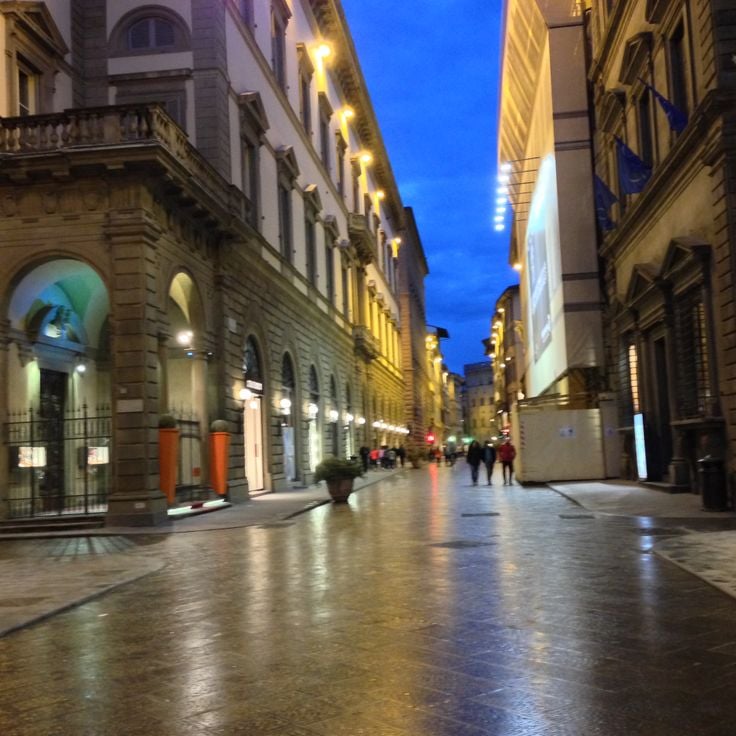
This shopping street displays 15th-century palaces that house Italian fashion brands. The historical buildings form a row of tall facades with stone walls and large windows. Via de' Tornabuoni connects the Arno bridges to the northern part of the city and has served as a commercial route for centuries.
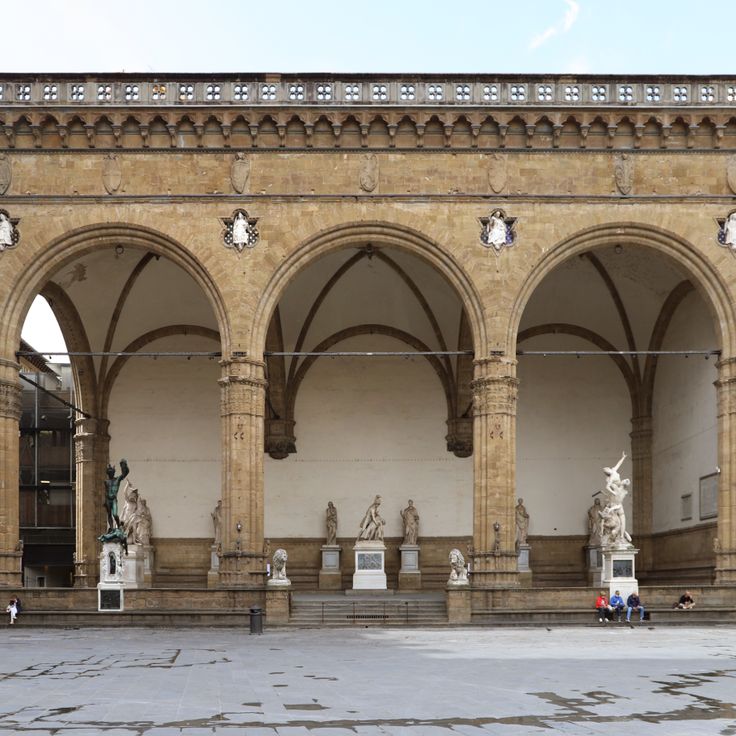
This open gallery stands at the edge of Piazza della Signoria and displays Renaissance sculptures under arches from the 14th century. The loggia holds bronze figures and marble works created between the 16th century and antiquity. Visitors walk among the statues and photograph the details of the figures. Light falls through the arcade and casts shadows on the stone floor.
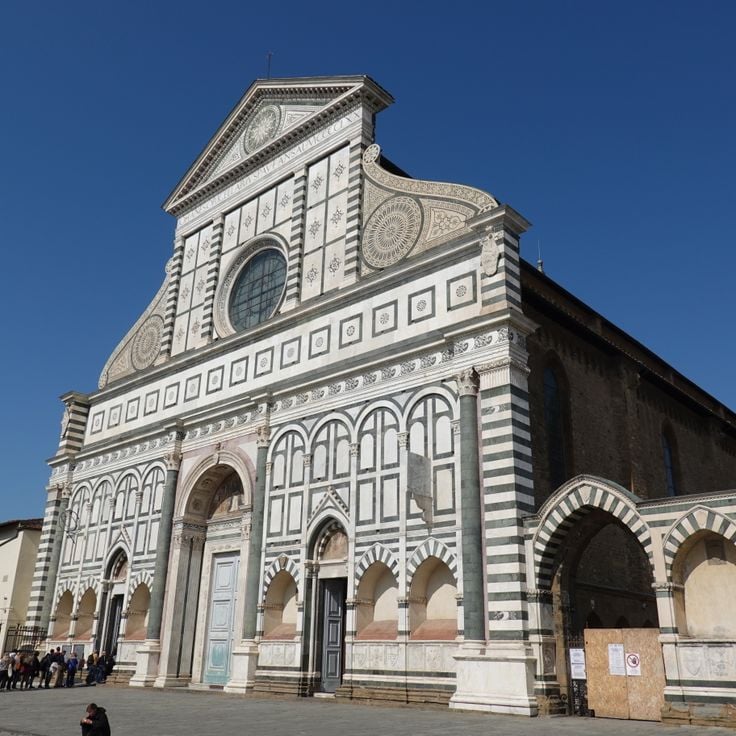
This 13th-century church displays a geometric marble facade in green and white. The interior preserves frescoes by Giotto and Masaccio. The church stands at a piazza near the main train station and serves as a photographic subject with its clean lines and Renaissance symmetry typical of Florence.
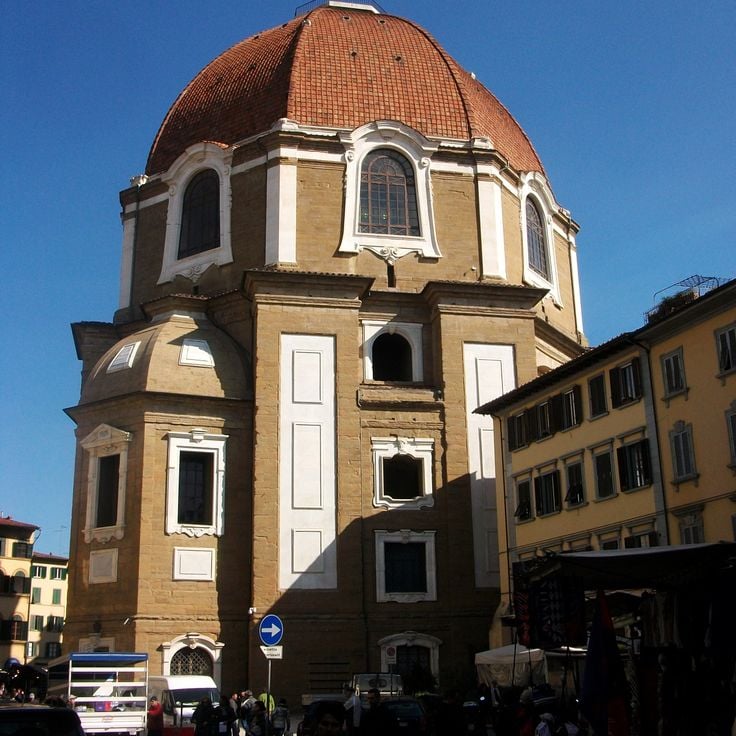
These chapels house the tombs of the Medici family. The New Sacristy contains sculptures by Michelangelo. The chapels show the power of the family through marble and artworks. Visitors see the sarcophagi of the dukes and the figures Morning, Evening, Day and Night. The building connects the church of San Lorenzo with the burial rooms of the family.
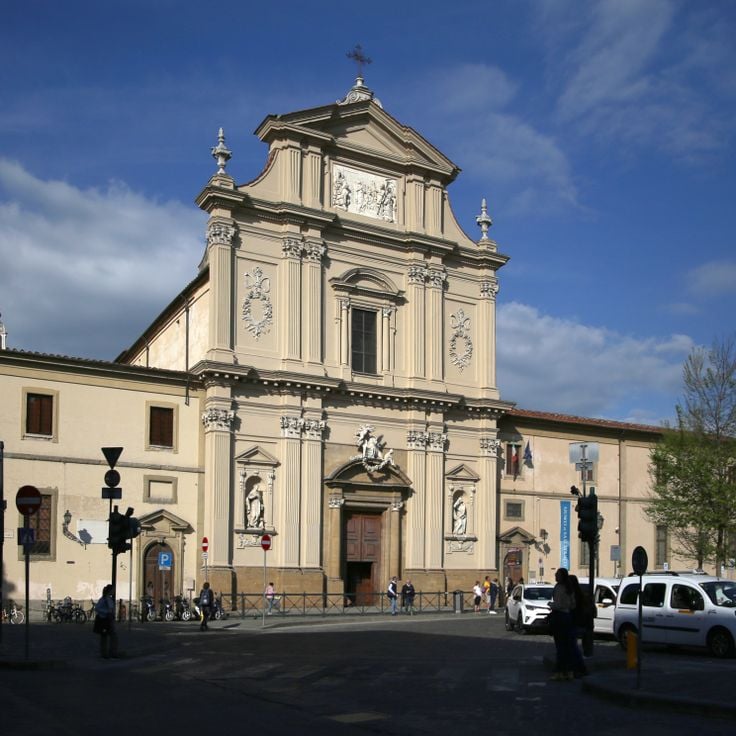
This former Dominican monastery displays frescoes by Fra Angelico from the 15th century. The monks' cells contain individual wall paintings depicting religious scenes. The rooms preserve their original layout, with narrow corridors leading to the cells. The building served as a monastery for centuries before becoming a museum. Fra Angelico's works were painted directly onto the walls and remain in place. The museum sits near Piazza San Marco, in a quiet part of Florence.
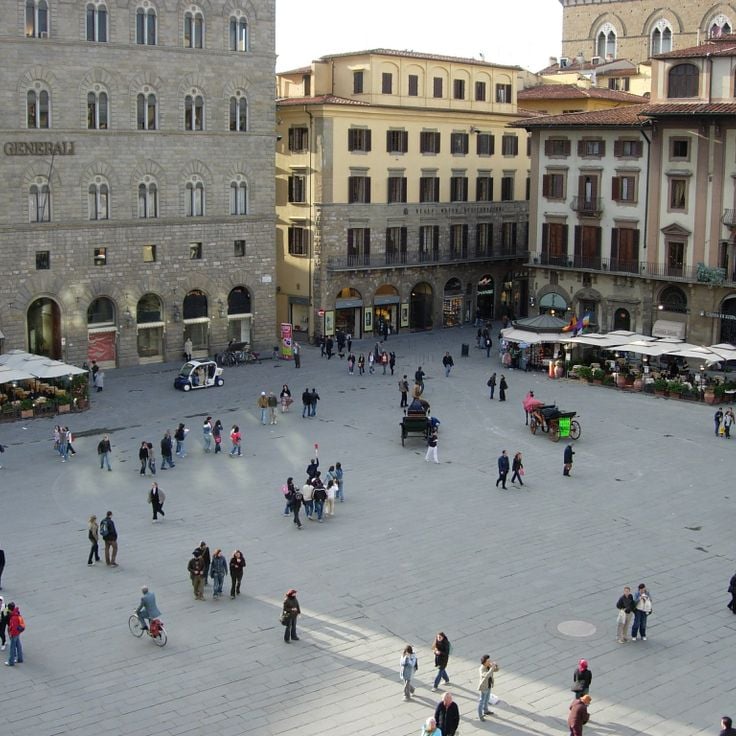
This central square shows a replica of the David statue, the Neptune Fountain, and the Palazzo Vecchio with its 308-foot (94-meter) tower. Piazza della Signoria combines Renaissance architecture with open space at the heart of the city. Visitors stand among sculptures and the medieval palace while tourists take photos of the Loggia dei Lanzi and the tower.
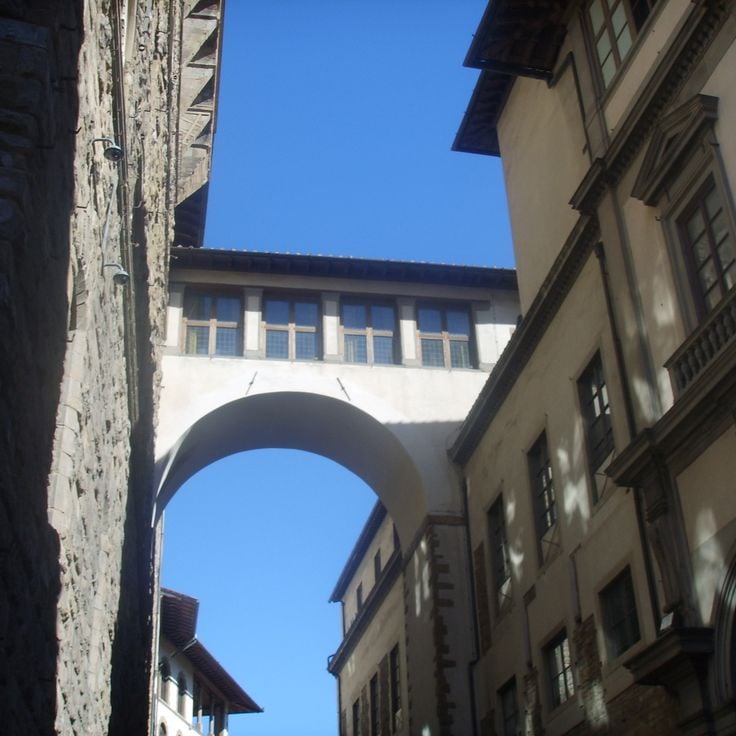
This 16th-century passage connects two palaces across the river and follows the rooftops of the old town. The corridor runs above Ponte Vecchio and holds portraits of artists from different periods. Built as a private walkway for the Medici family, the route shows the character of the city through its windows. The structure extends about one kilometer and offers insights into how power was arranged during the Renaissance.
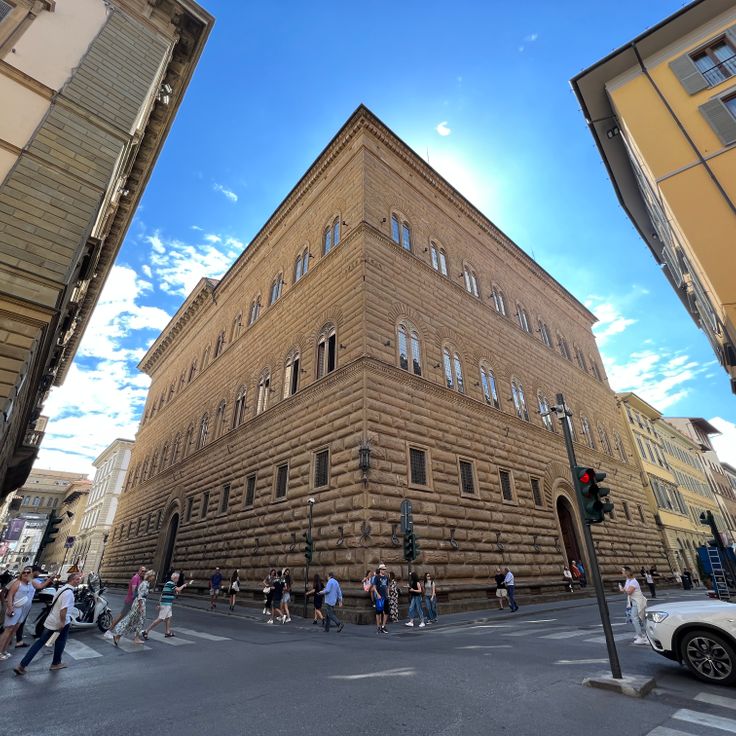
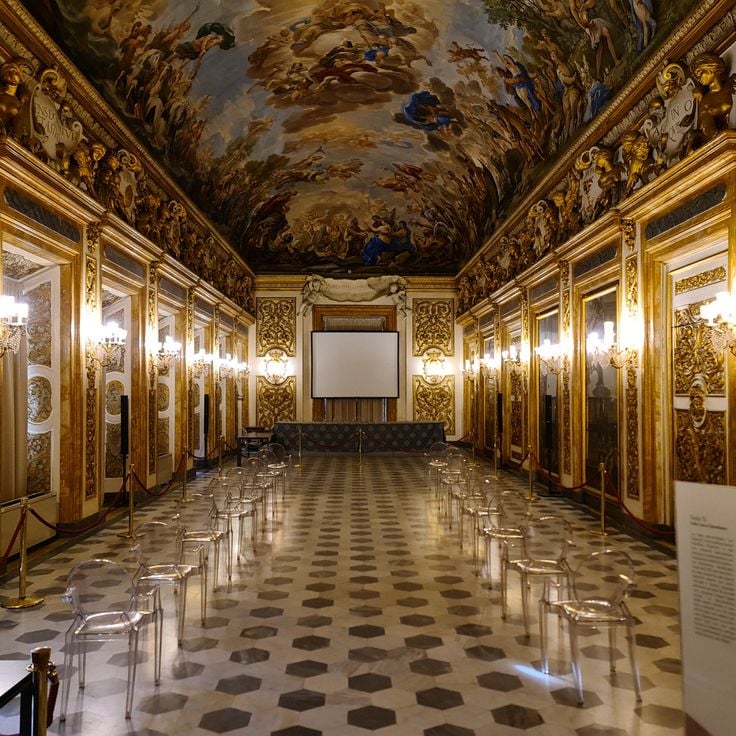
This 15th-century palace stands in the center of Florence and displays early Renaissance architecture. The outer walls are covered with rough stone, giving the building a strong appearance. Inside the courtyard, frescoes by Benozzo Gozzoli depict biblical scenes and processions. The cubic structure once served as the residence of the Medici family and later housed other Florentine families. Today, Palazzo Medici Riccardi contains public rooms and can be visited.
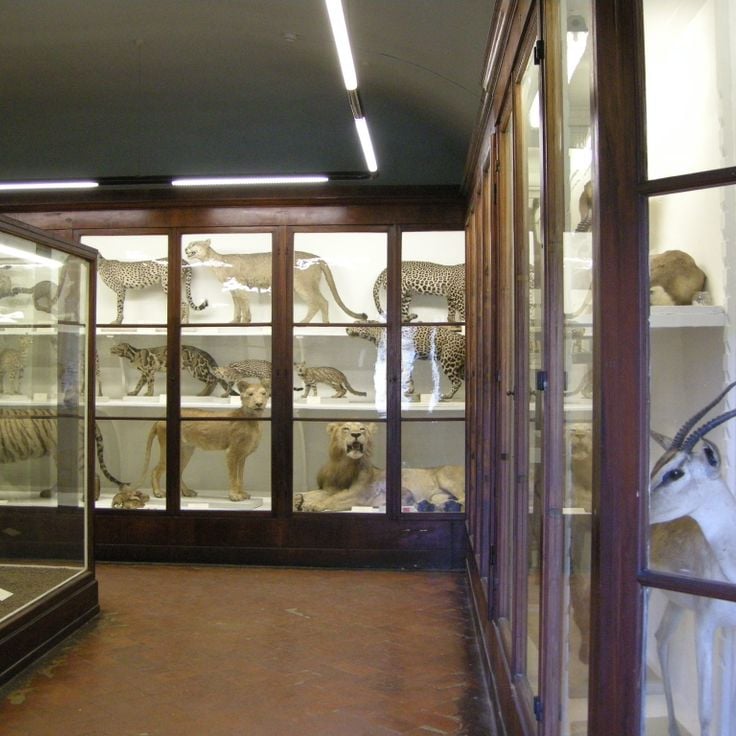
La Specola is a museum that holds 3.5 million specimens, including anatomical wax models from the 18th century. The collection displays medical and natural history objects in rooms that once belonged to the grand duchy's observatory. Visitors see human figures and organs made of wax, crafted by surgeons and artists for teaching purposes. The models were created when Florence was a center for scientific research.
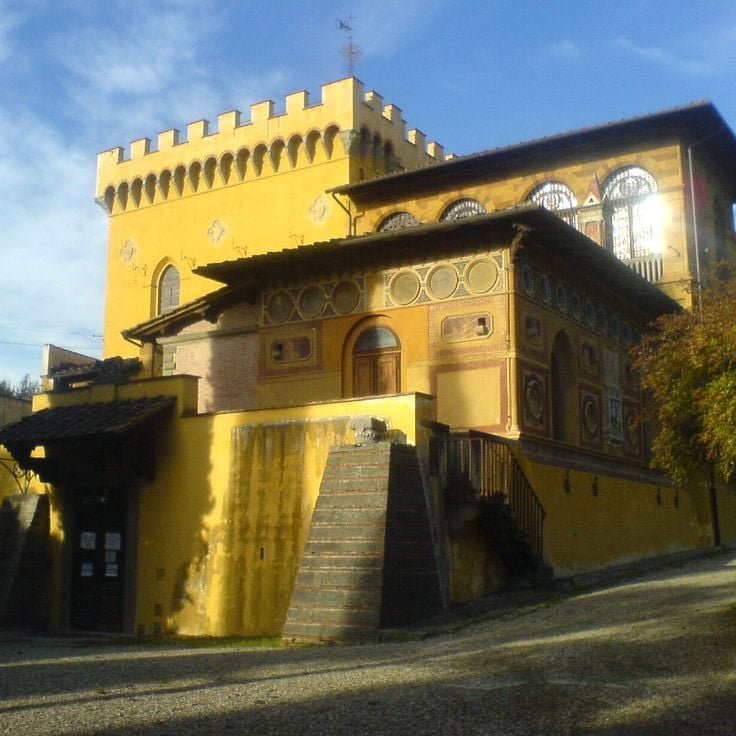
This museum holds a large collection of historical weapons, armor and decorative arts set in a park with Italian gardens, offering in Florence an experience away from the usual Renaissance stops of the city center, and making for photos in a different setting than the common tourist routes.
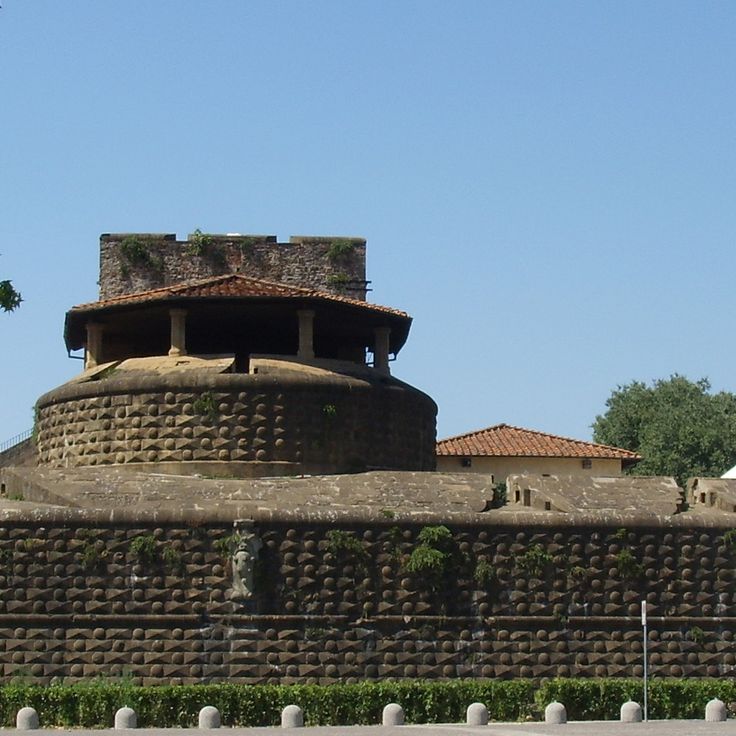
This Renaissance fortress dates back to the early 16th century, when Cosimo de' Medici commissioned it for defensive purposes. Since its conversion, the old walls and open courtyards host trade fairs and cultural events. The red brick construction and military design create a contrast with the rest of Florence's architecture. Photographers capture the heavy gates, wide inner courtyards, and ancient defense towers that belong to the city's history.
This Romanesque church stands on Via de' Tornabuoni, a street lined with shops in central Florence. Inside, frescoes by Domenico Ghirlandaio from the 15th century decorate the walls. The plain facade differs from the polychrome marble churches elsewhere in the city. The building ranks among the oldest churches in Florence and shows the transition between medieval and Renaissance architecture.
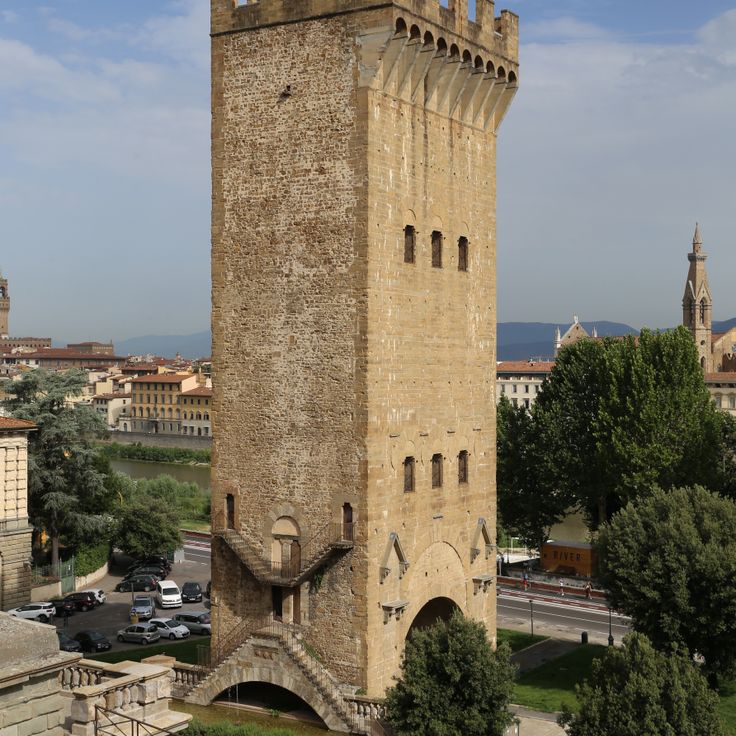
This tower from the 13th century rises 28 meters (92 feet) into the air and offers views over the rooftops of Florence and the Arno river below. The old walls lead up to a platform at the top where you can see the cathedral dome, the hills behind the city, and the everyday activity along the riverbank. Visitors climb narrow stone staircases to reach the upper level.
This church combines Gothic architecture with the history of Florence's craft guilds. The building from the 14th century displays sculptures in niches on the outside, representing different guilds of the city. Inside, a two-story space with vaults and a historical altar occupies the room. The exterior walls carry figures of saints, once commissioned by the guilds. The building stands between the busy streets of the old town and was originally a market hall before it became a church. The upper floors served as the city's grain storage.
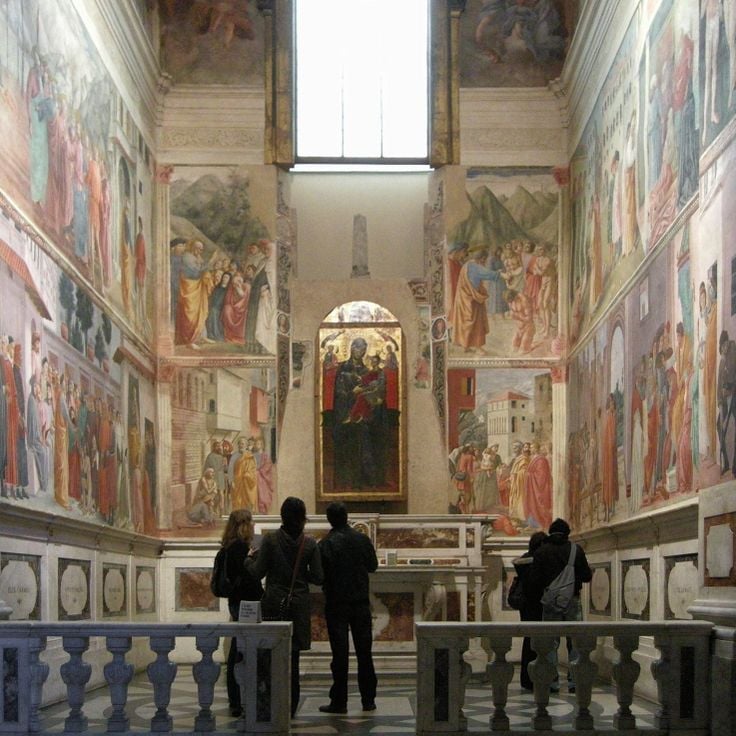
This chapel inside the church of Santa Maria del Carmine displays wall paintings from the early 15th century that introduced a new way of representing human figures with natural bodies and spatial depth. The biblical scenes were created by Masaccio and Masolino and became a training ground for later Renaissance artists. Light enters through a high window and illuminates the frescoes, which show episodes from the life of Saint Peter.
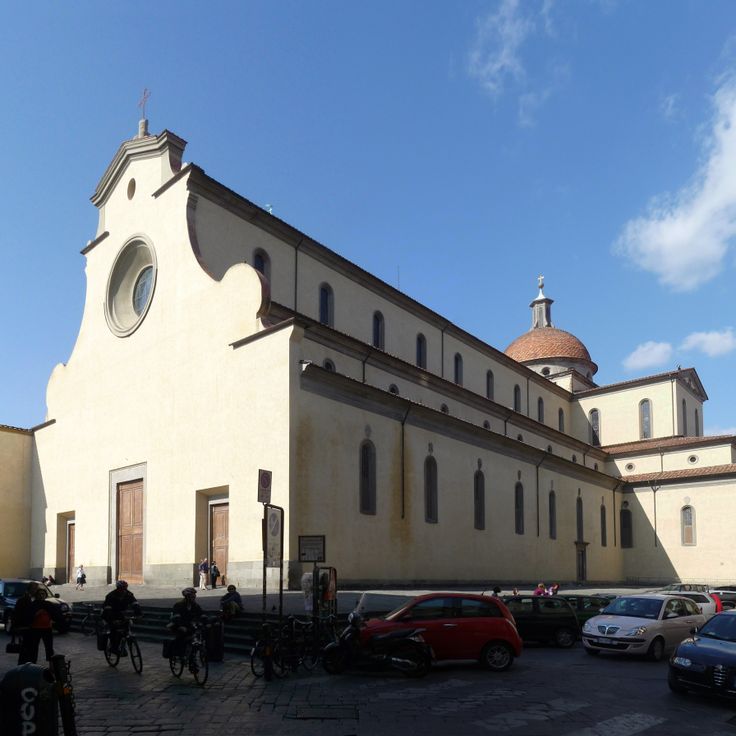
This church from the 15th century shows the mathematical harmony of Renaissance architecture through its clear proportions and symmetrical forms. The building uses geometric principles that repeat in all elements. The interior spaces follow a regular system of columns and arches that creates order and balance. Light enters through tall windows and emphasizes the rational structures. The Basilica di Santo Spirito belongs to the photographed places in Florence because of its architectural clarity and the consistency of its design.
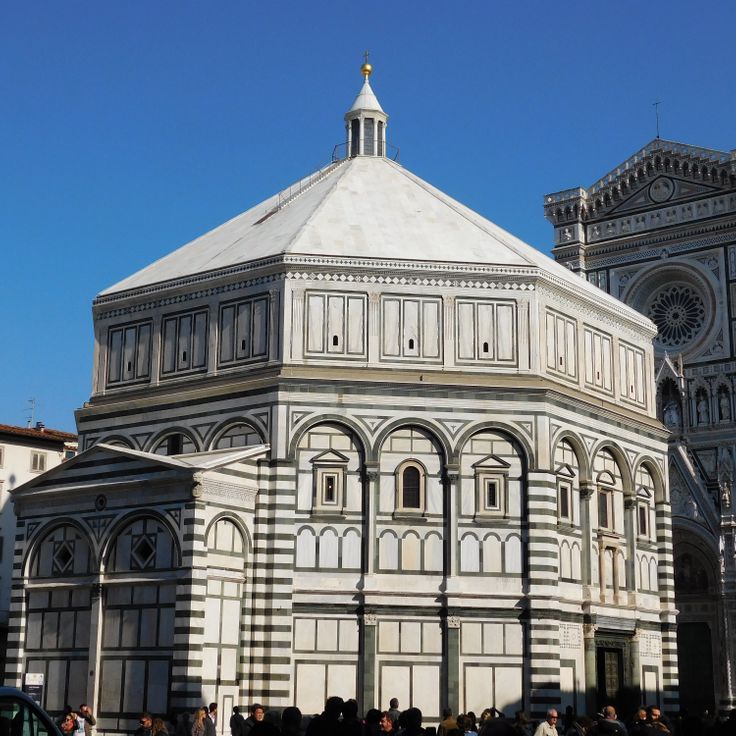
This 11th-century baptistery stands in front of the cathedral and displays its octagonal shape in white and green marble. The three bronze doors feature biblical reliefs created by different artists over centuries. Inside, a golden mosaic covers the entire dome and depicts Christian scenes. The building served as the baptismal church for the city's citizens for hundreds of years. The geometric patterns on the exterior reflect the Romanesque style. Visitors can examine the doors up close and watch light play across the mosaics.
This observation terrace offers a wide view of the old town, the river, and the hills around. Visitors see the cathedral dome, church towers, and the closely built neighborhoods with their red tile roofs from here. The terrace is a spot for taking photographs, especially at sunset when light casts warm colors over the buildings.
This bridge stretches across the Arno with a stone passage that dates from the Middle Ages. Ponte Vecchio carried goldsmith workshops since the 16th century, their craft continuing in the narrow storefronts. The structure rests on several arches while the upper story was added in the Renaissance to allow the Medici family to cross the river. Walking across, you move between shop windows and feel the centuries in the worn stones.
This cathedral dominates the skyline with its terracotta dome and a bell tower rising 85 meters (280 feet). The facade displays white and green marble panels arranged in geometric patterns that catch the sunlight. The interior spans several naves with high vaults. From the top of the dome, views open across the red rooftops of the city toward the hills on the horizon.
The Uffizi Gallery displays Italian paintings and Roman sculptures inside a 16th-century palace. This museum complex along the Arno presents works by Botticelli, Leonardo da Vinci, and Michelangelo in long corridors with windows facing the river. The rooms move through eras of Italian art, from medieval altarpieces to portraits of the Medici family. On the top floor, paintings hang on walls beneath painted ceilings, while marble figures from ancient times stand between the halls.
This Renaissance garden shows Italian design with statues, grottoes and geometric flower beds across multiple terraces. The Boboli Gardens stretch behind Palazzo Pitti and offer views over Florence and its rooftops. Visitors find fountains, stone sculptures and avenues lined with cypress trees. The paths lead through different levels, past niches with figures from mythology and history. On sunny afternoons, locals come for walks while tourists seek out the viewpoints to take photos of the city.
This medieval town hall with its 13th-century tower holds wall paintings from the 16th century and a Renaissance museum. The rooms show frescoes by Vasari, bronze statues, and ceiling paintings that represent Florence and its history. The tower, Torre d'Arnolfo, rises above Piazza della Signoria and offers views over the red roofs and the cathedral dome. Courtyards with columns and fountains lead to rooms where the Medici family once held power. The historic rooms show how politics and art intertwined during the Renaissance.
This Franciscan church preserves the tombs of Michelangelo, Galileo and Machiavelli behind its marble facade. Inside, frescoes by Giotto show scenes from the life of Saint Francis on the walls of the chapels. A leather craft school in the monastery building continues the city's artisan tradition. The nave extends over 377 feet (115 meters) and is among the largest Franciscan churches. The cloister connects different chapels where Florentine families established their burial places.
The Accademia Gallery displays Michelangelo's full-size David statue and offers a collection of Tuscan paintings from medieval and Renaissance periods. This museum houses additional sculptures by Michelangelo along with religious artworks from the Florentine tradition. The gallery attracts visitors who want to see the famous masterwork and learn about the region's artistic development. The rooms present altarpieces, wooden panels, and sacred art spanning several centuries.
This Gothic palace from the 13th century displays Italian sculptures spanning four centuries. The collection includes works by Donatello, Michelangelo and other Renaissance sculptors. The rooms preserve medieval frescoes and the building's architecture tells of its history as a prison and courtroom.
This 15th-century palace houses several museums displaying paintings that document different periods of Italian art, alongside collections of historical costumes and silverwork. The rooms show wood paneling, ceiling frescoes, and Renaissance furniture. The courtyard opens onto a garden that climbs the hill, with terraces, statues, and fountains among the greenery. From above, the view extends over the city's rooftops to the churches and towers across the river.
This church sits on a hill above Florence and dates from the 11th century. The facade shows geometric patterns in white and green marble, typical of Romanesque architecture in Tuscany. Inside you find medieval frescoes and a golden mosaic in the apse. The terrace in front offers views over the city, including the cathedral dome and the Arno River. The place is quiet and away from the crowded streets below.
This market sits inside a 19th-century building where stalls sell fresh vegetables, meats, cheeses, and local products on the ground floor, while upstairs restaurants and food counters prepare regional dishes and visitors eat at long shared tables, making it a place to experience the food culture of Florence while sitting beneath tall iron beams.
This 15th-century Renaissance palace hosts international art exhibitions in its historical halls. The rough stone walls and tall ceilings create a setting for modern and classical art. Visitors can walk through the rooms to see rotating exhibitions that present both contemporary and historical works. The inner courtyard opens to the sky, bringing light and space into the building.
This historic garden sits on several terraces on the south side of the Arno and climbs through a baroque stone staircase to the upper plateau. From there, the view opens over the red roofs of the old city, the cathedral dome, and the bridges crossing the river. Old wisteria, cypress trees, and rose bushes grow between the terraces. The paths are narrow and often empty. A small pavilion stands at the edge, and in spring the wisteria blooms over the staircase. The garden was originally part of a 17th-century villa and was later reshaped by antique dealer Stefano Bardini. Today it belongs to the city and is open to visitors. The climb is steep, but at the end a wide view of Florence awaits.
This public garden displays 350 varieties of roses and sits on a slope above the city. From here, the view reaches the cathedral with its large dome and extends over the red rooftops of the old center. Paths wind between the rose beds while Renaissance architecture forms the background. Visitors come here to photograph the blooms and at the same time capture the view over Florence.
This shopping street displays 15th-century palaces that house Italian fashion brands. The historical buildings form a row of tall facades with stone walls and large windows. Via de' Tornabuoni connects the Arno bridges to the northern part of the city and has served as a commercial route for centuries.
This open gallery stands at the edge of Piazza della Signoria and displays Renaissance sculptures under arches from the 14th century. The loggia holds bronze figures and marble works created between the 16th century and antiquity. Visitors walk among the statues and photograph the details of the figures. Light falls through the arcade and casts shadows on the stone floor.
This 13th-century church displays a geometric marble facade in green and white. The interior preserves frescoes by Giotto and Masaccio. The church stands at a piazza near the main train station and serves as a photographic subject with its clean lines and Renaissance symmetry typical of Florence.
These chapels house the tombs of the Medici family. The New Sacristy contains sculptures by Michelangelo. The chapels show the power of the family through marble and artworks. Visitors see the sarcophagi of the dukes and the figures Morning, Evening, Day and Night. The building connects the church of San Lorenzo with the burial rooms of the family.
This former Dominican monastery displays frescoes by Fra Angelico from the 15th century. The monks' cells contain individual wall paintings depicting religious scenes. The rooms preserve their original layout, with narrow corridors leading to the cells. The building served as a monastery for centuries before becoming a museum. Fra Angelico's works were painted directly onto the walls and remain in place. The museum sits near Piazza San Marco, in a quiet part of Florence.
This central square shows a replica of the David statue, the Neptune Fountain, and the Palazzo Vecchio with its 308-foot (94-meter) tower. Piazza della Signoria combines Renaissance architecture with open space at the heart of the city. Visitors stand among sculptures and the medieval palace while tourists take photos of the Loggia dei Lanzi and the tower.
This 16th-century passage connects two palaces across the river and follows the rooftops of the old town. The corridor runs above Ponte Vecchio and holds portraits of artists from different periods. Built as a private walkway for the Medici family, the route shows the character of the city through its windows. The structure extends about one kilometer and offers insights into how power was arranged during the Renaissance.
This 15th-century palace stands in the center of Florence and displays early Renaissance architecture. The outer walls are covered with rough stone, giving the building a strong appearance. Inside the courtyard, frescoes by Benozzo Gozzoli depict biblical scenes and processions. The cubic structure once served as the residence of the Medici family and later housed other Florentine families. Today, Palazzo Medici Riccardi contains public rooms and can be visited.
La Specola is a museum that holds 3.5 million specimens, including anatomical wax models from the 18th century. The collection displays medical and natural history objects in rooms that once belonged to the grand duchy's observatory. Visitors see human figures and organs made of wax, crafted by surgeons and artists for teaching purposes. The models were created when Florence was a center for scientific research.
This museum holds a large collection of historical weapons, armor and decorative arts set in a park with Italian gardens, offering in Florence an experience away from the usual Renaissance stops of the city center, and making for photos in a different setting than the common tourist routes.
This Renaissance fortress dates back to the early 16th century, when Cosimo de' Medici commissioned it for defensive purposes. Since its conversion, the old walls and open courtyards host trade fairs and cultural events. The red brick construction and military design create a contrast with the rest of Florence's architecture. Photographers capture the heavy gates, wide inner courtyards, and ancient defense towers that belong to the city's history.
This Romanesque church stands on Via de' Tornabuoni, a street lined with shops in central Florence. Inside, frescoes by Domenico Ghirlandaio from the 15th century decorate the walls. The plain facade differs from the polychrome marble churches elsewhere in the city. The building ranks among the oldest churches in Florence and shows the transition between medieval and Renaissance architecture.
This tower from the 13th century rises 28 meters (92 feet) into the air and offers views over the rooftops of Florence and the Arno river below. The old walls lead up to a platform at the top where you can see the cathedral dome, the hills behind the city, and the everyday activity along the riverbank. Visitors climb narrow stone staircases to reach the upper level.
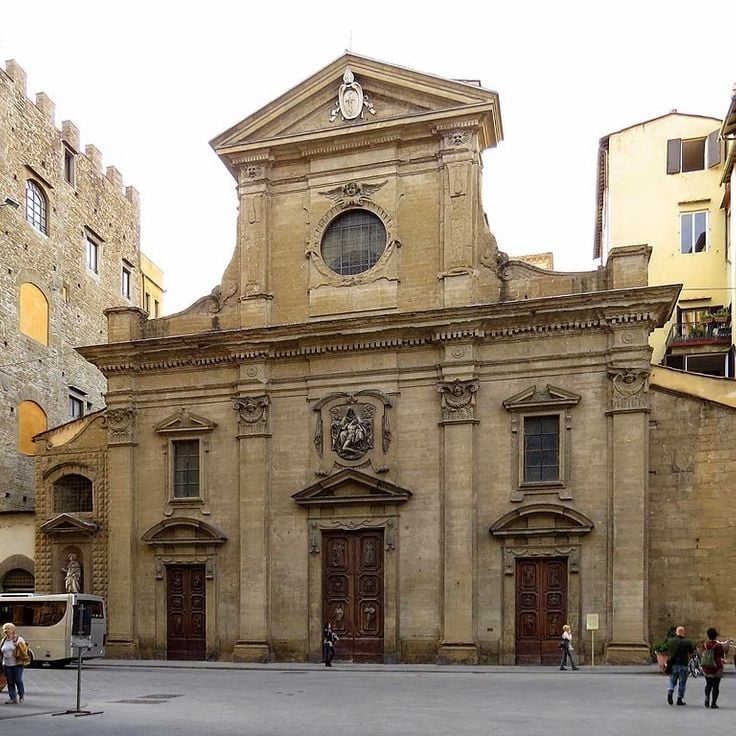
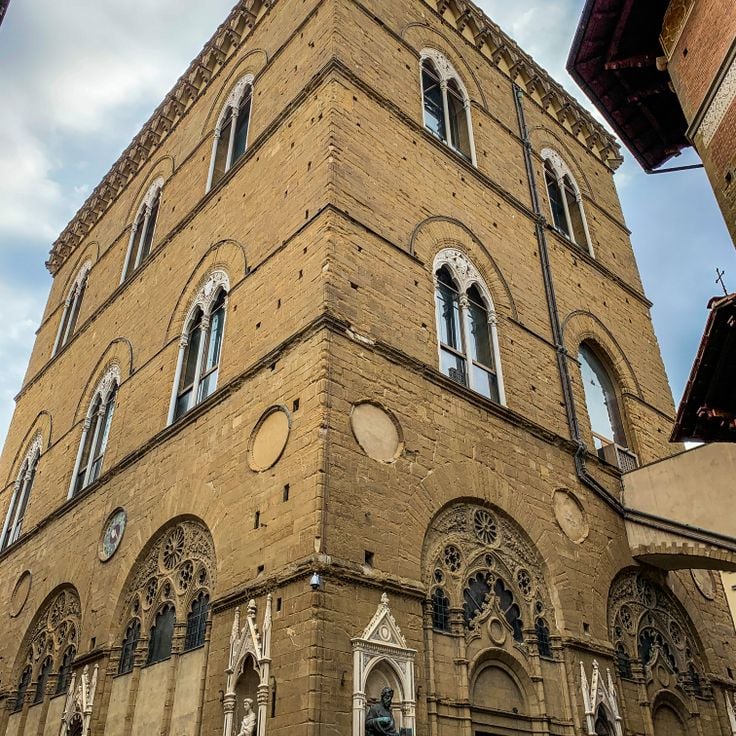
This church combines Gothic architecture with the history of Florence's craft guilds. The building from the 14th century displays sculptures in niches on the outside, representing different guilds of the city. Inside, a two-story space with vaults and a historical altar occupies the room. The exterior walls carry figures of saints, once commissioned by the guilds. The building stands between the busy streets of the old town and was originally a market hall before it became a church. The upper floors served as the city's grain storage.
This chapel inside the church of Santa Maria del Carmine displays wall paintings from the early 15th century that introduced a new way of representing human figures with natural bodies and spatial depth. The biblical scenes were created by Masaccio and Masolino and became a training ground for later Renaissance artists. Light enters through a high window and illuminates the frescoes, which show episodes from the life of Saint Peter.
This church from the 15th century shows the mathematical harmony of Renaissance architecture through its clear proportions and symmetrical forms. The building uses geometric principles that repeat in all elements. The interior spaces follow a regular system of columns and arches that creates order and balance. Light enters through tall windows and emphasizes the rational structures. The Basilica di Santo Spirito belongs to the photographed places in Florence because of its architectural clarity and the consistency of its design.
This 11th-century baptistery stands in front of the cathedral and displays its octagonal shape in white and green marble. The three bronze doors feature biblical reliefs created by different artists over centuries. Inside, a golden mosaic covers the entire dome and depicts Christian scenes. The building served as the baptismal church for the city's citizens for hundreds of years. The geometric patterns on the exterior reflect the Romanesque style. Visitors can examine the doors up close and watch light play across the mosaics.
This observation terrace offers a wide view of the old town, the river, and the hills around. Visitors see the cathedral dome, church towers, and the closely built neighborhoods with their red tile roofs from here. The terrace is a spot for taking photographs, especially at sunset when light casts warm colors over the buildings.
This bridge stretches across the Arno with a stone passage that dates from the Middle Ages. Ponte Vecchio carried goldsmith workshops since the 16th century, their craft continuing in the narrow storefronts. The structure rests on several arches while the upper story was added in the Renaissance to allow the Medici family to cross the river. Walking across, you move between shop windows and feel the centuries in the worn stones.
This cathedral dominates the skyline with its terracotta dome and a bell tower rising 85 meters (280 feet). The facade displays white and green marble panels arranged in geometric patterns that catch the sunlight. The interior spans several naves with high vaults. From the top of the dome, views open across the red rooftops of the city toward the hills on the horizon.
The Uffizi Gallery displays Italian paintings and Roman sculptures inside a 16th-century palace. This museum complex along the Arno presents works by Botticelli, Leonardo da Vinci, and Michelangelo in long corridors with windows facing the river. The rooms move through eras of Italian art, from medieval altarpieces to portraits of the Medici family. On the top floor, paintings hang on walls beneath painted ceilings, while marble figures from ancient times stand between the halls.
This Renaissance garden shows Italian design with statues, grottoes and geometric flower beds across multiple terraces. The Boboli Gardens stretch behind Palazzo Pitti and offer views over Florence and its rooftops. Visitors find fountains, stone sculptures and avenues lined with cypress trees. The paths lead through different levels, past niches with figures from mythology and history. On sunny afternoons, locals come for walks while tourists seek out the viewpoints to take photos of the city.
This medieval town hall with its 13th-century tower holds wall paintings from the 16th century and a Renaissance museum. The rooms show frescoes by Vasari, bronze statues, and ceiling paintings that represent Florence and its history. The tower, Torre d'Arnolfo, rises above Piazza della Signoria and offers views over the red roofs and the cathedral dome. Courtyards with columns and fountains lead to rooms where the Medici family once held power. The historic rooms show how politics and art intertwined during the Renaissance.
This Franciscan church preserves the tombs of Michelangelo, Galileo and Machiavelli behind its marble facade. Inside, frescoes by Giotto show scenes from the life of Saint Francis on the walls of the chapels. A leather craft school in the monastery building continues the city's artisan tradition. The nave extends over 377 feet (115 meters) and is among the largest Franciscan churches. The cloister connects different chapels where Florentine families established their burial places.
The Accademia Gallery displays Michelangelo's full-size David statue and offers a collection of Tuscan paintings from medieval and Renaissance periods. This museum houses additional sculptures by Michelangelo along with religious artworks from the Florentine tradition. The gallery attracts visitors who want to see the famous masterwork and learn about the region's artistic development. The rooms present altarpieces, wooden panels, and sacred art spanning several centuries.
This Gothic palace from the 13th century displays Italian sculptures spanning four centuries. The collection includes works by Donatello, Michelangelo and other Renaissance sculptors. The rooms preserve medieval frescoes and the building's architecture tells of its history as a prison and courtroom.
This 15th-century palace houses several museums displaying paintings that document different periods of Italian art, alongside collections of historical costumes and silverwork. The rooms show wood paneling, ceiling frescoes, and Renaissance furniture. The courtyard opens onto a garden that climbs the hill, with terraces, statues, and fountains among the greenery. From above, the view extends over the city's rooftops to the churches and towers across the river.
This church sits on a hill above Florence and dates from the 11th century. The facade shows geometric patterns in white and green marble, typical of Romanesque architecture in Tuscany. Inside you find medieval frescoes and a golden mosaic in the apse. The terrace in front offers views over the city, including the cathedral dome and the Arno River. The place is quiet and away from the crowded streets below.
This market sits inside a 19th-century building where stalls sell fresh vegetables, meats, cheeses, and local products on the ground floor, while upstairs restaurants and food counters prepare regional dishes and visitors eat at long shared tables, making it a place to experience the food culture of Florence while sitting beneath tall iron beams.
This 15th-century Renaissance palace hosts international art exhibitions in its historical halls. The rough stone walls and tall ceilings create a setting for modern and classical art. Visitors can walk through the rooms to see rotating exhibitions that present both contemporary and historical works. The inner courtyard opens to the sky, bringing light and space into the building.
This historic garden sits on several terraces on the south side of the Arno and climbs through a baroque stone staircase to the upper plateau. From there, the view opens over the red roofs of the old city, the cathedral dome, and the bridges crossing the river. Old wisteria, cypress trees, and rose bushes grow between the terraces. The paths are narrow and often empty. A small pavilion stands at the edge, and in spring the wisteria blooms over the staircase. The garden was originally part of a 17th-century villa and was later reshaped by antique dealer Stefano Bardini. Today it belongs to the city and is open to visitors. The climb is steep, but at the end a wide view of Florence awaits.
This public garden displays 350 varieties of roses and sits on a slope above the city. From here, the view reaches the cathedral with its large dome and extends over the red rooftops of the old center. Paths wind between the rose beds while Renaissance architecture forms the background. Visitors come here to photograph the blooms and at the same time capture the view over Florence.
This shopping street displays 15th-century palaces that house Italian fashion brands. The historical buildings form a row of tall facades with stone walls and large windows. Via de' Tornabuoni connects the Arno bridges to the northern part of the city and has served as a commercial route for centuries.
This open gallery stands at the edge of Piazza della Signoria and displays Renaissance sculptures under arches from the 14th century. The loggia holds bronze figures and marble works created between the 16th century and antiquity. Visitors walk among the statues and photograph the details of the figures. Light falls through the arcade and casts shadows on the stone floor.
This 13th-century church displays a geometric marble facade in green and white. The interior preserves frescoes by Giotto and Masaccio. The church stands at a piazza near the main train station and serves as a photographic subject with its clean lines and Renaissance symmetry typical of Florence.
These chapels house the tombs of the Medici family. The New Sacristy contains sculptures by Michelangelo. The chapels show the power of the family through marble and artworks. Visitors see the sarcophagi of the dukes and the figures Morning, Evening, Day and Night. The building connects the church of San Lorenzo with the burial rooms of the family.
This former Dominican monastery displays frescoes by Fra Angelico from the 15th century. The monks' cells contain individual wall paintings depicting religious scenes. The rooms preserve their original layout, with narrow corridors leading to the cells. The building served as a monastery for centuries before becoming a museum. Fra Angelico's works were painted directly onto the walls and remain in place. The museum sits near Piazza San Marco, in a quiet part of Florence.
This central square shows a replica of the David statue, the Neptune Fountain, and the Palazzo Vecchio with its 308-foot (94-meter) tower. Piazza della Signoria combines Renaissance architecture with open space at the heart of the city. Visitors stand among sculptures and the medieval palace while tourists take photos of the Loggia dei Lanzi and the tower.
This 16th-century passage connects two palaces across the river and follows the rooftops of the old town. The corridor runs above Ponte Vecchio and holds portraits of artists from different periods. Built as a private walkway for the Medici family, the route shows the character of the city through its windows. The structure extends about one kilometer and offers insights into how power was arranged during the Renaissance.
This 15th-century palace stands in the center of Florence and displays early Renaissance architecture. The outer walls are covered with rough stone, giving the building a strong appearance. Inside the courtyard, frescoes by Benozzo Gozzoli depict biblical scenes and processions. The cubic structure once served as the residence of the Medici family and later housed other Florentine families. Today, Palazzo Medici Riccardi contains public rooms and can be visited.
La Specola is a museum that holds 3.5 million specimens, including anatomical wax models from the 18th century. The collection displays medical and natural history objects in rooms that once belonged to the grand duchy's observatory. Visitors see human figures and organs made of wax, crafted by surgeons and artists for teaching purposes. The models were created when Florence was a center for scientific research.
This museum holds a large collection of historical weapons, armor and decorative arts set in a park with Italian gardens, offering in Florence an experience away from the usual Renaissance stops of the city center, and making for photos in a different setting than the common tourist routes.
This Renaissance fortress dates back to the early 16th century, when Cosimo de' Medici commissioned it for defensive purposes. Since its conversion, the old walls and open courtyards host trade fairs and cultural events. The red brick construction and military design create a contrast with the rest of Florence's architecture. Photographers capture the heavy gates, wide inner courtyards, and ancient defense towers that belong to the city's history.
This Romanesque church stands on Via de' Tornabuoni, a street lined with shops in central Florence. Inside, frescoes by Domenico Ghirlandaio from the 15th century decorate the walls. The plain facade differs from the polychrome marble churches elsewhere in the city. The building ranks among the oldest churches in Florence and shows the transition between medieval and Renaissance architecture.
This tower from the 13th century rises 28 meters (92 feet) into the air and offers views over the rooftops of Florence and the Arno river below. The old walls lead up to a platform at the top where you can see the cathedral dome, the hills behind the city, and the everyday activity along the riverbank. Visitors climb narrow stone staircases to reach the upper level.
This church combines Gothic architecture with the history of Florence's craft guilds. The building from the 14th century displays sculptures in niches on the outside, representing different guilds of the city. Inside, a two-story space with vaults and a historical altar occupies the room. The exterior walls carry figures of saints, once commissioned by the guilds. The building stands between the busy streets of the old town and was originally a market hall before it became a church. The upper floors served as the city's grain storage.
This chapel inside the church of Santa Maria del Carmine displays wall paintings from the early 15th century that introduced a new way of representing human figures with natural bodies and spatial depth. The biblical scenes were created by Masaccio and Masolino and became a training ground for later Renaissance artists. Light enters through a high window and illuminates the frescoes, which show episodes from the life of Saint Peter.
This church from the 15th century shows the mathematical harmony of Renaissance architecture through its clear proportions and symmetrical forms. The building uses geometric principles that repeat in all elements. The interior spaces follow a regular system of columns and arches that creates order and balance. Light enters through tall windows and emphasizes the rational structures. The Basilica di Santo Spirito belongs to the photographed places in Florence because of its architectural clarity and the consistency of its design.
This 11th-century baptistery stands in front of the cathedral and displays its octagonal shape in white and green marble. The three bronze doors feature biblical reliefs created by different artists over centuries. Inside, a golden mosaic covers the entire dome and depicts Christian scenes. The building served as the baptismal church for the city's citizens for hundreds of years. The geometric patterns on the exterior reflect the Romanesque style. Visitors can examine the doors up close and watch light play across the mosaics.