Mason–Dixon Line, Political border between Pennsylvania, Maryland, Delaware, and West Virginia, United States.
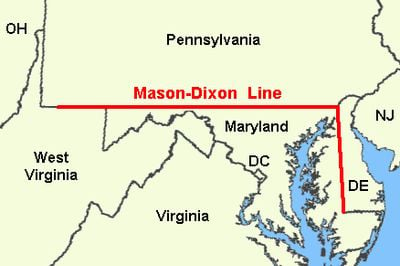
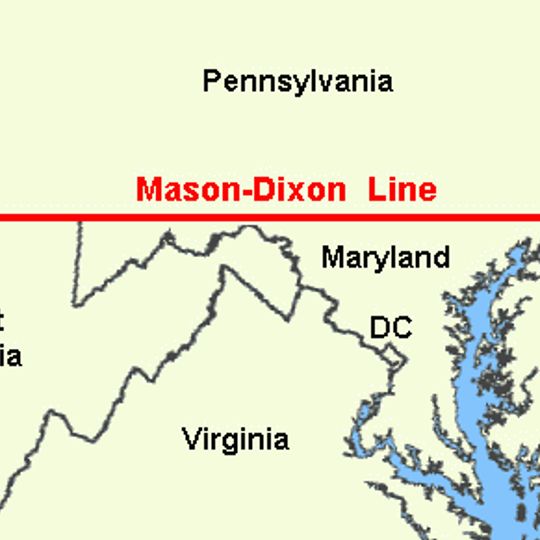
The Mason-Dixon Line is a political border between Pennsylvania, Maryland, Delaware, and West Virginia in the United States, stretching for 244 miles (393 kilometers). Limestone markers were placed every mile along its length, while decorated stones indicating territorial boundaries appear every five miles.
English surveyors Charles Mason and Jeremiah Dixon mapped this boundary between 1763 and 1767 to resolve territorial disputes among British colonies. During the Missouri Compromise of 1820, the line came to mark the separation between Northern free states and Southern slave states.
Local communities organize guided walks and historical tours that follow sections of the line through farmland and forest, allowing visitors to see the old boundary markers up close. People often stop to photograph the stones and reflect on how this invisible division once separated very different ways of life.
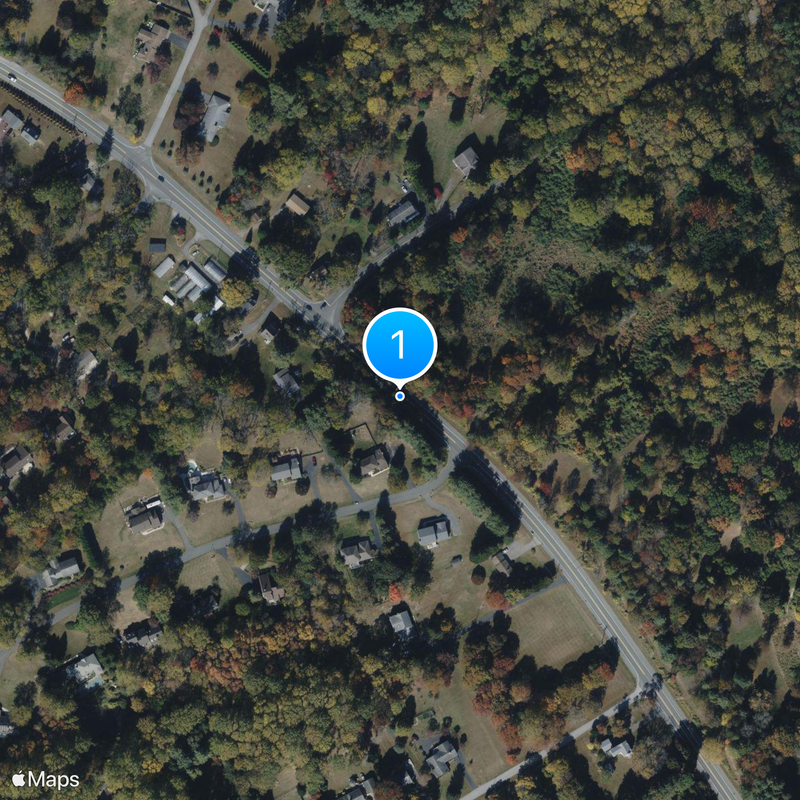
Modern preservation efforts use GPS technology to locate and document the remaining boundary stones along the entire surveyed route. Some markers are difficult to reach in wooded areas or on private property, though many are visible along roads or on public land.
The survey stones carry a P for Pennsylvania and an M for Maryland carved into opposite faces, making each one readable from both sides of the border. Special crown stones placed at key points display the Penn and Calvert family coats of arms, reminding visitors of the colonial families who once owned these territories.
The community of curious travelers
AroundUs brings together thousands of curated places, local tips, and hidden gems, enriched daily by 90,738 contributors worldwide.