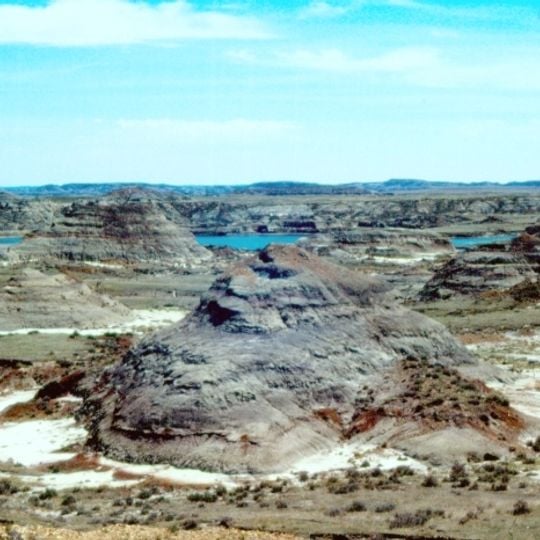
Hell Creek Formation, Geological formation in western North Dakota, United States.
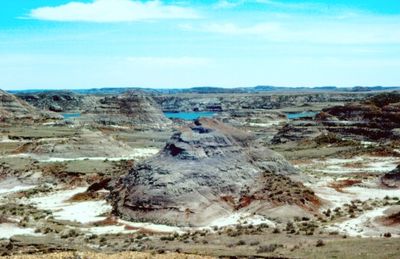
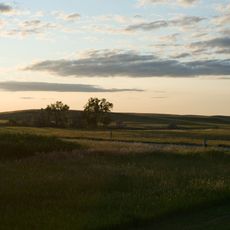
The Hell Creek Formation is a series of sandstone and clay layers in western North Dakota that rises through about 560 feet of rock dating from the Upper Cretaceous period. The layers appear exposed at the surface and display colors ranging from gray to brown and reddish, with alternating harder and softer rock bands.
Paleontologist Barnum Brown first documented this formation in 1907 and recognized its value for studying the final chapter of the dinosaur age. The rocks formed between roughly 66 and 68 million years ago in a low coastal plain that later rose to become part of today's Great Plains.
The formation houses extensive collections at the Museum of the Rockies and University of California Museum of Paleontology, contributing to scientific education.
Visitors should obtain permits from the relevant land management agencies before collecting fossils or removing rock samples. Any finds should be reported so that scientists can receive valuable information about location and context.
The formation contains the K-Pg boundary, a thin layer of clay and iridium that marks the transition between the Cretaceous period and the Paleogene. This line shows the moment when an asteroid impact fundamentally changed life on Earth.
The community of curious travelers
AroundUs brings together thousands of curated places, local tips, and hidden gems, enriched daily by 90,802 contributors worldwide.