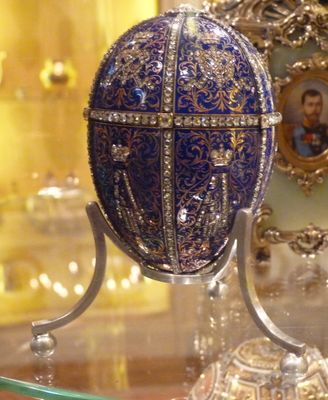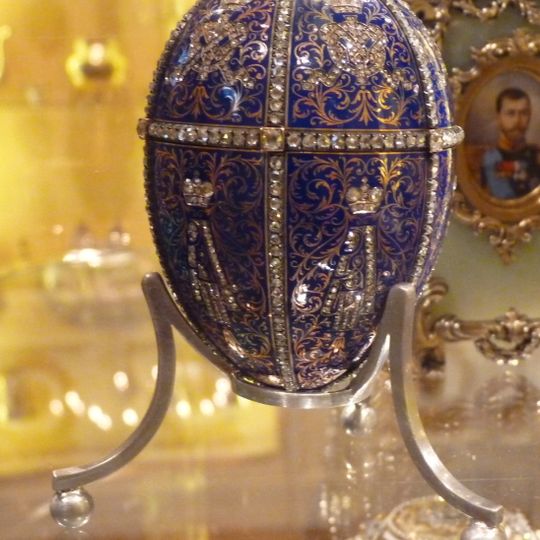
Twelve Monograms, Imperial Easter egg at Hillwood Museum & Gardens, United States
The Twelve Monograms Egg is a small decorative object made of gold, enamel, and diamonds, measuring about 3 inches (7.9 cm) tall and displaying twelve panels with crowned monograms on royal blue enamel separated by rows of diamonds. Its construction combines vitreous enamel work with precious materials, creating an intricate small-scale artwork.
Michael Perkhin created this imperial egg in 1896 for Empress Maria Feodorovna as part of an annual tradition started by her late husband Alexander III. This practice of commissioning elaborate eggs became a defining feature of the Russian imperial court's relationship with fine craftsmanship.
The craftsmanship reflects the sophisticated taste of the imperial court, with each detail chosen to display wealth and artistic skill through metalwork and gemstones. Objects like this one shaped how Russia's nobility viewed luxury and beauty during that era.
This piece is displayed in the Icon Room at Hillwood Museum, which houses a collection of Russian decorative arts and religious objects. The gallery setting provides good lighting to observe the fine details of the enameling and gemstone work.
The interior originally contained a folding screen with portraits of Tsar Alexander III, a surprise feature that has since disappeared. This lost element reminds visitors that many of the original delights hidden inside these imperial eggs no longer survive.
The community of curious travelers
AroundUs brings together thousands of curated places, local tips, and hidden gems, enriched daily by 91,697 contributors worldwide.