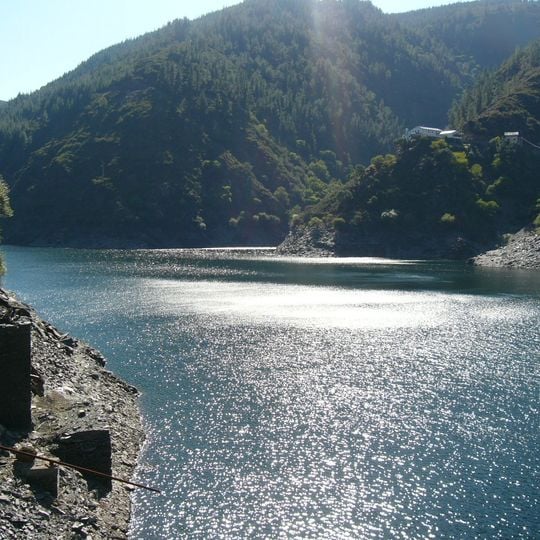
Embalse de Salime, reservoir and hydroelectric dam
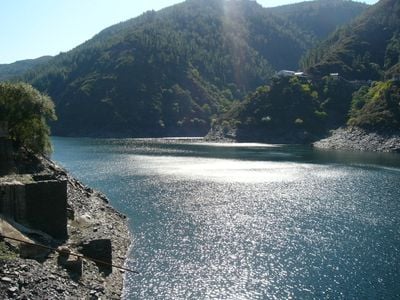
The Embalse de Salime is a large water reservoir in western Asturias that was completed in 1955 and covers approximately 685 hectares. The concrete dam stands about 128 meters high and roughly 250 meters wide at its crest, holding back the Navia River to generate electricity through four turbines.
Planning began in the 1940s and construction took place between 1946 and 1955, using over 630,000 cubic meters of concrete. The project marked a turning point in Spain's industrial history and was, at its completion, the largest dam in Spain and the second largest in Europe.
The name comes from the old village of Salime, which now lies underwater and once served as the area's main settlement. When water levels drop, remnants of houses emerge, offering a tangible connection to a community that was displaced to make way for the reservoir.
The site is accessible from Grandas de Salime via the AS-14 highway and offers various activities such as fishing, boating, and picnicking around the water. Water levels change seasonally depending on rainfall and power demands, which affects the best time to visit.
An impressive feature of the construction was a cable car that stretched over 37 kilometers, transporting materials across steep terrain to help complete the project on time. This innovative solution was crucial to managing the logistical challenges of building in difficult mountainous conditions.
The community of curious travelers
AroundUs brings together thousands of curated places, local tips, and hidden gems, enriched daily by 90,865 contributors worldwide.